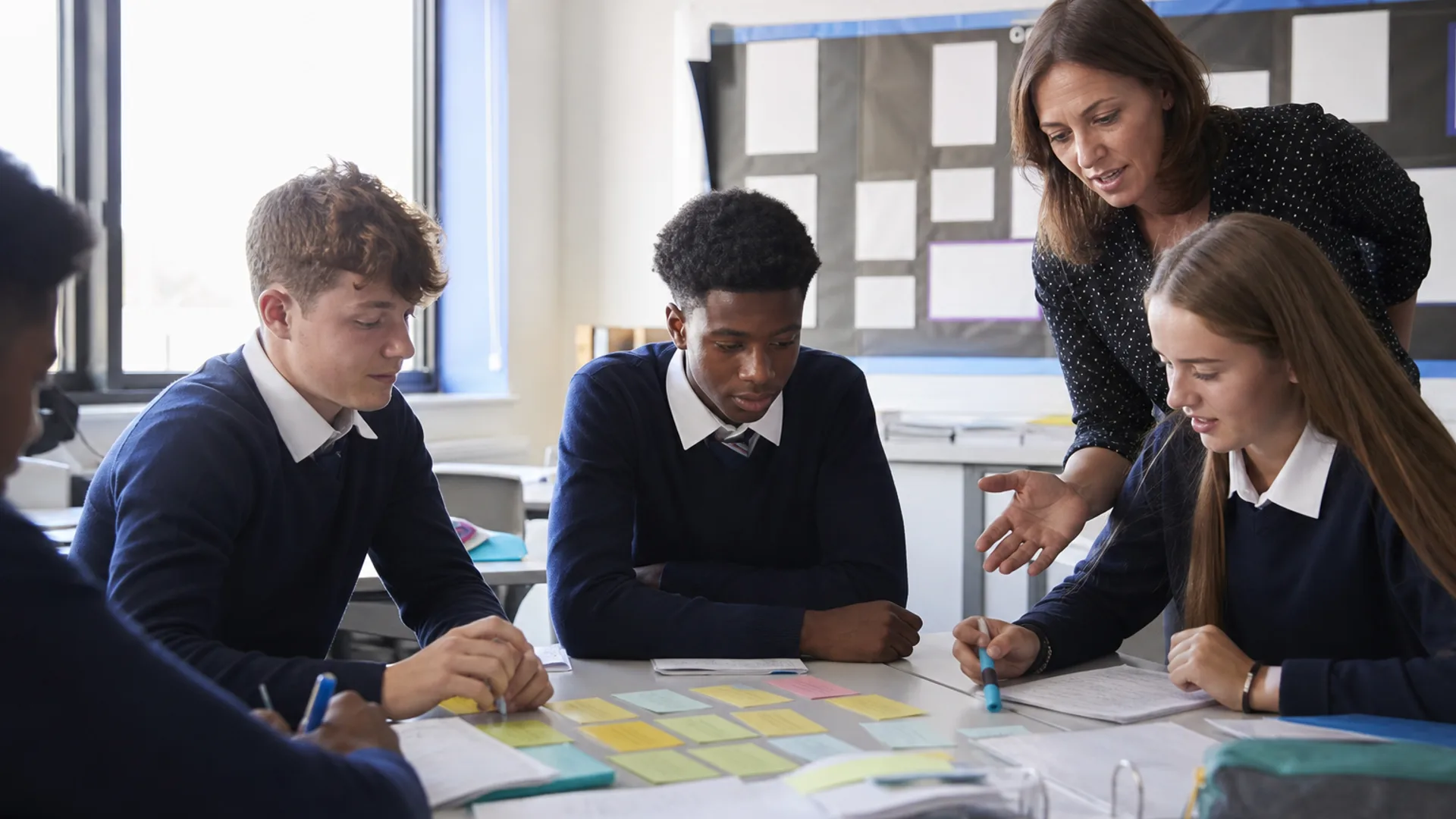
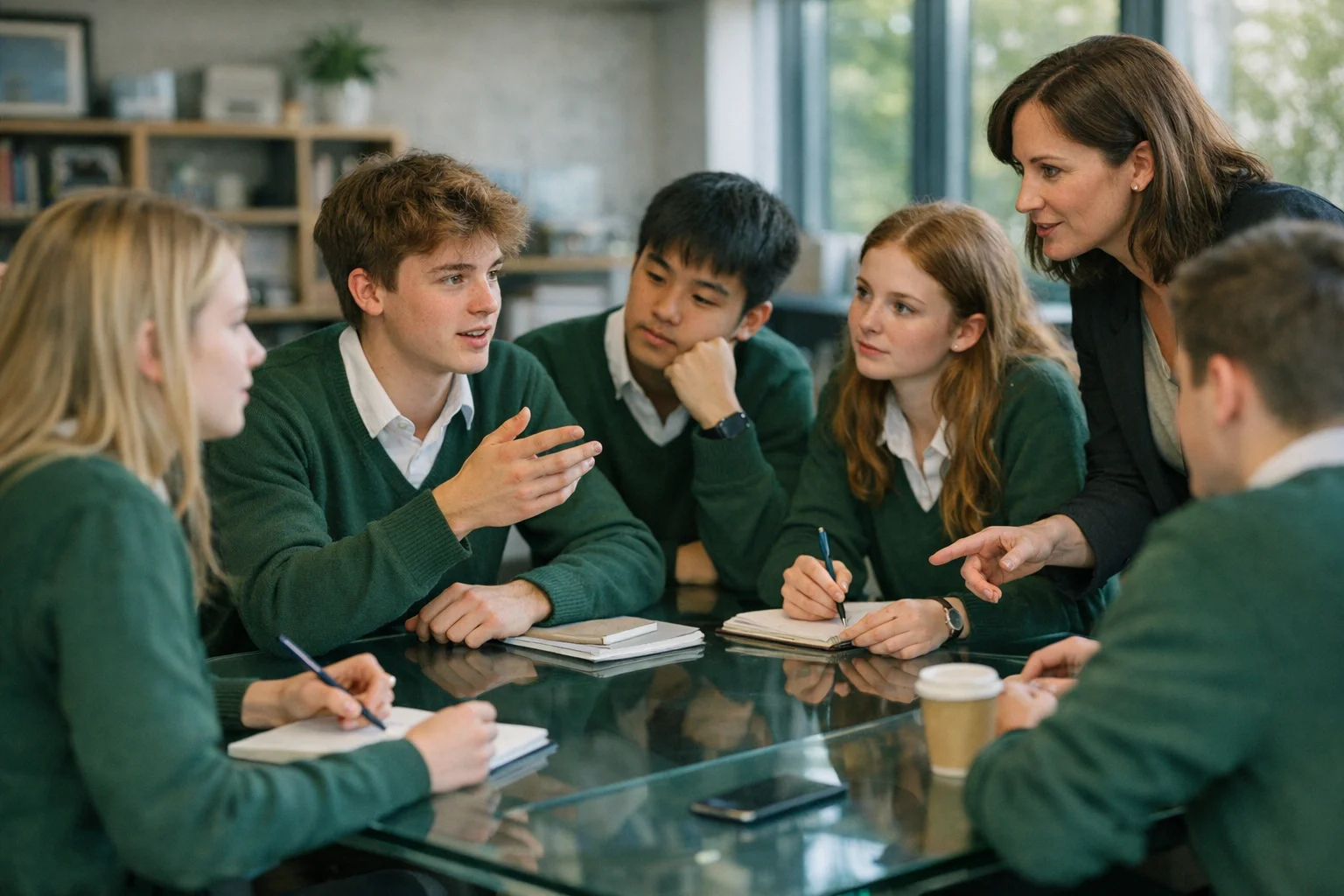
Thinking Routines for Deeper UnderstandingSixth formers in bottle green cardigans discuss ideas around a glass table in a modern study space

Updated on  

April 2, 2026

Thinking Routines for Deeper Understanding

|

June 13, 2025

Discover thinking routines: simple question sequences that reveal student thinking and deepen learning, with practical tips for embedding them across subjects.

Course Enquiry
Copy citation

Main, P. (2026, January 9). Thinking Routines for Deeper Understanding. Retrieved from www.structural-learning.com/post/thinking-routines-for-deeper-understanding

Project Zero's Visible Thinking (Harvard) sparked this. These routines build learner thinking skills across subjects and backgrounds. Research by Ritchhart, Church, & Morrison (2011) supports this.

Key Takeaways

  1. Thinking routines fundamentally shift classroom dynamics by making learners' thought processes explicit: This pedagogical approach moves beyond mere answers, encouraging learners to articulate their reasoning and understanding. By making thinking visible, educators can better identify misconceptions and foster deeper, more inclusive learning environments for all learners (Ritchhart, Church, & Morrison, 2011).
  2. These routines are instrumental in cultivating higher-order cognitive skills beyond rote memorisation: Unlike traditional question-and-answer formats, thinking routines actively engage learners in analysis, synthesis, and evaluation. This systematic development of intellectual capacities prepares learners for complex problem-solving and critical inquiry across all subjects (Perkins, 1992).
  3. The core set of thinking routines offers adaptable frameworks applicable across diverse subjects and age groups: Routines such as 'See-Think-Wonder' or 'Compass Points' are versatile tools that can be tailored to specific learning objectives, from primary to secondary education. This adaptability ensures that a culture of thinking can be consistently fostered throughout a learner's educational process (Ritchhart, 2015).
  4. Empirical evidence consistently supports the efficacy of thinking routines in enhancing learning outcomes and engagement: Research indicates that classrooms employing these routines foster a more active, learner-driven learning environment, leading to improved critical thinking and problem-solving abilities. This pedagogical shift moves away from passive reception towards active construction of knowledge (Tishman, Perkins, & Jay, 1995).

While they may sound complex, these routines are simply sets of questions or short sequences. They . Over time, they become part of classroom culture. Their purpose is clear: create spaces where thinking is visible, celebrated, and woven into learning. As metacognition develops through these thinking routines in mathematics and other subjects, students become more aware of their own thought processes - getting started with these routines helps teachers scaffold this development.

What is Project Zero's Thinking Routines Toolbox?

The thinking routines toolbox defines these routines as sequences of questions or steps that guide students in their thought processes. It groups them into Core Thinking and Possibilities, along with other methods for organising and combining ideas.
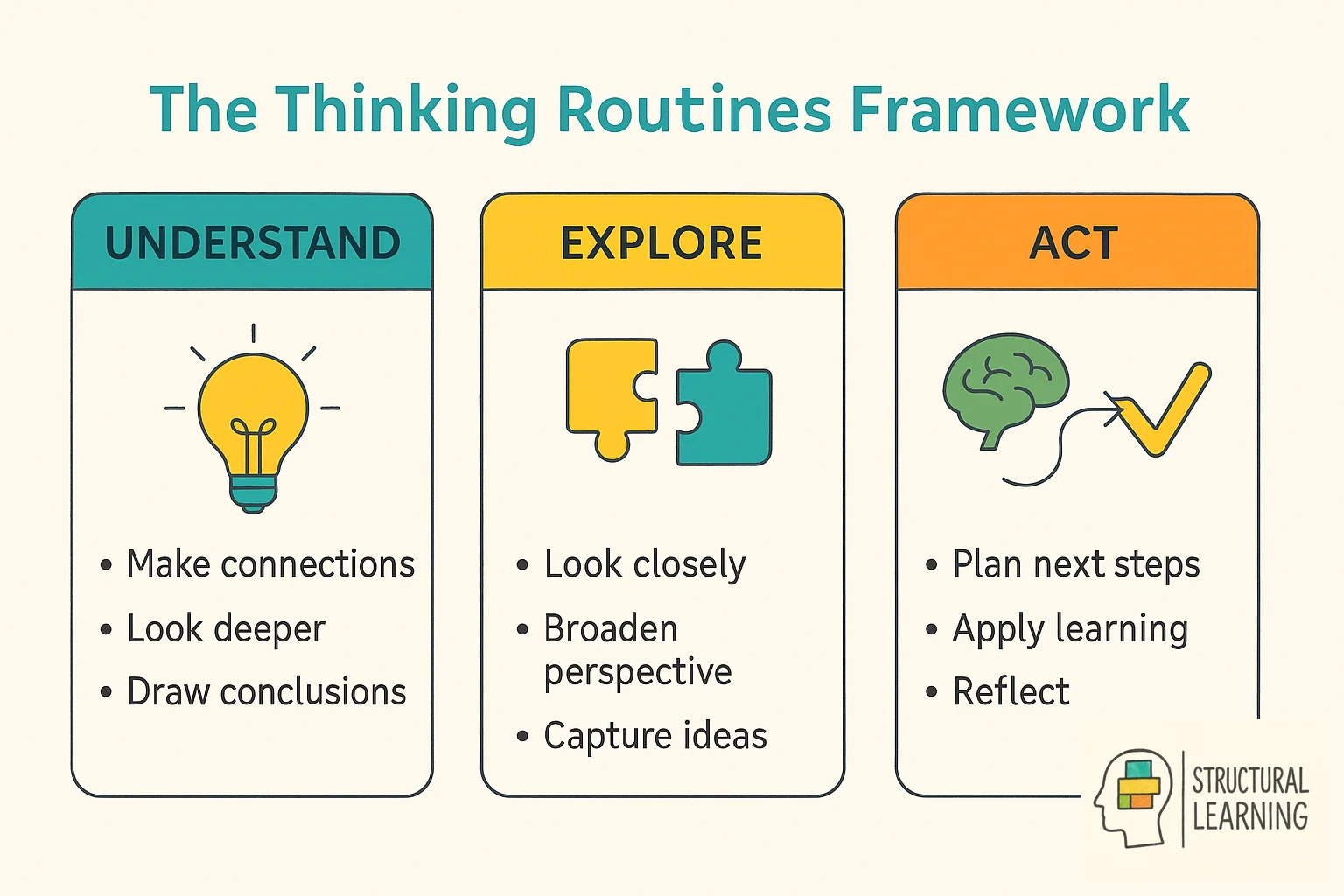
Framework showing Harvard's thinking routines: what they are, how they work, why to use them
The Thinking Routines Framework

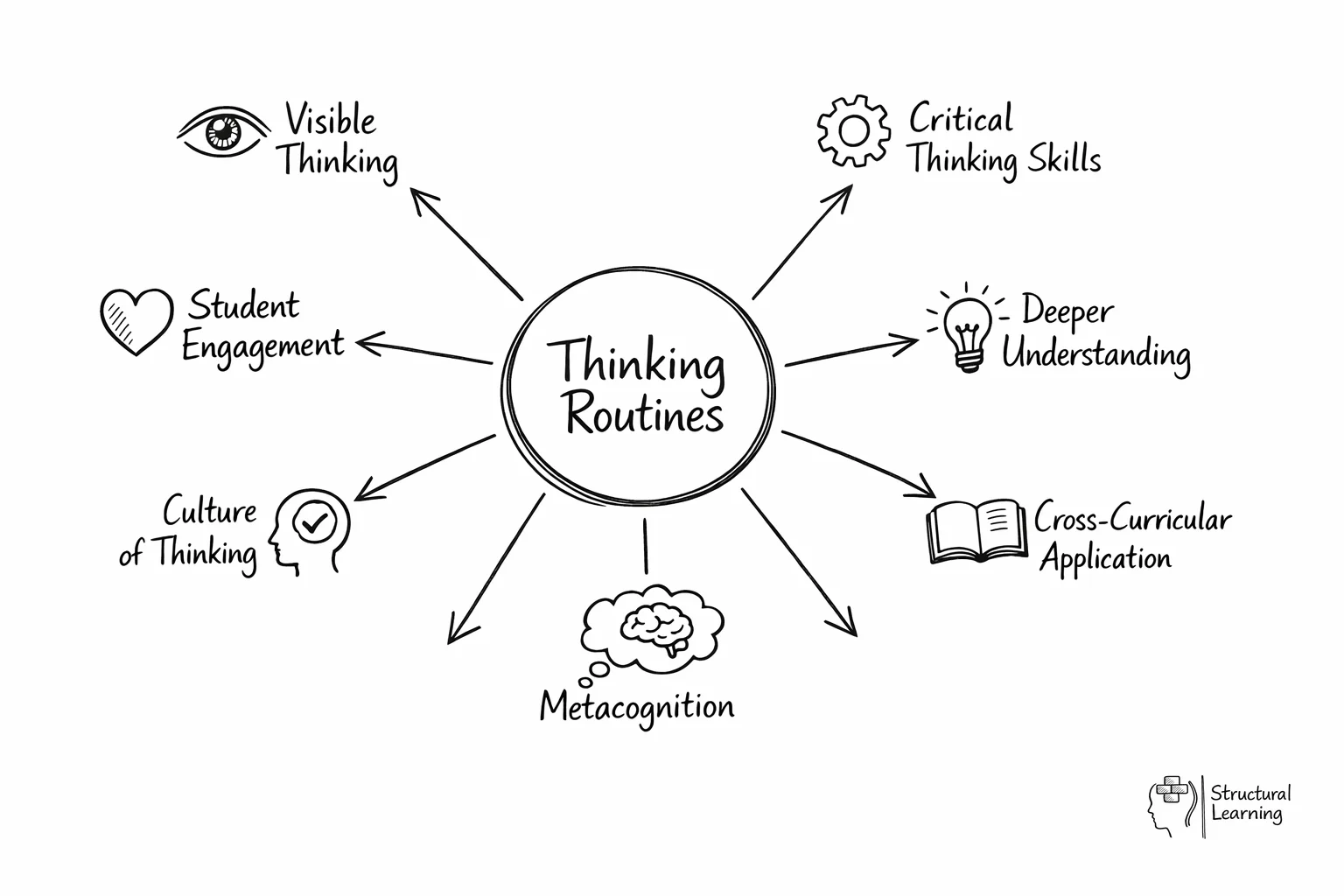
Hub-and-spoke diagram showing thinking routines at centre connected to seven <a href=educational benefits" loading="lazy">
Hub-and-spoke diagram: Project Zero's Thinking Routines Framework and Its Educational Impact

With over 80 routines available, teachers can adapt them to fit different settings. Think of it as a toolkit designed to make thinking skill development more visible. This encourages a stronger connection with the content being learned.

Evolution and Development

The process began with Project Zero researchers at Harvard, driven by a desire to support student thinking. By using a set of questions or a sequence of steps, these routines make invisible thinking processes visible. This strengthens students' memory and cognitive abilities.

The Thinking Routines Toolbox offers different types like Core Thinking Routines and systems for concept mapping. Teachers play a key role here. These routines help them see how students think, enabling learners to spot and use specific thinking moves across different contexts. See also: Learner process.

These routines work across subjects, not just English. They build understanding and help communication across all areas of study.
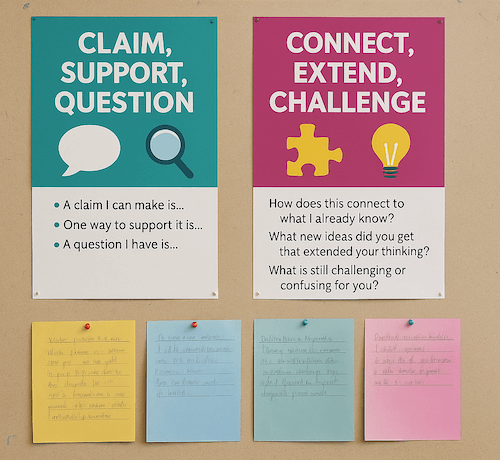
Creating cultures of thinking

Core Benefits of Thinking Routines

Thinking routines work as a useful tool in schools, especially when building a culture of inquiry-based learning among students. They structure student thinking, creating ways for learners to explore and share their thoughts in meaningful ways.

By using these routines, teachers can show the thinking processes happening in their classrooms. This allows for a more inclusive and interactive learning space. The routines can be adapted across different subjects and year groups, offering the flexibility needed to meet diverse student needs.

Their structured yet flexible nature helps students from all backgrounds engage in open discussions. This builds a culture where thinking becomes a visible and key part of learning.

Building Critical Thinking

When we talk about building critical thinking in education, thinking routines play a significant role. These routines are carefully designed to make thinking processes clear and visible to students as they work through learning challenges.

By taking part in these routines, students build critical thinking skills. These skills are essential for analysing complex ideas and making informed decisions. Over time, thinking routines grow with the student, guiding them toward deeper levels of thinking.

(Costa & Kallick, 2008) found frameworks help teachers foster inquisitive learners. These routines are adaptable, fitting different subjects well. They ensure critical thinking permeates project learning (Wiggins & McTighe, 2005).
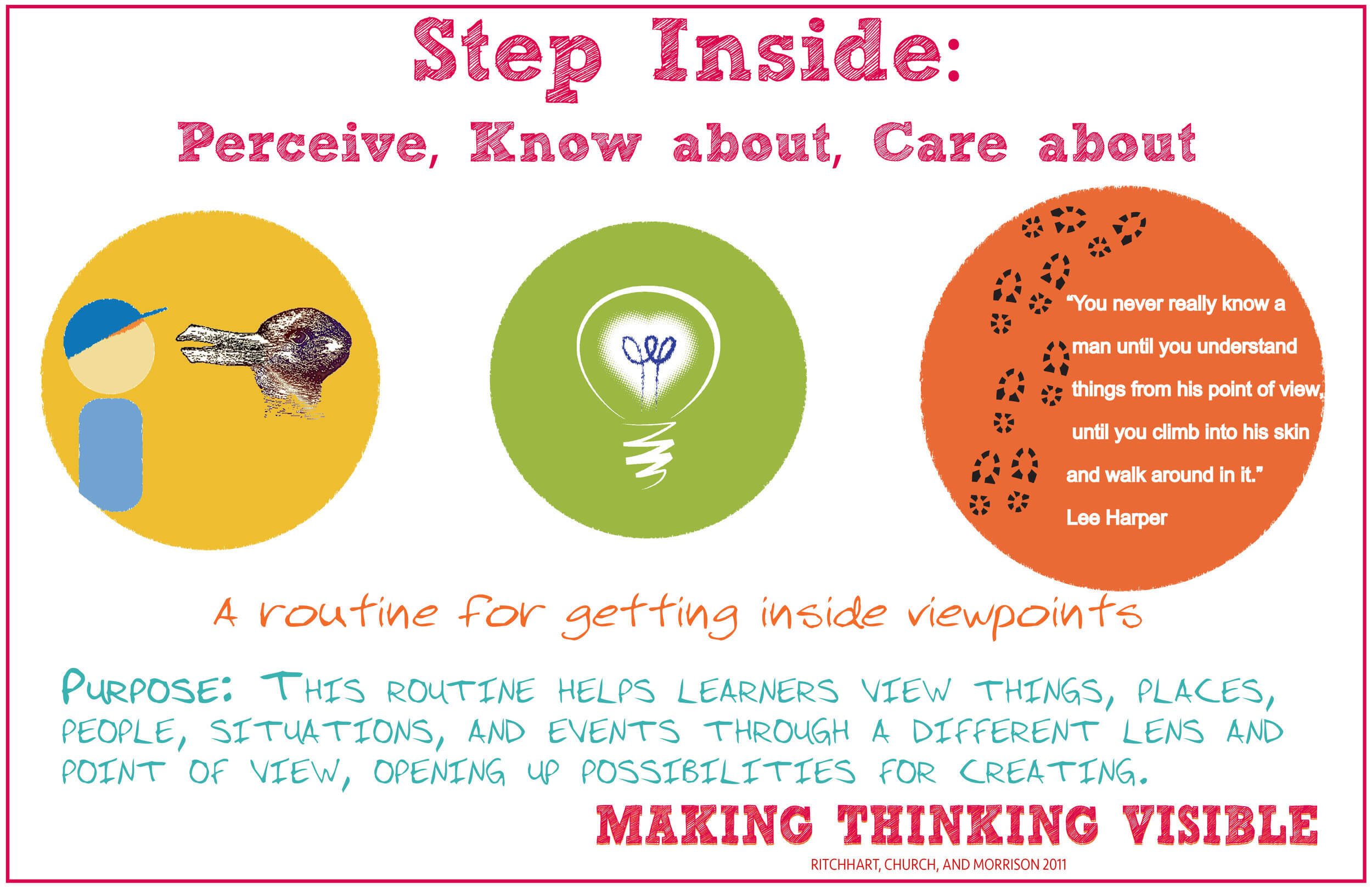
Visible thinking routines

Building Student Engagement

Students who feel engaged can explore and reflect on ideas more deeply. Through engagement with thinking routines, students develop stronger motivation to learn. These routines provide a clear structure that helps students see their progress and builds their confidence in sharing ideas.

Thinking routines improve learners' metacognition long term, impacting beyond school. Flavell's research shows structured thinking helps learners understand their own learning (Flavell). This awareness supports self-regulation and greater independence.
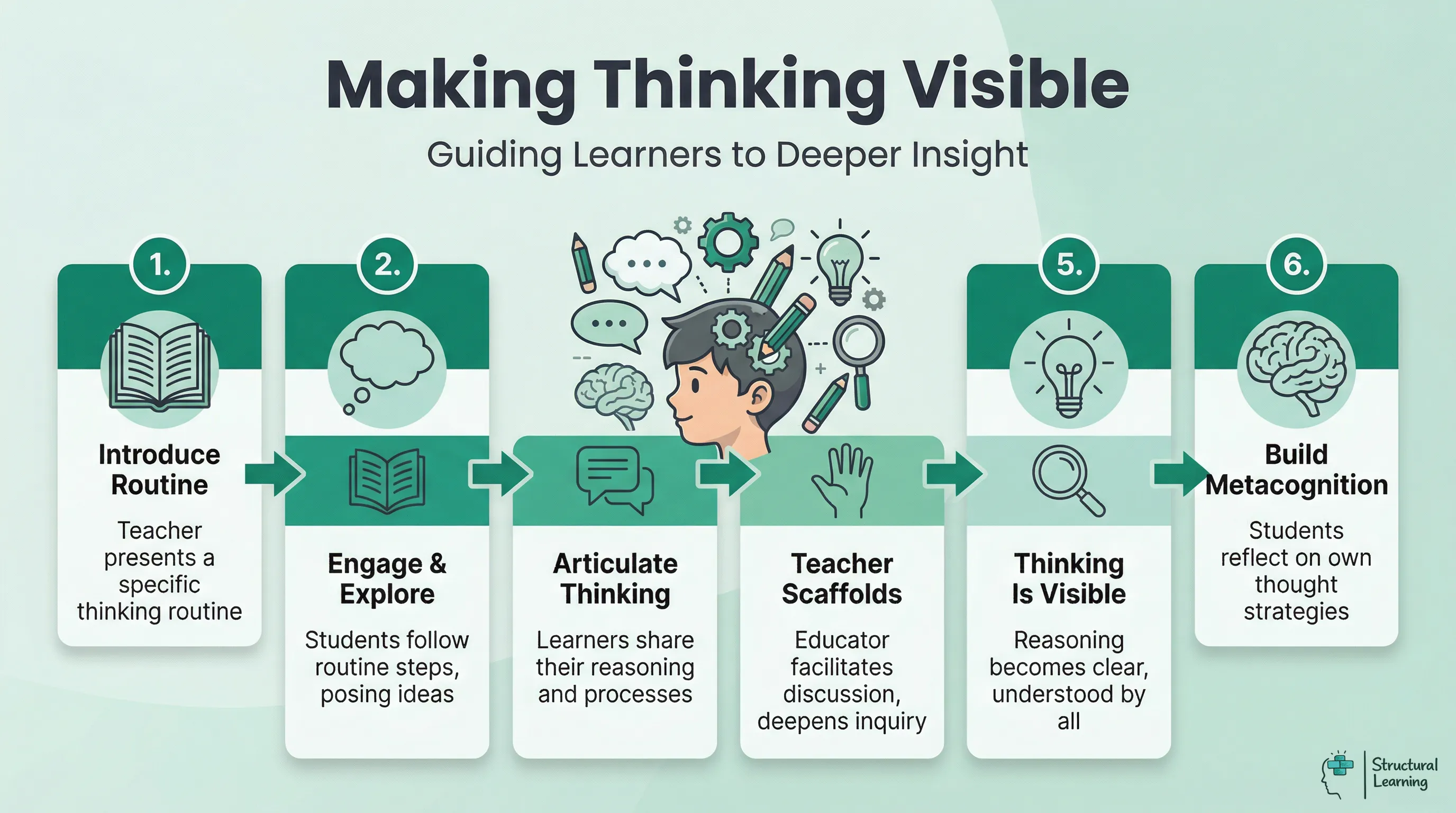
Infographic showing the process of making student thinking visible via Project Zero routines, from introduction to metacognitive development.
Making Thinking Visible

The social dimension of thinking routines cannot be overlooked. When students engage in routines like 'Circle of Viewpoints' or 'Step Inside', they develop empathy and perspective-taking skills essential for collaborative learning. These routines create a classroom culture where diverse viewpoints are valued and intellectual risk-taking is encouraged.

Thinking routines let teachers vary lessons for learners. Visual learners use diagrams (Marzano, 2001). Kinesthetic learners reflect with movement (Gardner, 1983). This suits different learning styles and abilities (Vygotsky, 1978).

What Are Thinking Routines?

Thinking routines structure learning, so learners think more systematically. Harvard's Project Zero researchers developed them. These routines give learners steps to analyse information (Ritchhart et al., 2011), connect ideas, and reflect. Routines make thinking visible, so teachers can guide learners.

These routines work by breaking down complex thinking into manageable components, aligning with Daniel Willingham's research on cognitive science which shows that explicit instruction in thinking processes enhances learning outcomes. When students repeatedly practice structured approaches like "Think-Pair-Share" or "What Makes You Say That?", they internalise these patterns and begin applying them independently across different subjects and contexts. This metacognitive development enables learners to become more aware of their own thinking processes.

Thinking routines engage learners and improve understanding. They offer a clear structure, reducing cognitive strain (Willingham, 2009). Routines encourage learners to think critically about lesson content (Ritchhart & Perkins, 2011). This builds academic ability and wider reasoning skills (Costa & Kallick, 2008).

Thinking routines help learners because of how our brains work (Willingham, 2009). Repeated practice builds thinking skills, which psychologists call 'procedural fluency'. Learners focus on content, not just how to think (Sweller, 1988). Neural pathways strengthen with repeated use, improving reasoning (Anderson, 1983; Ericsson, 1993).

In practical terms, this means that a Year 3 student using 'Think-Pair-Share' for the tenth time can concentrate fully on their mathematical reasoning, whilst a Year 10 student applying 'What Makes You Say That?' can examine deeper into textual analysis without cognitive overload. Teachers consistently report that after just a few weeks of regular implementation, students begin to use these thinking moves independently, asking themselves probing questions and seeking evidence for their ideas even when not prompted to do so.

Types of Thinking Routines

Thinking routines support specific cognitive skills and improve learner understanding. Understanding routines help learners explore ideas (Ritchhart et al., 2011). They expose assumptions and make thinking visible through structured questions. Truth and fairness routines build critical evaluation skills (Costa & Kallick, 2008). Learners examine evidence and assess source reliability.

Thinking routines build original thought, using brainstorming. Dilemma routines help learners navigate tough ethical choices. Ritchhart (2002) found teachers pick routines matching learning goals. This boosts analysis, creative problem-solving, or thinking skills.

Matching routines to curriculum goals helps learners succeed. "See-Think-Wonder" works well when you introduce new ideas. Routines like "Circle of Viewpoints" improve critical thinking, say Ritchhart et al (2011). Using varied routines builds content mastery and supports how learners think.

Ritchhart, Church, and Morrison (2011) suggest routines build understanding and observation skills. "Zoom In" helps learners examine details carefully. "Circle of Viewpoints" aids perspective-taking, say Ritchhart, Church, and Morrison (2011). These routines work well in humanities, where learners need interpretation skills.

Synthesis routines help students connect ideas and identify patterns. 'Connect-Extend-Challenge' pushes learners to link new information with prior knowledge, extend their thinking, and identify points of confusion or disagreement. The '3-2-1 Bridge' routine captures thinking before and after learning, making knowledge construction visible to both teacher and student.

Creative thinking routines like 'What Makes You Say That?' demand evidence-based reasoning, whilst 'Step Inside' encourages empathetic thinking. Truth and fairness routines, including 'Tug of War' and 'Options-Explode', help students examine multiple sides of complex issues and consider various solutions to problems.

Choose routines that match your learning aims and skills you want to grow. Routines, like 'Think-Puzzle-Explore', by Ritchhart, Church, and Morrison (2011), boost engagement. Use them to start lessons and encourage learners to question topics.

Synthesis routines help learners connect ideas after learning experiences. Consistent use of routines, rather than variety, aids implementation. Learners develop better thinking skills when routines are familiar (Marzano et al., 2012). This lets them focus on thinking, not just procedures.

Essential Thinking Routines for the Classroom

Project Zero's See-Think-Wonder helps learners think. Learners observe, reflect, and question (Ritchhart, date unspecified). This routine develops learners' critical thinking and curiosity in all subjects (Ritchhart, date unspecified).

Think-Pair-Share boosts learning through teamwork. Learners consider ideas solo, then chat with a partner. They then share with the class. This method, linked to Vygotsky's ideas, helps learners improve thinking via peer discussion. It builds confidence before class contributions (Vygotsky, date not provided).

In practice, these routines work best when teachers model the thinking process explicitly and provide adequate wait time for reflection. Begin with simpler content to establish the routine's structure, then gradually apply it to more complex material. The key lies in consistency: regular use transforms these frameworks from novel activities into natural habits of mind that students apply independently across learning contexts.

Thinking routines help learners repeat and use clear thought structures (Ritchhart et al., 2011). Routines give everyone a chance to participate, unlike standard questions. Predictable steps lower mental effort, so learners focus on the material (Hattie, 2012). This helps learners with extra needs or those still learning English.

Modelling and gradual release help classroom routines work. Teachers can use visual prompts and explain their thinking (Fisher & Frey, 2013). Celebrate when learners use structures themselves. Learners need repeated exposure for routines to become automatic (Duke & Pearson, 2002). Patience is key (Hunter, 2014).

Thinking routines, used regularly, create a positive classroom environment. Learners question each other (Wiliam, 2011) and build on ideas. They reflect on their learning (Black & Wiliam, 1998) without needing prompts. Learners become active thinkers (Costa & Kallick, 2009), understanding their own knowledge.

How to Implement Thinking Routines Effectively

Thinking routines work best when introduced slowly and practised often. Start with one routine that fits your lessons, modelling it clearly. Explain your thinking, as Project Zero (Harvard) suggests. Learners internalise these patterns, making them habits (Harvard's Project Zero).

Classrooms benefit from valuing thinking skills alongside correct answers. Display routine steps clearly and allow thinking time. Celebrate careful reasoning, not just speed (Sweller). Consistent routines reduce learner workload, freeing up capacity for content (Sweller's theory).

Observe learner discussions and self-reflection to track success. Effective routines mean learners use language patterns independently (Ritchhart, Church & Morrison, 2011). They will ask further questions beyond simple answers. Document these independent moments; this shows routines build critical thinking (Costa & Kallick, 2008).

Successful implementation requires careful attention to classroom culture and student preparation. Begin by explicitly teaching the routine steps, modelling your own thinking process, and providing sentence starters or thinking stems to support student responses. For example, when introducing 'See-Think-Wonder', offer phrases like 'I notice..', 'This makes me think..', or 'I wonder why..' to help students articulate their thoughts.

Timing and pacing are crucial for success. Allow sufficient think time, particularly for understanding routines where rushed responses undermine the purpose. Research by cognitive scientist Mary Budd Rowe shows that increasing wait time from three to seven seconds dramatically improves response quality and participation rates. Build in processing breaks during longer routines to prevent cognitive overload.

Visible thinking routines improve learning. Anchor charts record learner ideas, as Ritchhart et al. (2011) showed. Digital tools can document thinking for assessment. Consider technology's role, says Perkins (1993), so the thinking is the focus.

Assessing Learning Through Thinking Routines

Thinking routines move assessment from content to how learners think. Observe learners' developing cognitive skills instead (Wiliam, undated). Instead of measuring knowledge, examine how learners reason and apply understanding. This approach aligns with Dylan Wiliam's formative assessment research. Gather evidence about learner thinking to inform teaching.

Teachers note learner contributions during discussions. Written reflections demonstrate learner's thinking skills. Observing collaborative problem solving also gives insights. Use rubrics to assess question quality (Wiggins, 1998). Check idea building and thinking revisions. Learner portfolios show growth patterns over time (Black & Wiliam, 1998).

Learners improve most when they assess their own work. Use journals and peer feedback, suggest Black and Wiliam (1998). Regular reflection on helpful routines aids understanding, said Yorke (1991). This self assessment provides real progress evidence. It boosts metacognition, creating ongoing learning, as stated by Flavell (1979).

Adapting Thinking Routines Across Age Groups

Bruner's theory (dates not given) shows learners move from concrete to abstract thinking. "See-Think-Wonder" and "Chalk Talk" work well for younger learners. Older learners can use "What Makes You Say That?" or "Circle of Viewpoints". Effective thinking routines must suit learner stages.

Routines with drawings support younger learners, aiding thinking (Sweller, n.d.). "I Used to Think... Now I Think" helps with shared experiences. Older learners benefit from routines demanding independent thought. Age-appropriate tasks prevent cognitive overload and increase understanding (Sweller, n.d.).

Learners need gradual introduction to thinking routines. Assess their comfort with metacognitive language early. Systematically introduce routines to stretch their thinking (Costa & Kallick, 2008). This helps routines become true learning tools (Ritchhart, Church & Morrison, 2011).

Research Evidence for Thinking Routines

Thinking routines have a strong research base going back over 20 years. Ritchhart and Perkins (Harvard's Project Zero) showed routines improve learner thinking. Their research proves learners gain analytical skills. Routines also help learners transfer knowledge (Ritchhart & Perkins).

Neurocognitive research supports this, showing thinking routines help learning. Swartz and Parks found learners using routines improved reasoning (1991). They also confidently expressed complex ideas. These thinking skills lasted, suggesting habits formed, not just temporary skill boosts.

Thinking routines boost learner engagement, research shows (Marzano, 2003). Teachers find learners contribute more with frameworks (Costa, 1991). High achievers reason more deeply using routines (Swartz & Parks, 1994). Therefore, use thinking routines regularly in lessons.

Thinking Routines in Action: Classroom Examples

Mitchell (Year 5) used See-Think-Wonder during a science lesson. Learners watched ice melt and wrote observations, ideas, and questions. This method sparked curiosity about molecules and heat transfer. Many linked new observations to prior particle learning.

Chen (secondary English) uses Connect-Extend-Challenge to boost literary analysis. Learners connect Macbeth themes to current issues after reading. They extend Shakespeare's ideas to modern life and challenge power assumptions. This routine makes learners active; they show deep critical thought (Chen, n.d.).

Priya Patel (Year 8) used "What Makes You Say That?" for maths problem-solving. Learners questioned each other's solutions using this framework. David Perkins' visible thinking research showed questioning builds mathematical reasoning. It also makes learners aware of their thinking.

Written by the Structural Learning Research Team

Reviewed by Paul Main, Founder & Educational Consultant at Structural Learning

Frequently Asked Questions

schema.org/FAQPage">

What are Harvard thinking routines in the classroom?

Thinking routines are simple sequences of questions or steps used to guide student thought processes. Developed by Project Zero at Harvard University, these tools help make student reasoning visible to teachers and peers. They allow teachers and students to recognise how understanding develops over time through repeated use.

How do teachers implement thinking routines in the classroom?

Teachers usually begin by selecting one routine, such as See, Think, Wonder, and using it consistently across different subjects. It is helpful to display the steps on a wall or screen to remind students of the sequence. Over time, these routines move from being teacher led activities to student led habits of mind.

What are the benefits of thinking routines for learning?

These routines help students develop metacognition by making them more aware of their own learning strategies. They provide a clear structure that builds confidence and encourages students to explore complex ideas more deeply. By using these sequences, teachers create an inclusive environment where every learner has a starting point for discussion.

What does the research say about the effectiveness of thinking routines?

Harvard Project Zero research shows routines improve learning and self regulation. John Flavell's work highlights structured reflection's help with cognitive monitoring. Making thinking visible supports better understanding and information retention (research confirms).

What are common mistakes when using thinking routines?

A frequent error is using too many different routines at once, which can confuse students and prevent them from becoming habitual. Teachers should avoid treating them as one off activities; instead, they should focus on the quality of the thinking process. This approach helps with the organisation of ideas during complex projects.

Which thinking routines work best for primary school children?

Core routines like See, Think, Wonder and Zoom In are highly effective for younger learners because they build on natural curiosity. These routines help children practise describing what they observe before moving into more abstract reasoning. Using visual prompts alongside the routines helps support language development and keeps students engaged.

Overcoming Common Implementation Challenges

Thinking routines may fail, even with good intentions. Learners resist if unsure about open questions or fear wrong answers. Foster safety: praise partial thinking and model your thought process. Seeing teachers grapple with ideas encourages visible thinking (Ritchhart & Perkins, 2011).

Teachers face time limits with rising curriculum demands. Sweller's (1988) cognitive load theory shows metacognition speeds learning. Try two-minute routines like 'Think-Pair-Share' before longer tasks. Thinking routines, researched by Hyerle (2000) and Albers (2000), replace existing work.

Vary routines to keep learners engaged, but don't add too much at once. Master two or three routines first before teaching others. Make thinking visible using displays or journals. This helps deeper understanding become routine, not rare, say (Researcher, date).

Further Reading: Key Research Papers

These studies provide the research base behind thinking routines and their impact on classroom practice.

Ritchhart, Church and Morrison (2011) explore visible thinking routines. These routines aim to boost learner engagement. They can also increase understanding and encourage independence. Use these strategies to support every learner in your classroom.

Ritchhart, R., Church, M. and Morrison, K. (2011)

Project Zero introduced thinking routines (Ritchhart, Church & Morrison, 2011). See-Think-Wonder and Connect-Extend-Challenge make learner thinking visible. Routines across subjects build reasoning, understanding, and learner independence (Ritchhart, Church & Morrison, 2011).

Creating Cultures of Thinking: The 8 Forces We Must Master to Truly Transform Our Schools View study ↗ 87 citations

Ritchhart, R. (2015)

Ritchhart (date not provided) says thinking routines need a thinking culture. This culture includes expectations, language, time and modelling. Learners need opportunities, suitable environments, routines, and interactions. Without school commitment to valuing thinking, routines fail (research date not provided). Teachers benefit by understanding these cultural forces when using routines (date not provided).

How People Learn: Brain, Mind, Experience, and School View study ↗ 13,254 citations

National Research Council (2000)

Research from learning science says learners need to connect ideas, check understanding, and build meaning (Bransford et al., 2000). Thinking routines help learners do this using structure. Routines let learners link new facts to what they already know and assess their grasp.

Visible Thinking in Practice: Examples and Evidence of Thinking Routines in K-12 Classrooms 180 citations

Salmon, A. K. (2010)

Thinking routines increase learner participation and thinking quality (Ritchhart & Perkins, 2011). Learners engage more with complex ideas through routine use (Costa & Kallick, 2009). Researchers found learners use sophisticated thinking with structure (Hyerle, 2000). Teachers see progression from starting to fluent application (Wiggins & McTighe, 2005).

Intellectual Character: What It Is, Why It Matters, and How to Get It View study ↗ 245 citations

Ritchhart, R. (2002)

Ritchhart's work (2002) highlights thinking routines. Education must build learner curiosity and strategic thought. Class practices teach these skills, as shown in the book. Routines matter more than just learning content.

Loading audit...

Project Zero's Visible Thinking (Harvard) sparked this. These routines build learner thinking skills across subjects and backgrounds. Research by Ritchhart, Church, & Morrison (2011) supports this.

Key Takeaways

  1. Thinking routines fundamentally shift classroom dynamics by making learners' thought processes explicit: This pedagogical approach moves beyond mere answers, encouraging learners to articulate their reasoning and understanding. By making thinking visible, educators can better identify misconceptions and foster deeper, more inclusive learning environments for all learners (Ritchhart, Church, & Morrison, 2011).
  2. These routines are instrumental in cultivating higher-order cognitive skills beyond rote memorisation: Unlike traditional question-and-answer formats, thinking routines actively engage learners in analysis, synthesis, and evaluation. This systematic development of intellectual capacities prepares learners for complex problem-solving and critical inquiry across all subjects (Perkins, 1992).
  3. The core set of thinking routines offers adaptable frameworks applicable across diverse subjects and age groups: Routines such as 'See-Think-Wonder' or 'Compass Points' are versatile tools that can be tailored to specific learning objectives, from primary to secondary education. This adaptability ensures that a culture of thinking can be consistently fostered throughout a learner's educational process (Ritchhart, 2015).
  4. Empirical evidence consistently supports the efficacy of thinking routines in enhancing learning outcomes and engagement: Research indicates that classrooms employing these routines foster a more active, learner-driven learning environment, leading to improved critical thinking and problem-solving abilities. This pedagogical shift moves away from passive reception towards active construction of knowledge (Tishman, Perkins, & Jay, 1995).

While they may sound complex, these routines are simply sets of questions or short sequences. They . Over time, they become part of classroom culture. Their purpose is clear: create spaces where thinking is visible, celebrated, and woven into learning. As metacognition develops through these thinking routines in mathematics and other subjects, students become more aware of their own thought processes - getting started with these routines helps teachers scaffold this development.

What is Project Zero's Thinking Routines Toolbox?

The thinking routines toolbox defines these routines as sequences of questions or steps that guide students in their thought processes. It groups them into Core Thinking and Possibilities, along with other methods for organising and combining ideas.

Framework showing Harvard's thinking routines: what they are, how they work, why to use them
The Thinking Routines Framework

Hub-and-spoke diagram showing thinking routines at centre connected to seven <a href=educational benefits" loading="lazy">
Hub-and-spoke diagram: Project Zero's Thinking Routines Framework and Its Educational Impact

With over 80 routines available, teachers can adapt them to fit different settings. Think of it as a toolkit designed to make thinking skill development more visible. This encourages a stronger connection with the content being learned.

Evolution and Development

The process began with Project Zero researchers at Harvard, driven by a desire to support student thinking. By using a set of questions or a sequence of steps, these routines make invisible thinking processes visible. This strengthens students' memory and cognitive abilities.

The Thinking Routines Toolbox offers different types like Core Thinking Routines and systems for concept mapping. Teachers play a key role here. These routines help them see how students think, enabling learners to spot and use specific thinking moves across different contexts. See also: Learner process.

These routines work across subjects, not just English. They build understanding and help communication across all areas of study.

Creating cultures of thinking

Core Benefits of Thinking Routines

Thinking routines work as a useful tool in schools, especially when building a culture of inquiry-based learning among students. They structure student thinking, creating ways for learners to explore and share their thoughts in meaningful ways.

By using these routines, teachers can show the thinking processes happening in their classrooms. This allows for a more inclusive and interactive learning space. The routines can be adapted across different subjects and year groups, offering the flexibility needed to meet diverse student needs.

Their structured yet flexible nature helps students from all backgrounds engage in open discussions. This builds a culture where thinking becomes a visible and key part of learning.

Building Critical Thinking

When we talk about building critical thinking in education, thinking routines play a significant role. These routines are carefully designed to make thinking processes clear and visible to students as they work through learning challenges.

By taking part in these routines, students build critical thinking skills. These skills are essential for analysing complex ideas and making informed decisions. Over time, thinking routines grow with the student, guiding them toward deeper levels of thinking.

(Costa & Kallick, 2008) found frameworks help teachers foster inquisitive learners. These routines are adaptable, fitting different subjects well. They ensure critical thinking permeates project learning (Wiggins & McTighe, 2005).

Visible thinking routines

Building Student Engagement

Students who feel engaged can explore and reflect on ideas more deeply. Through engagement with thinking routines, students develop stronger motivation to learn. These routines provide a clear structure that helps students see their progress and builds their confidence in sharing ideas.

Thinking routines improve learners' metacognition long term, impacting beyond school. Flavell's research shows structured thinking helps learners understand their own learning (Flavell). This awareness supports self-regulation and greater independence.

Infographic showing the process of making student thinking visible via Project Zero routines, from introduction to metacognitive development.
Making Thinking Visible

The social dimension of thinking routines cannot be overlooked. When students engage in routines like 'Circle of Viewpoints' or 'Step Inside', they develop empathy and perspective-taking skills essential for collaborative learning. These routines create a classroom culture where diverse viewpoints are valued and intellectual risk-taking is encouraged.

Thinking routines let teachers vary lessons for learners. Visual learners use diagrams (Marzano, 2001). Kinesthetic learners reflect with movement (Gardner, 1983). This suits different learning styles and abilities (Vygotsky, 1978).

What Are Thinking Routines?

Thinking routines structure learning, so learners think more systematically. Harvard's Project Zero researchers developed them. These routines give learners steps to analyse information (Ritchhart et al., 2011), connect ideas, and reflect. Routines make thinking visible, so teachers can guide learners.

These routines work by breaking down complex thinking into manageable components, aligning with Daniel Willingham's research on cognitive science which shows that explicit instruction in thinking processes enhances learning outcomes. When students repeatedly practice structured approaches like "Think-Pair-Share" or "What Makes You Say That?", they internalise these patterns and begin applying them independently across different subjects and contexts. This metacognitive development enables learners to become more aware of their own thinking processes.

Thinking routines engage learners and improve understanding. They offer a clear structure, reducing cognitive strain (Willingham, 2009). Routines encourage learners to think critically about lesson content (Ritchhart & Perkins, 2011). This builds academic ability and wider reasoning skills (Costa & Kallick, 2008).

Thinking routines help learners because of how our brains work (Willingham, 2009). Repeated practice builds thinking skills, which psychologists call 'procedural fluency'. Learners focus on content, not just how to think (Sweller, 1988). Neural pathways strengthen with repeated use, improving reasoning (Anderson, 1983; Ericsson, 1993).

In practical terms, this means that a Year 3 student using 'Think-Pair-Share' for the tenth time can concentrate fully on their mathematical reasoning, whilst a Year 10 student applying 'What Makes You Say That?' can examine deeper into textual analysis without cognitive overload. Teachers consistently report that after just a few weeks of regular implementation, students begin to use these thinking moves independently, asking themselves probing questions and seeking evidence for their ideas even when not prompted to do so.

Types of Thinking Routines

Thinking routines support specific cognitive skills and improve learner understanding. Understanding routines help learners explore ideas (Ritchhart et al., 2011). They expose assumptions and make thinking visible through structured questions. Truth and fairness routines build critical evaluation skills (Costa & Kallick, 2008). Learners examine evidence and assess source reliability.

Thinking routines build original thought, using brainstorming. Dilemma routines help learners navigate tough ethical choices. Ritchhart (2002) found teachers pick routines matching learning goals. This boosts analysis, creative problem-solving, or thinking skills.

Matching routines to curriculum goals helps learners succeed. "See-Think-Wonder" works well when you introduce new ideas. Routines like "Circle of Viewpoints" improve critical thinking, say Ritchhart et al (2011). Using varied routines builds content mastery and supports how learners think.

Ritchhart, Church, and Morrison (2011) suggest routines build understanding and observation skills. "Zoom In" helps learners examine details carefully. "Circle of Viewpoints" aids perspective-taking, say Ritchhart, Church, and Morrison (2011). These routines work well in humanities, where learners need interpretation skills.

Synthesis routines help students connect ideas and identify patterns. 'Connect-Extend-Challenge' pushes learners to link new information with prior knowledge, extend their thinking, and identify points of confusion or disagreement. The '3-2-1 Bridge' routine captures thinking before and after learning, making knowledge construction visible to both teacher and student.

Creative thinking routines like 'What Makes You Say That?' demand evidence-based reasoning, whilst 'Step Inside' encourages empathetic thinking. Truth and fairness routines, including 'Tug of War' and 'Options-Explode', help students examine multiple sides of complex issues and consider various solutions to problems.

Choose routines that match your learning aims and skills you want to grow. Routines, like 'Think-Puzzle-Explore', by Ritchhart, Church, and Morrison (2011), boost engagement. Use them to start lessons and encourage learners to question topics.

Synthesis routines help learners connect ideas after learning experiences. Consistent use of routines, rather than variety, aids implementation. Learners develop better thinking skills when routines are familiar (Marzano et al., 2012). This lets them focus on thinking, not just procedures.

Essential Thinking Routines for the Classroom

Project Zero's See-Think-Wonder helps learners think. Learners observe, reflect, and question (Ritchhart, date unspecified). This routine develops learners' critical thinking and curiosity in all subjects (Ritchhart, date unspecified).

Think-Pair-Share boosts learning through teamwork. Learners consider ideas solo, then chat with a partner. They then share with the class. This method, linked to Vygotsky's ideas, helps learners improve thinking via peer discussion. It builds confidence before class contributions (Vygotsky, date not provided).

In practice, these routines work best when teachers model the thinking process explicitly and provide adequate wait time for reflection. Begin with simpler content to establish the routine's structure, then gradually apply it to more complex material. The key lies in consistency: regular use transforms these frameworks from novel activities into natural habits of mind that students apply independently across learning contexts.

Thinking routines help learners repeat and use clear thought structures (Ritchhart et al., 2011). Routines give everyone a chance to participate, unlike standard questions. Predictable steps lower mental effort, so learners focus on the material (Hattie, 2012). This helps learners with extra needs or those still learning English.

Modelling and gradual release help classroom routines work. Teachers can use visual prompts and explain their thinking (Fisher & Frey, 2013). Celebrate when learners use structures themselves. Learners need repeated exposure for routines to become automatic (Duke & Pearson, 2002). Patience is key (Hunter, 2014).

Thinking routines, used regularly, create a positive classroom environment. Learners question each other (Wiliam, 2011) and build on ideas. They reflect on their learning (Black & Wiliam, 1998) without needing prompts. Learners become active thinkers (Costa & Kallick, 2009), understanding their own knowledge.

How to Implement Thinking Routines Effectively

Thinking routines work best when introduced slowly and practised often. Start with one routine that fits your lessons, modelling it clearly. Explain your thinking, as Project Zero (Harvard) suggests. Learners internalise these patterns, making them habits (Harvard's Project Zero).

Classrooms benefit from valuing thinking skills alongside correct answers. Display routine steps clearly and allow thinking time. Celebrate careful reasoning, not just speed (Sweller). Consistent routines reduce learner workload, freeing up capacity for content (Sweller's theory).

Observe learner discussions and self-reflection to track success. Effective routines mean learners use language patterns independently (Ritchhart, Church & Morrison, 2011). They will ask further questions beyond simple answers. Document these independent moments; this shows routines build critical thinking (Costa & Kallick, 2008).

Successful implementation requires careful attention to classroom culture and student preparation. Begin by explicitly teaching the routine steps, modelling your own thinking process, and providing sentence starters or thinking stems to support student responses. For example, when introducing 'See-Think-Wonder', offer phrases like 'I notice..', 'This makes me think..', or 'I wonder why..' to help students articulate their thoughts.

Timing and pacing are crucial for success. Allow sufficient think time, particularly for understanding routines where rushed responses undermine the purpose. Research by cognitive scientist Mary Budd Rowe shows that increasing wait time from three to seven seconds dramatically improves response quality and participation rates. Build in processing breaks during longer routines to prevent cognitive overload.

Visible thinking routines improve learning. Anchor charts record learner ideas, as Ritchhart et al. (2011) showed. Digital tools can document thinking for assessment. Consider technology's role, says Perkins (1993), so the thinking is the focus.

Assessing Learning Through Thinking Routines

Thinking routines move assessment from content to how learners think. Observe learners' developing cognitive skills instead (Wiliam, undated). Instead of measuring knowledge, examine how learners reason and apply understanding. This approach aligns with Dylan Wiliam's formative assessment research. Gather evidence about learner thinking to inform teaching.

Teachers note learner contributions during discussions. Written reflections demonstrate learner's thinking skills. Observing collaborative problem solving also gives insights. Use rubrics to assess question quality (Wiggins, 1998). Check idea building and thinking revisions. Learner portfolios show growth patterns over time (Black & Wiliam, 1998).

Learners improve most when they assess their own work. Use journals and peer feedback, suggest Black and Wiliam (1998). Regular reflection on helpful routines aids understanding, said Yorke (1991). This self assessment provides real progress evidence. It boosts metacognition, creating ongoing learning, as stated by Flavell (1979).

Adapting Thinking Routines Across Age Groups

Bruner's theory (dates not given) shows learners move from concrete to abstract thinking. "See-Think-Wonder" and "Chalk Talk" work well for younger learners. Older learners can use "What Makes You Say That?" or "Circle of Viewpoints". Effective thinking routines must suit learner stages.

Routines with drawings support younger learners, aiding thinking (Sweller, n.d.). "I Used to Think... Now I Think" helps with shared experiences. Older learners benefit from routines demanding independent thought. Age-appropriate tasks prevent cognitive overload and increase understanding (Sweller, n.d.).

Learners need gradual introduction to thinking routines. Assess their comfort with metacognitive language early. Systematically introduce routines to stretch their thinking (Costa & Kallick, 2008). This helps routines become true learning tools (Ritchhart, Church & Morrison, 2011).

Research Evidence for Thinking Routines

Thinking routines have a strong research base going back over 20 years. Ritchhart and Perkins (Harvard's Project Zero) showed routines improve learner thinking. Their research proves learners gain analytical skills. Routines also help learners transfer knowledge (Ritchhart & Perkins).

Neurocognitive research supports this, showing thinking routines help learning. Swartz and Parks found learners using routines improved reasoning (1991). They also confidently expressed complex ideas. These thinking skills lasted, suggesting habits formed, not just temporary skill boosts.

Thinking routines boost learner engagement, research shows (Marzano, 2003). Teachers find learners contribute more with frameworks (Costa, 1991). High achievers reason more deeply using routines (Swartz & Parks, 1994). Therefore, use thinking routines regularly in lessons.

Thinking Routines in Action: Classroom Examples

Mitchell (Year 5) used See-Think-Wonder during a science lesson. Learners watched ice melt and wrote observations, ideas, and questions. This method sparked curiosity about molecules and heat transfer. Many linked new observations to prior particle learning.

Chen (secondary English) uses Connect-Extend-Challenge to boost literary analysis. Learners connect Macbeth themes to current issues after reading. They extend Shakespeare's ideas to modern life and challenge power assumptions. This routine makes learners active; they show deep critical thought (Chen, n.d.).

Priya Patel (Year 8) used "What Makes You Say That?" for maths problem-solving. Learners questioned each other's solutions using this framework. David Perkins' visible thinking research showed questioning builds mathematical reasoning. It also makes learners aware of their thinking.

Written by the Structural Learning Research Team

Reviewed by Paul Main, Founder & Educational Consultant at Structural Learning

Frequently Asked Questions

schema.org/FAQPage">

What are Harvard thinking routines in the classroom?

Thinking routines are simple sequences of questions or steps used to guide student thought processes. Developed by Project Zero at Harvard University, these tools help make student reasoning visible to teachers and peers. They allow teachers and students to recognise how understanding develops over time through repeated use.

How do teachers implement thinking routines in the classroom?

Teachers usually begin by selecting one routine, such as See, Think, Wonder, and using it consistently across different subjects. It is helpful to display the steps on a wall or screen to remind students of the sequence. Over time, these routines move from being teacher led activities to student led habits of mind.

What are the benefits of thinking routines for learning?

These routines help students develop metacognition by making them more aware of their own learning strategies. They provide a clear structure that builds confidence and encourages students to explore complex ideas more deeply. By using these sequences, teachers create an inclusive environment where every learner has a starting point for discussion.

What does the research say about the effectiveness of thinking routines?

Harvard Project Zero research shows routines improve learning and self regulation. John Flavell's work highlights structured reflection's help with cognitive monitoring. Making thinking visible supports better understanding and information retention (research confirms).

What are common mistakes when using thinking routines?

A frequent error is using too many different routines at once, which can confuse students and prevent them from becoming habitual. Teachers should avoid treating them as one off activities; instead, they should focus on the quality of the thinking process. This approach helps with the organisation of ideas during complex projects.

Which thinking routines work best for primary school children?

Core routines like See, Think, Wonder and Zoom In are highly effective for younger learners because they build on natural curiosity. These routines help children practise describing what they observe before moving into more abstract reasoning. Using visual prompts alongside the routines helps support language development and keeps students engaged.

Overcoming Common Implementation Challenges

Thinking routines may fail, even with good intentions. Learners resist if unsure about open questions or fear wrong answers. Foster safety: praise partial thinking and model your thought process. Seeing teachers grapple with ideas encourages visible thinking (Ritchhart & Perkins, 2011).

Teachers face time limits with rising curriculum demands. Sweller's (1988) cognitive load theory shows metacognition speeds learning. Try two-minute routines like 'Think-Pair-Share' before longer tasks. Thinking routines, researched by Hyerle (2000) and Albers (2000), replace existing work.

Vary routines to keep learners engaged, but don't add too much at once. Master two or three routines first before teaching others. Make thinking visible using displays or journals. This helps deeper understanding become routine, not rare, say (Researcher, date).

Further Reading: Key Research Papers

These studies provide the research base behind thinking routines and their impact on classroom practice.

Ritchhart, Church and Morrison (2011) explore visible thinking routines. These routines aim to boost learner engagement. They can also increase understanding and encourage independence. Use these strategies to support every learner in your classroom.

Ritchhart, R., Church, M. and Morrison, K. (2011)

Project Zero introduced thinking routines (Ritchhart, Church & Morrison, 2011). See-Think-Wonder and Connect-Extend-Challenge make learner thinking visible. Routines across subjects build reasoning, understanding, and learner independence (Ritchhart, Church & Morrison, 2011).

Creating Cultures of Thinking: The 8 Forces We Must Master to Truly Transform Our Schools View study ↗ 87 citations

Ritchhart, R. (2015)

Ritchhart (date not provided) says thinking routines need a thinking culture. This culture includes expectations, language, time and modelling. Learners need opportunities, suitable environments, routines, and interactions. Without school commitment to valuing thinking, routines fail (research date not provided). Teachers benefit by understanding these cultural forces when using routines (date not provided).

How People Learn: Brain, Mind, Experience, and School View study ↗ 13,254 citations

National Research Council (2000)

Research from learning science says learners need to connect ideas, check understanding, and build meaning (Bransford et al., 2000). Thinking routines help learners do this using structure. Routines let learners link new facts to what they already know and assess their grasp.

Visible Thinking in Practice: Examples and Evidence of Thinking Routines in K-12 Classrooms 180 citations

Salmon, A. K. (2010)

Thinking routines increase learner participation and thinking quality (Ritchhart & Perkins, 2011). Learners engage more with complex ideas through routine use (Costa & Kallick, 2009). Researchers found learners use sophisticated thinking with structure (Hyerle, 2000). Teachers see progression from starting to fluent application (Wiggins & McTighe, 2005).

Intellectual Character: What It Is, Why It Matters, and How to Get It View study ↗ 245 citations

Ritchhart, R. (2002)

Ritchhart's work (2002) highlights thinking routines. Education must build learner curiosity and strategic thought. Class practices teach these skills, as shown in the book. Routines matter more than just learning content.

Cognitive Development

Back to Blog

{"@context":"https://schema.org","@graph":[{"@type":"Article","@id":"https://www.structural-learning.com/post/thinking-routines-for-deeper-understanding#article","headline":"Thinking Routines for Deeper Understanding","description":"Discover thinking routines: simple question sequences that reveal student thinking and deepen learning, with practical tips for embedding them across subjects.","datePublished":"2025-06-13T15:25:45.605Z","dateModified":"2026-03-02T11:00:05.582Z","author":{"@type":"Person","name":"Paul Main","url":"https://www.structural-learning.com/team/paulmain","jobTitle":"Founder & Educational Consultant"},"publisher":{"@type":"Organization","name":"Structural Learning","url":"https://www.structural-learning.com","logo":{"@type":"ImageObject","url":"https://cdn.prod.website-files.com/5b69a01ba2e409e5d5e055c6/6040bf0426cb415ba2fc7882_newlogoblue.svg"}},"mainEntityOfPage":{"@type":"WebPage","@id":"https://www.structural-learning.com/post/thinking-routines-for-deeper-understanding"},"image":"https://cdn.prod.website-files.com/5b69a01ba2e409501de055d1/695021267c71dd684b83c301_9c84ku.webp","wordCount":3811},{"@type":"BreadcrumbList","@id":"https://www.structural-learning.com/post/thinking-routines-for-deeper-understanding#breadcrumb","itemListElement":[{"@type":"ListItem","position":1,"name":"Home","item":"https://www.structural-learning.com/"},{"@type":"ListItem","position":2,"name":"Blog","item":"https://www.structural-learning.com/blog"},{"@type":"ListItem","position":3,"name":"Thinking Routines for Deeper Understanding","item":"https://www.structural-learning.com/post/thinking-routines-for-deeper-understanding"}]}]}