Learning Behaviour Framework

Make learning behaviours visible.

The confidence to have a go. The resolve to keep going. Give your school a shared way to name, notice and encourage the qualities learners grow.

For primary and secondary schools. Eight behaviours, four strands, one focus at a time.

How it fits together

Knowledge stays at the centre.

Structural Learning does not replace your curriculum. It sits around it, so learners can take in the knowledge and think about how they learn.

We’re learning about healthy eating.

The curriculum stays at the centre. Everything else is there to help learners with it.

We’re learning to use tools that help.

  1. 01
    Visual organisers (Map It)to organise what they know
  2. 02
    Oracy strategies (Say It)to talk it through
  3. 03
    The Thinking Frameworkto understand how they think and learn
  4. 04
    Writer’s Block (Build It)to build sentences and ideas

We’re learning to become.

  • Building resilience
  • Communicating clearly

Eight named behaviours sit on this page. Qualities that carry across lessons. You can look for them once each has a name, so you can notice, acknowledge and celebrate them.

In a real lesson

What it looks like in your classroom.

The same three rings, filled in for six lessons. Choose a subject, or watch them turn.

History · Secondary

Learning about, at the centreThe causes of the First World War

Learning to use, middle ringA cause-and-effect map (Map It), then a Say It routine to argue which cause mattered most

Learning to become, outer ringThinking It Through: plans, checks and reviews their own thinking

English · Secondary

Learning about, at the centrePersuasive writing

Learning to use, middle ringSentence building with Writer’s Block, and oral rehearsal (Say It) before writing

Learning to become, outer ringCommunicating Clearly: says and writes what they mean so others understand

Science · Secondary

Learning about, at the centreStates of matter

Learning to use, middle ringThe Thinking Framework: Compare solids, liquids and gases, then Explain what changes of state happen

Learning to become, outer ringReflecting on My Learning: looks back at what they learned and how

Maths · Upper primary

Learning about, at the centreSolving two-step word problems

Learning to use, middle ringThe Thinking Framework: Identify what is asked, then Sequence the steps

Learning to become, outer ringBuilding Resilience: persists when they hit a setback

Art · Secondary

Learning about, at the centreHow colour creates mood in a painting

Learning to use, middle ringThe Thinking Framework: Imagine two colour schemes, then Judge which works better

Learning to become, outer ringBeing Creative: willing to try something new

Healthy eating · Primary

Learning about, at the centreThe main food groups and what each does for the body

Learning to use, middle ringSort foods into food groups on a Map It organiser, then talk it through with a partner (Say It)

Learning to become, outer ringLearning Together: works well with others

Six illustrative lessons written for this page. They are examples of the model, not research findings.

Where it came from

Schools noticed their learners changing.

Teachers in schools using Structural Learning, with graphic organisers, structured talk and the building blocks, noticed something they had not planned for. Their learners were starting to do things differently. They were more confident, and they were less ready to give up.

The framework began as a way to acknowledge that, and to encourage it. We wrote down the learning behaviours that help learners succeed and gave each one a name, so a school can notice them, talk about them and celebrate them.

  1. 01

    What they know

    The platform covers what learners need to know and learn.

  2. 02

    How they learn

    It supports how they learn: organising ideas, talking them through and building them.

  3. 03

    What they can become

    The learning behaviours are the lasting qualities learners can grow into.

This is the newest part of the programme, and it is still growing.
The framework working

Pick one. See what to look for.

The eight behaviours sit in four strands. Choose one to see its descriptor and an observable cue. Two show a four-step progression.

Personal skills

Building Resilience

Learners persist when they encounter setbacks.

Look for

When stuck, learners try a different strategy rather than stopping or asking for help immediately.

Across a term

Plan. Observe. Assess.

A simple way to use the framework over time. Use it at the pace that suits your school.

  1. 01

    Plan a focus

    Choose one behaviour that supports the curriculum task. Name the action learners will try and model it.

  2. 02

    Observe the action

    Look for the strategy in the work or talk. Ask the learner when they used it and why it helped.

  3. 03

    Assess a next step

    Compare a concrete example with a clear criterion. Record what to repeat or change. A badge alone is not proof of learning.

One worked example

A lesson on shadows.

The class is explaining why a shadow changes during the day. The teacher chooses Thinking It Through as the behaviour focus.

The subject question is the learning goal. The behaviour helps learners work towards it.

Plan

The teacher models how to plan an explanation before writing.

Notice

A learner checks an early idea against an observation and revises it.

Review

The learner explains what changed in their thinking and why.

Thinking It Through means learners plan, monitor and evaluate their own thinking.

Badges learners earn

Name it, then celebrate it.

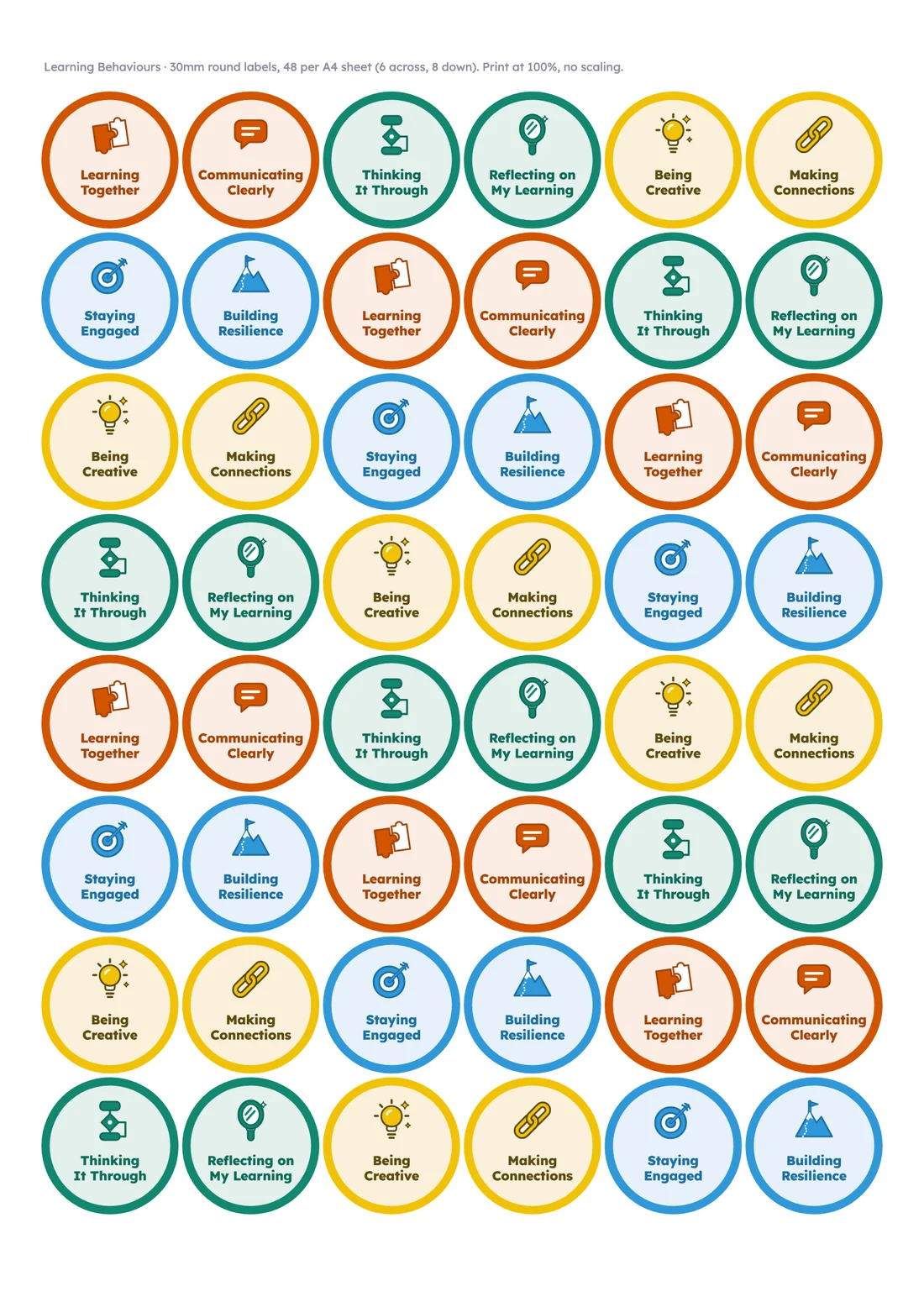
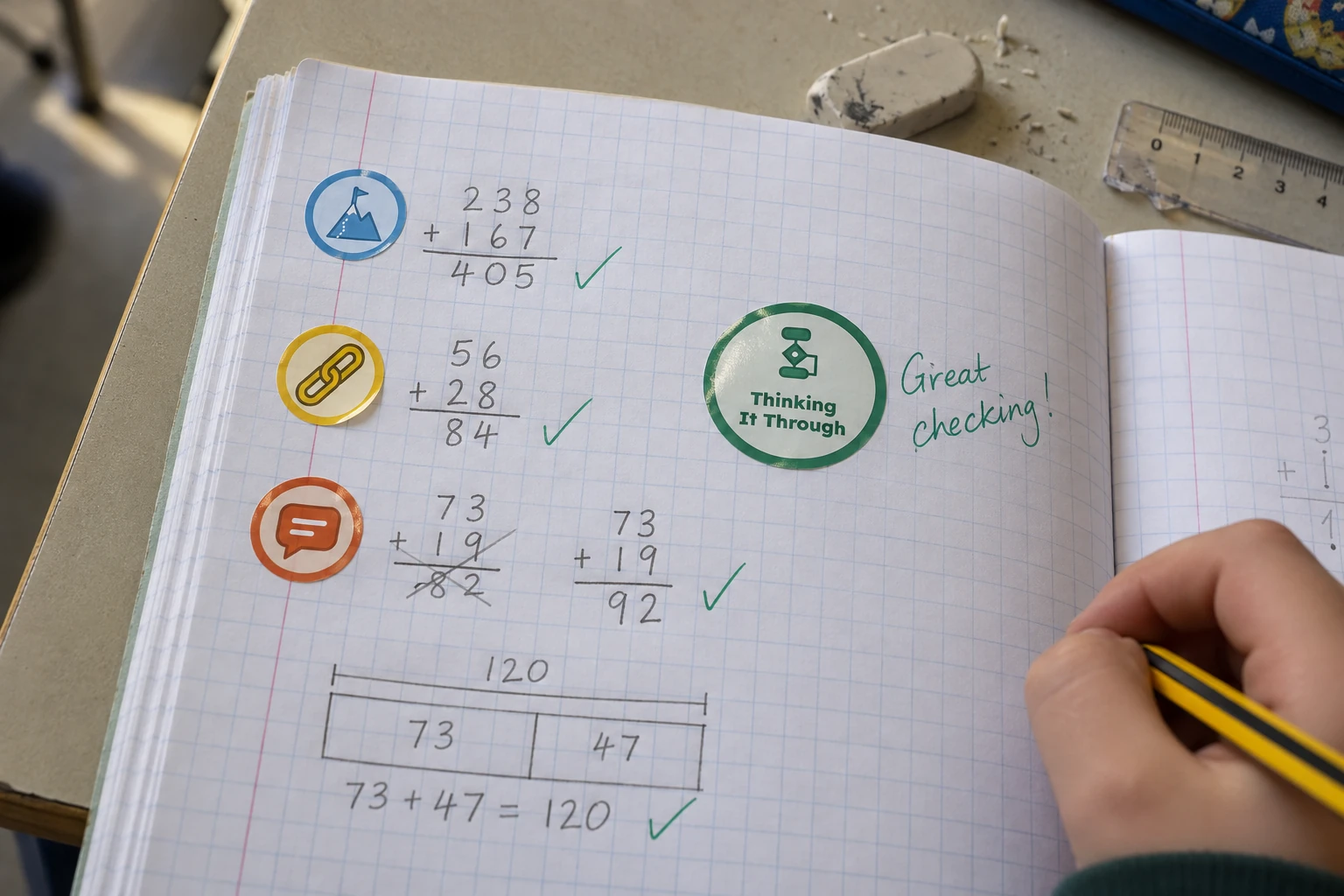
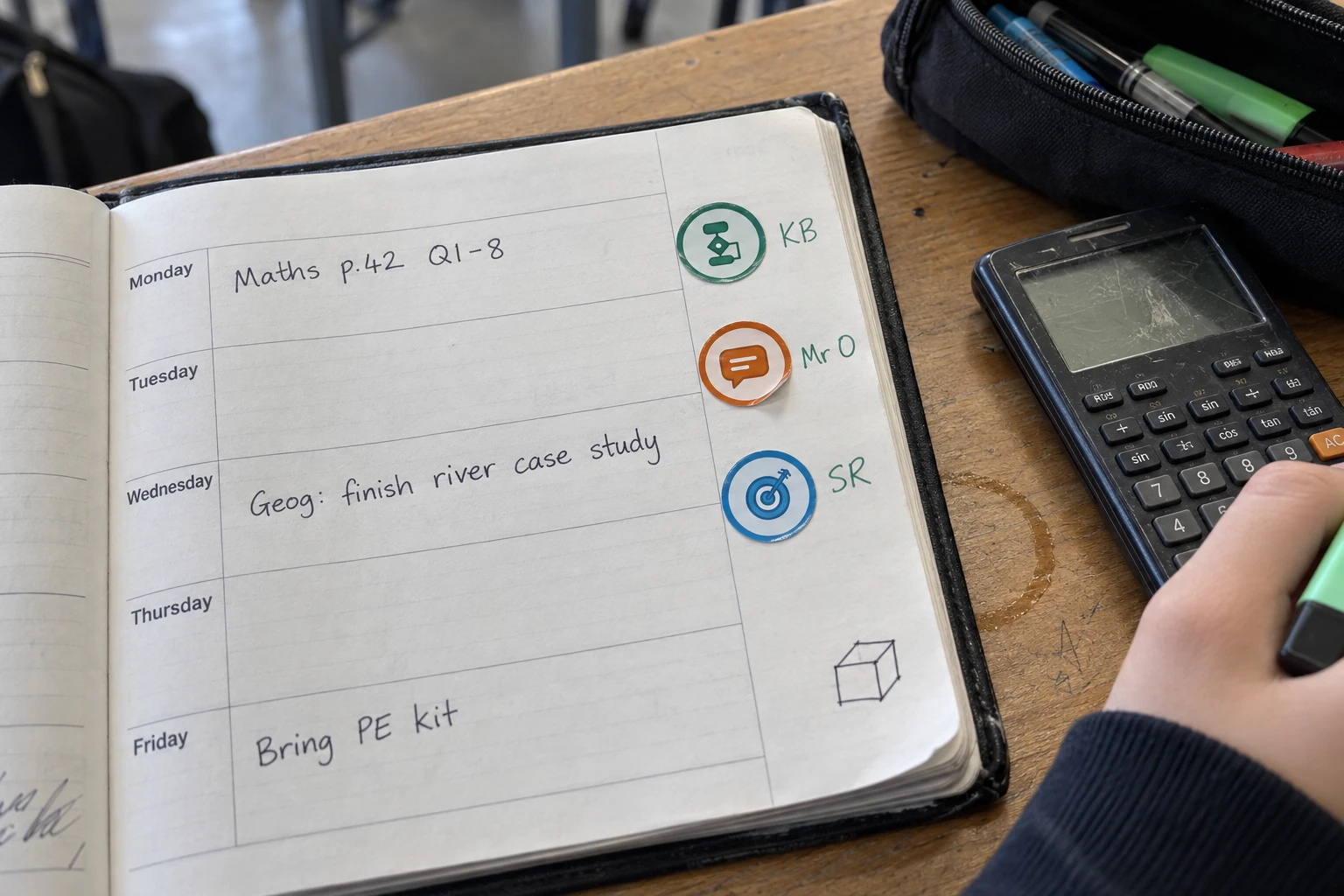
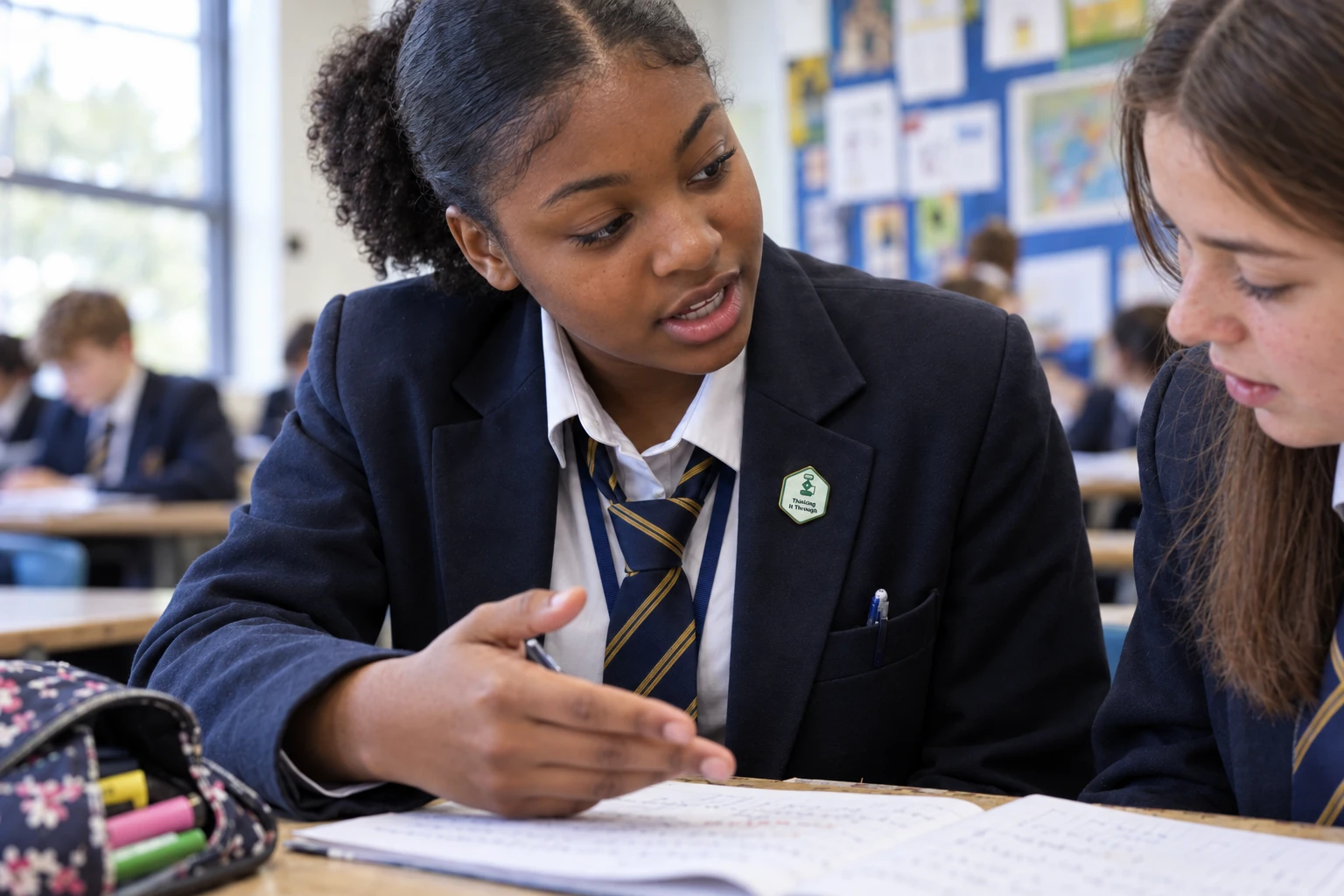
Each behaviour has its own badge, with its name and one simple picture inside, so it reads without relying on colour. The colour shows the strand. The set is three pieces: the hexagon badge with its name, a round sticker with its name, and a small icon-only sticker for books.

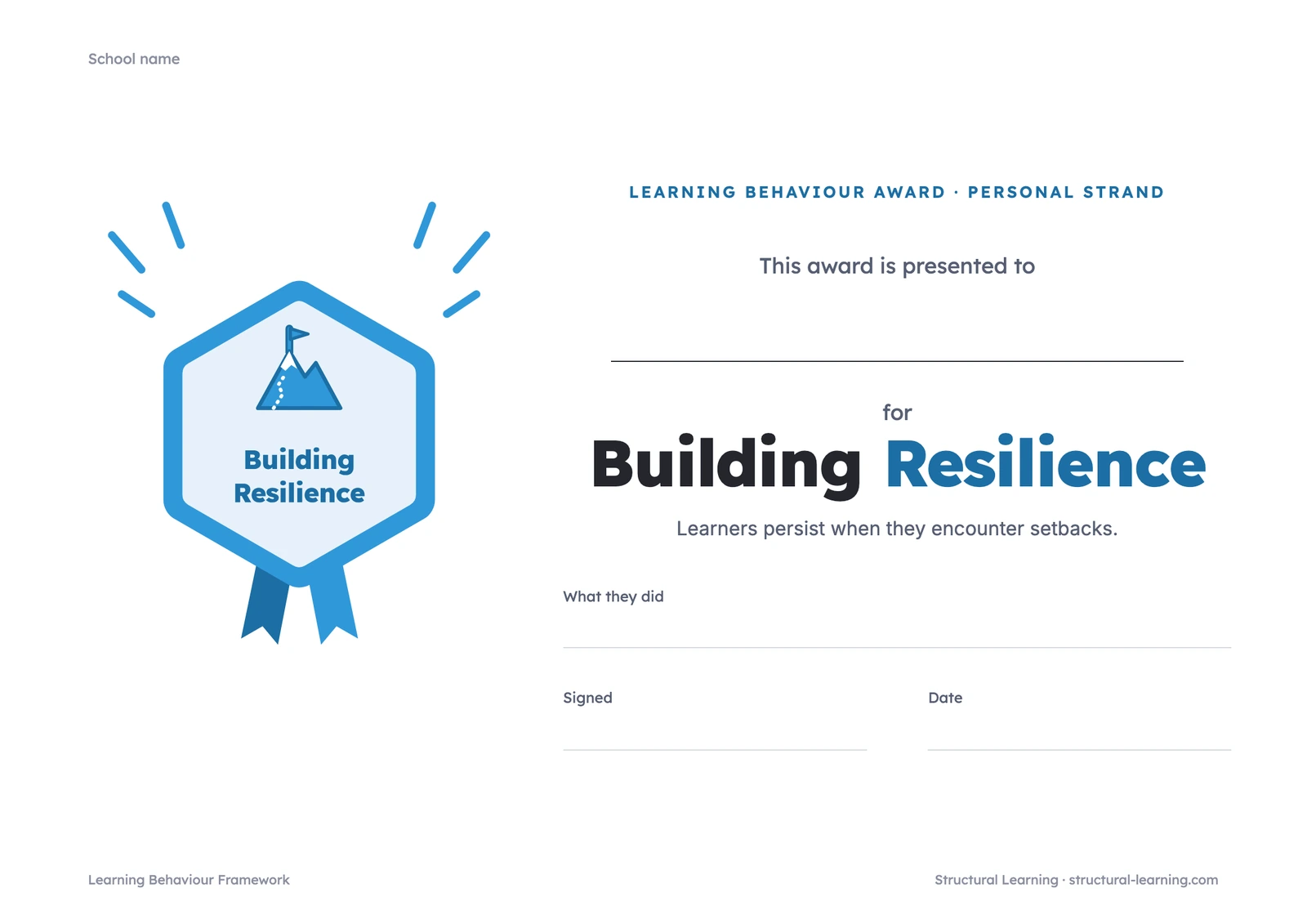
An A4 landscape certificate for Building Resilience: the blue hexagon badge with two ribbon tails, the words This award is presented to, a line for the learner's name, the behaviour as a large headline with its one-line description, a line for what they did, and lines to sign and date.
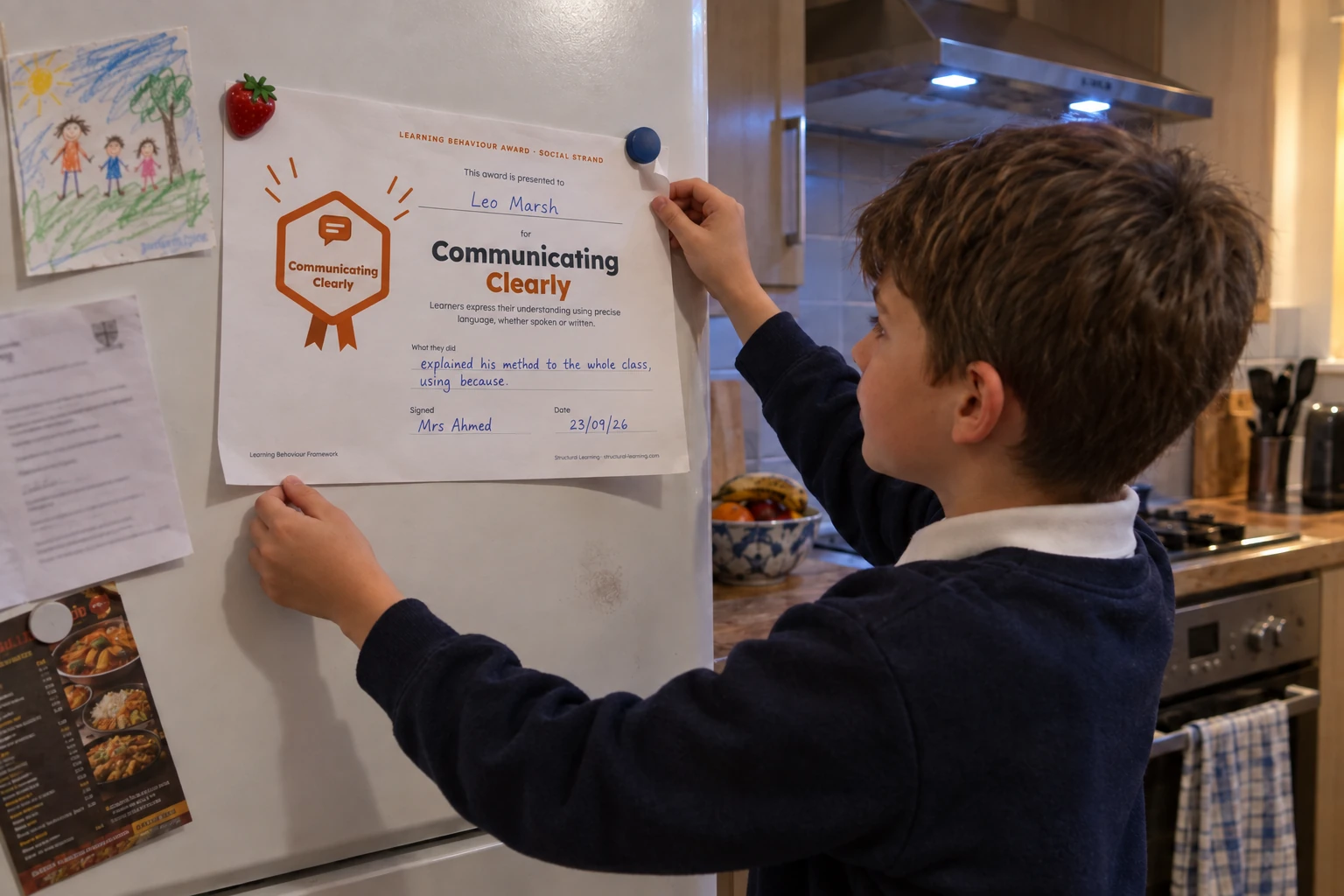
A certificate that goes home. A4, printed on white. The learner's name gets the biggest line, and there is one line for what they did. No levels, no scores: it celebrates what the learner did.
An A4 sheet of 48 round stickers, 30mm across, each a two-tone circle with a behaviour's icon and its name inside.
Round stickers. On standard A4 label sheets: the round sticker with its name at 30mm, 48 to a page, and the small icon-only sticker for books at 19mm, 117 to a page.

In school

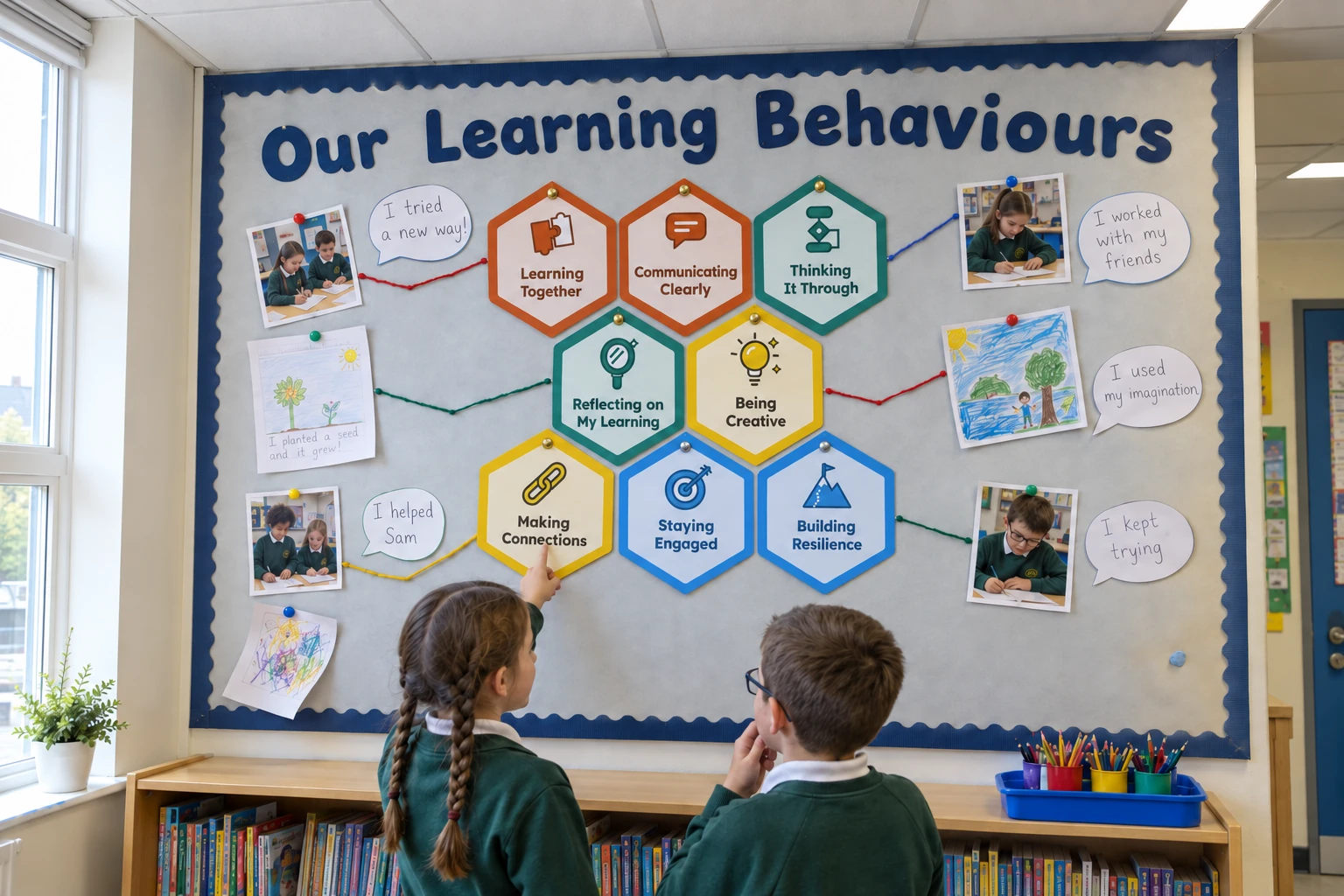
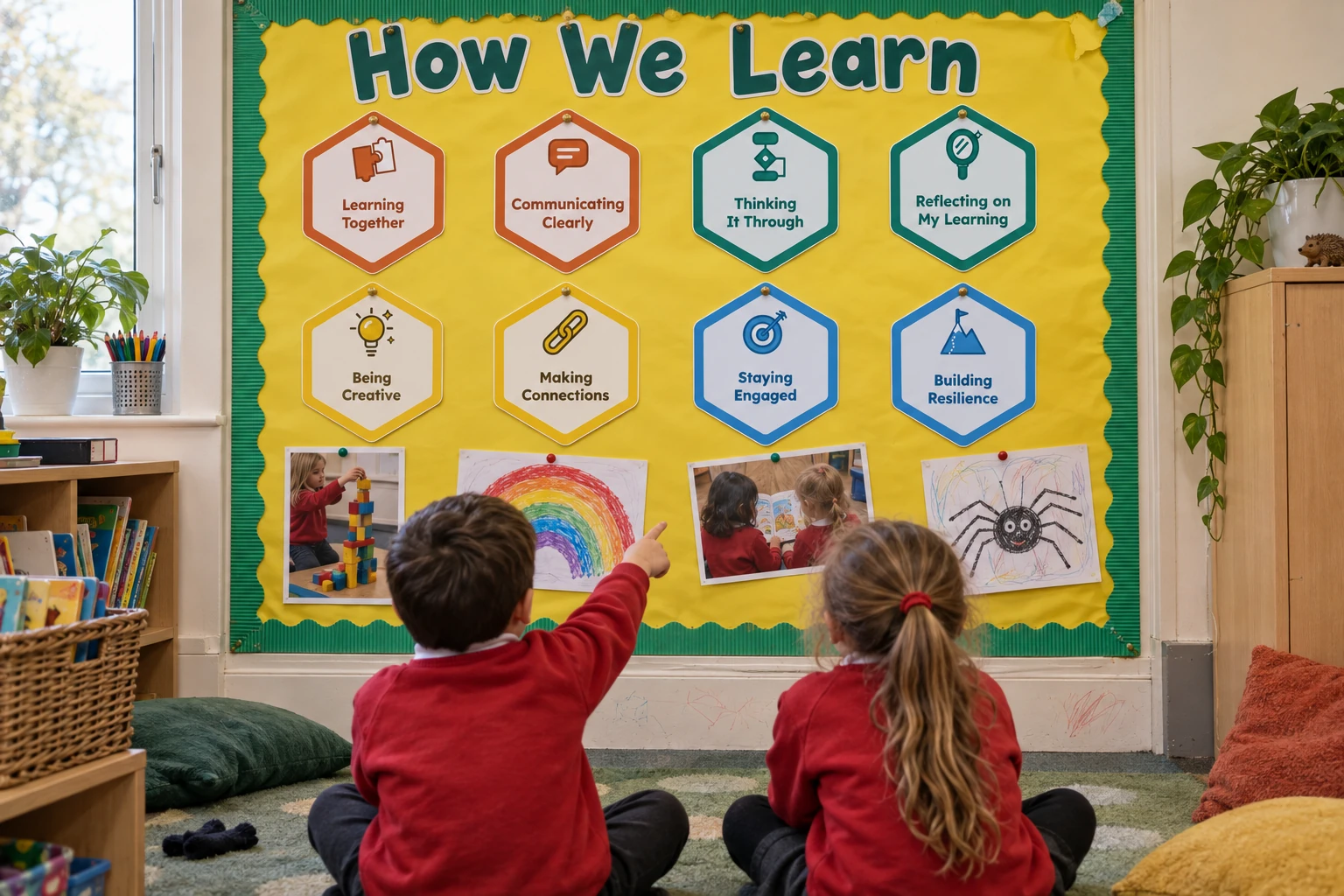
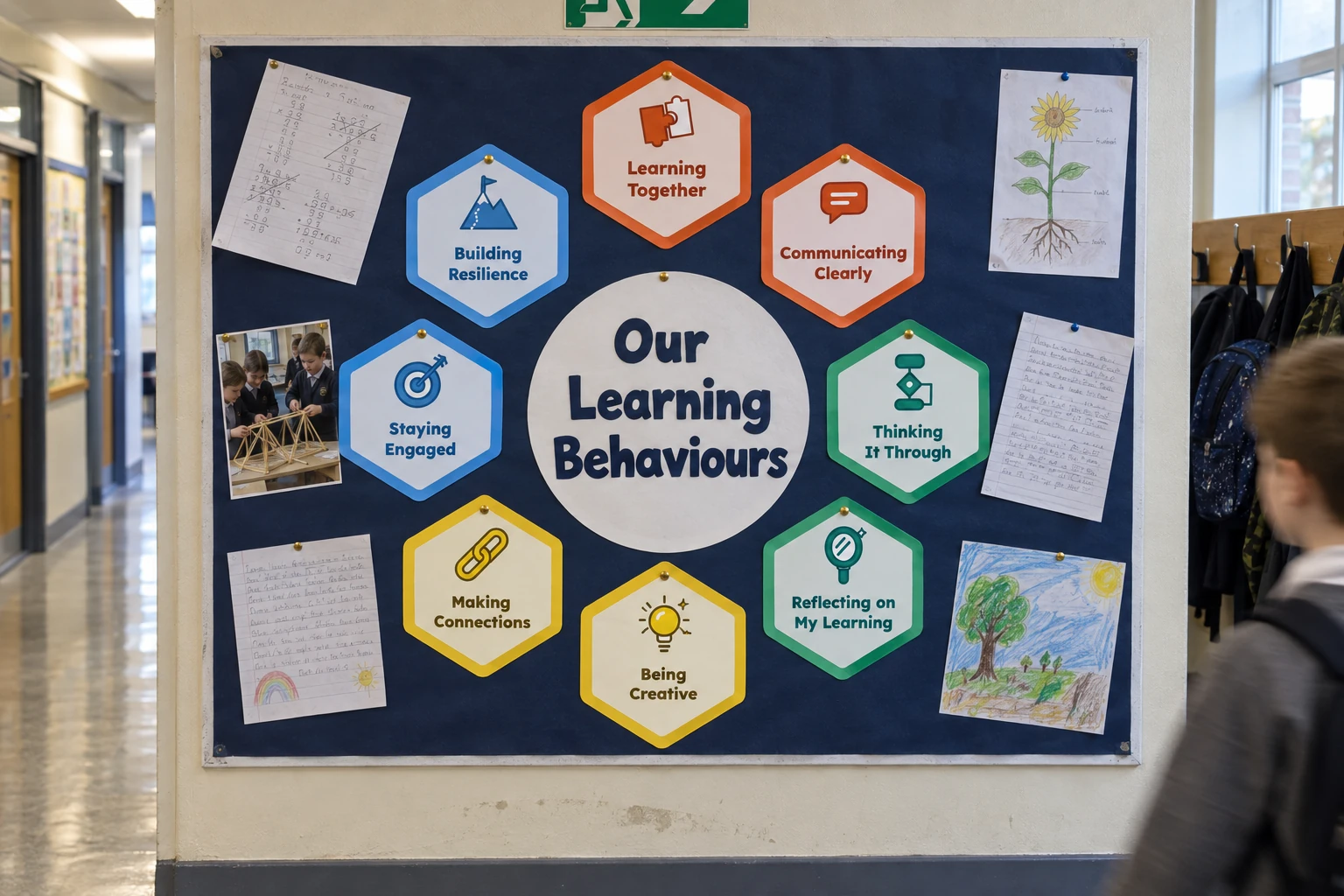
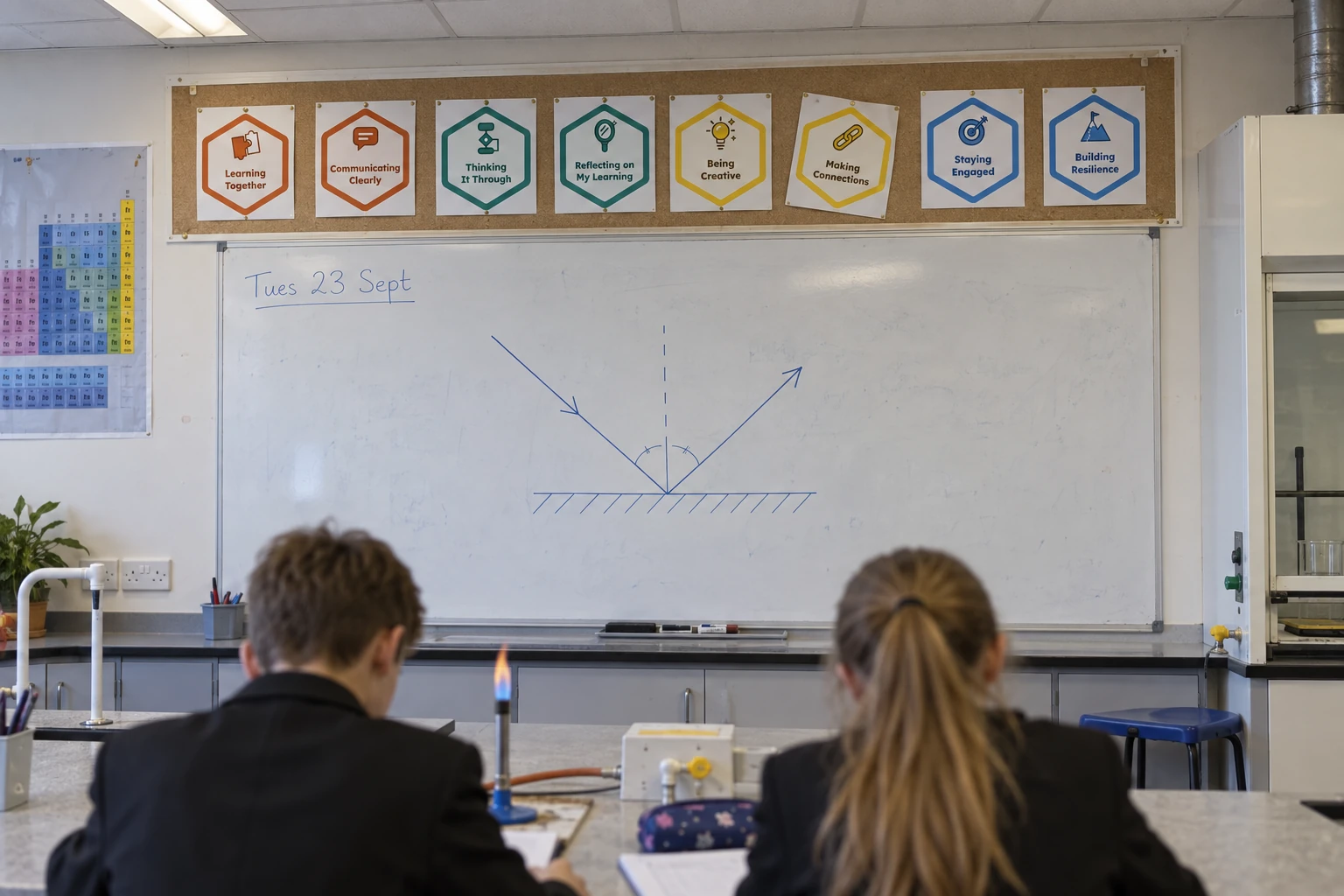
How the badges look in use.

These pictures were made for this page. They are not photographs of real schools.

Where it lives

Keep the language close.

01

In print

Badges, round stickers and a certificate for each behaviour, for books, planners and the classroom wall.

See the badges →
02

In the platform

Teachers can choose one or two behaviours for a lesson, then review a task-specific focus before teaching.

Explore the lesson planner →
03

In staff learning

Use a shared behaviour to discuss what teachers will model, notice and ask learners to explain.

See training →

Evidence

What the evidence supports.

The framework brings together classroom ideas about exploratory talk, metacognition and learning behaviours. We have not measured the effect of the framework on its own, and we will not claim one.

The Structural Learning platform

It all comes to life on the platform.

Choose a learning behaviour for any lesson in the planner, and the lesson tells learners what to try.

Plan a lesson free

Free to start.

Training

Build a shared way to notice learning.

Start with a behaviour that matters to a real lesson. Agree what it looks like, practise naming it and review the evidence together.

A staff launch session, then a workshop. Paul will shape the format around your school.

Talk about training →
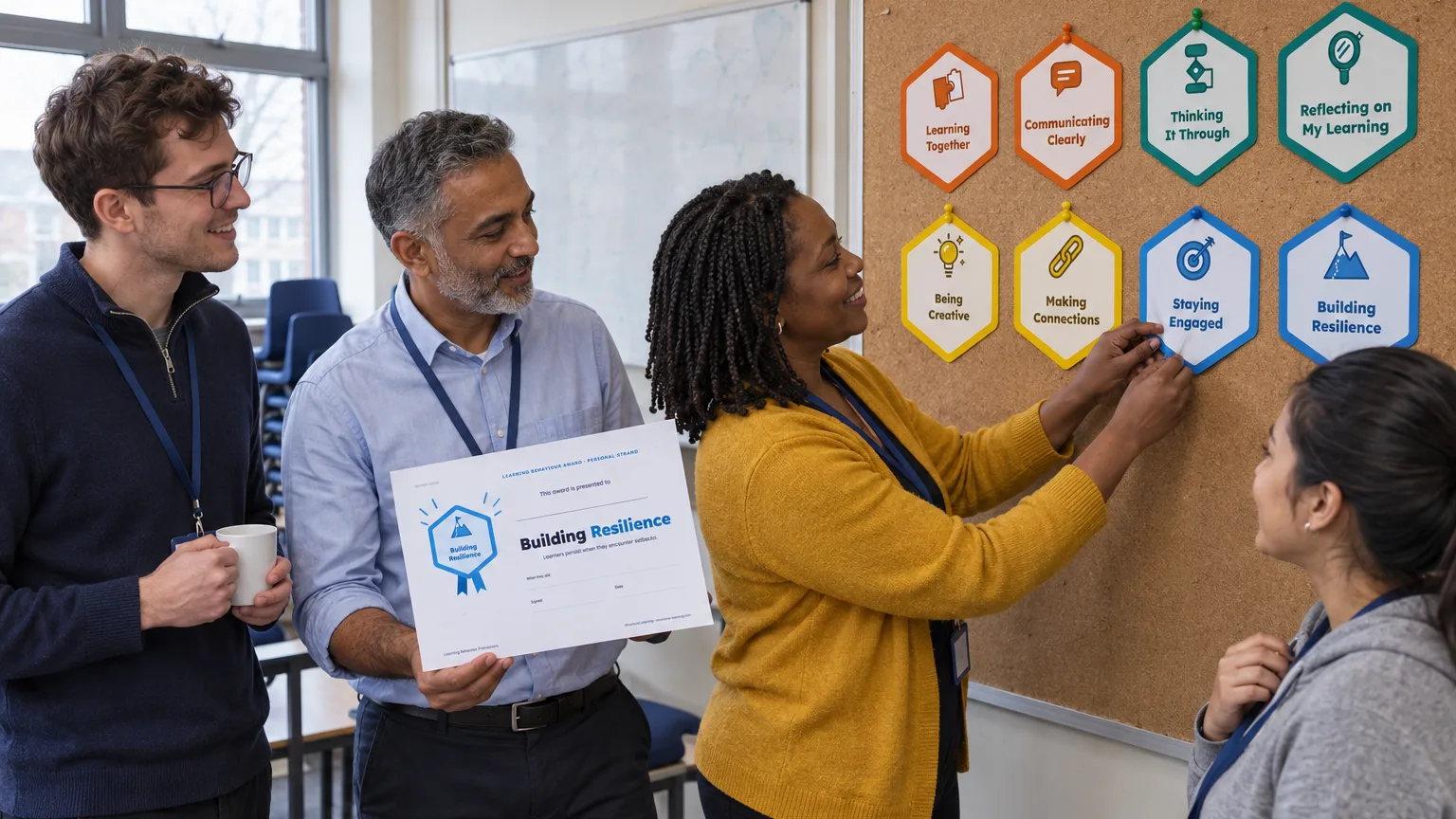
Four teachers at a staff session stand at a noticeboard where the eight Learning Behaviour badges are pinned; one pins up Staying Engaged while another holds a Building Resilience certificate
A Learning Behaviour staff session.

A training programme

One focus for the whole staff.

Each focus stands on its own, so a school can start with the one it needs. Together they make a whole-school programme for primary and secondary, so you can add the others when you are ready.

  1. The Thinking FrameworkThe Thinking Framework

    A shared language for thinking, for every teacher in the room.

    This focus

  2. Map ItMap It

    Graphic organisers that make learners' thinking visible on the page.

    This focus

  3. Say ItSay It

    Oracy: talk routines that give every learner a voice.

    This focus

  4. Build ItBuild It

    Learners build sentences and ideas with Writer's Block, then write them.

    This focus

Learning behaviours run alongside whichever focus you start with: in the planner, any lesson can name one.

The next step

Talk it through with Paul.

Tell me what your school is working on. We can look at where a learning behaviour focus would fit, and whether the framework would help.

Start a conversation

Pick a time that suits you. If you would rather write first, a short note is enough: your school, the age range and the learning behaviour you want to develop.

Book a 20-minute conversation with Paul

Or email paul@structural-learning.com