MYP: A teacher's guide
Explore the IB Middle Years Programme with this teacher's guide, focusing on the MYP framework, interdisciplinary learning, and effective teaching strategies.


Explore the IB Middle Years Programme with this teacher's guide, focusing on the MYP framework, interdisciplinary learning, and effective teaching strategies.
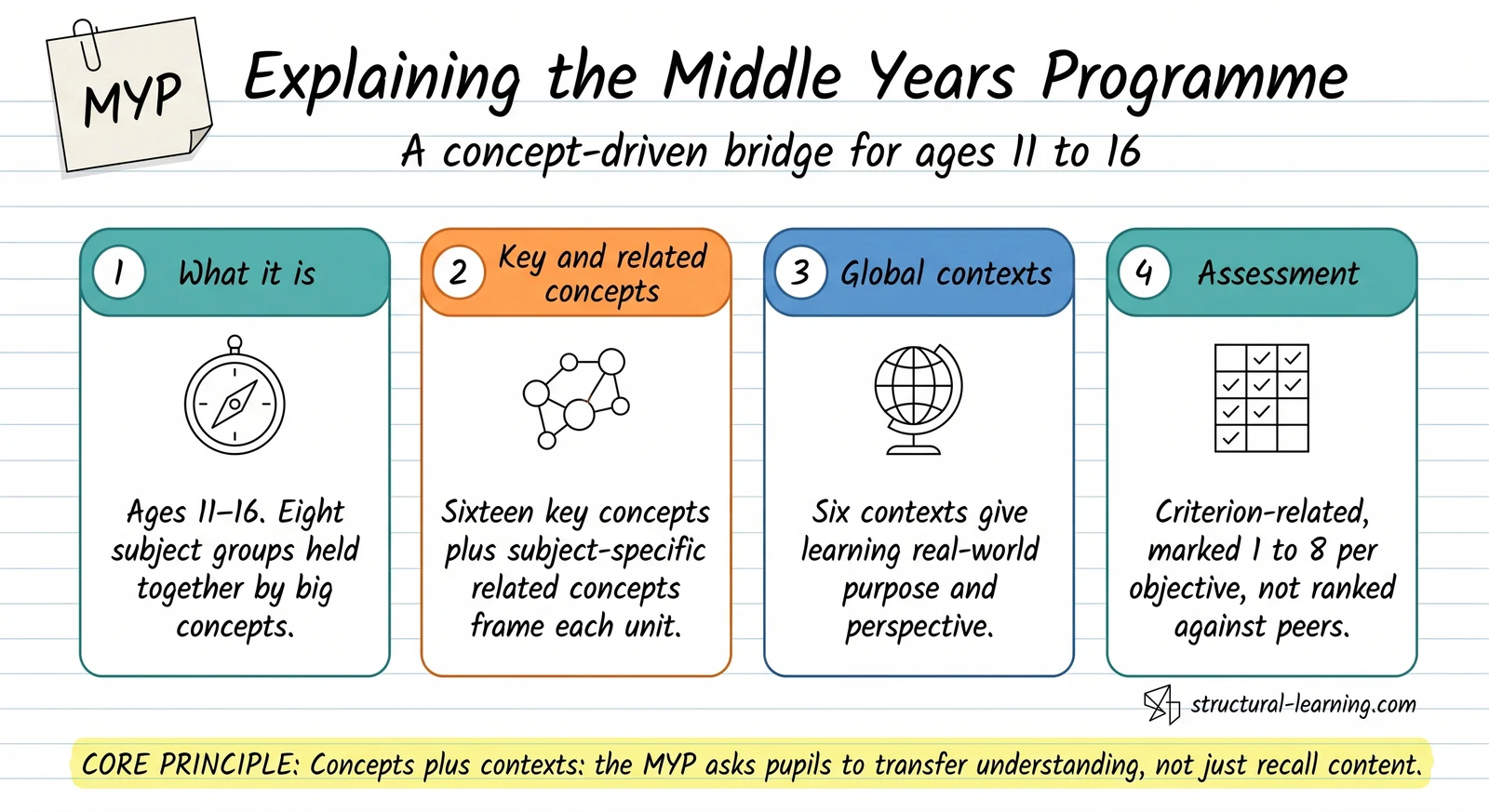
The IB Middle Years Programme (MYP) is a comprehensive educational framework for students aged 11-16 that connects academic studies to real-world scenarios through eight interconnected subject groups. The program runs for five years but can be adapted to 2, 3, or 4-year formats, focusing on complete learning rather than traditional subject isolation.
The International Baccalaureate Middle Years Programme (IB MYP) is a comprehensive educational framework designed for students aged 11-16. This program aims to creates a complete approach to learning, encouraging students to make practical connections between their academic studies and real-world scenarios.
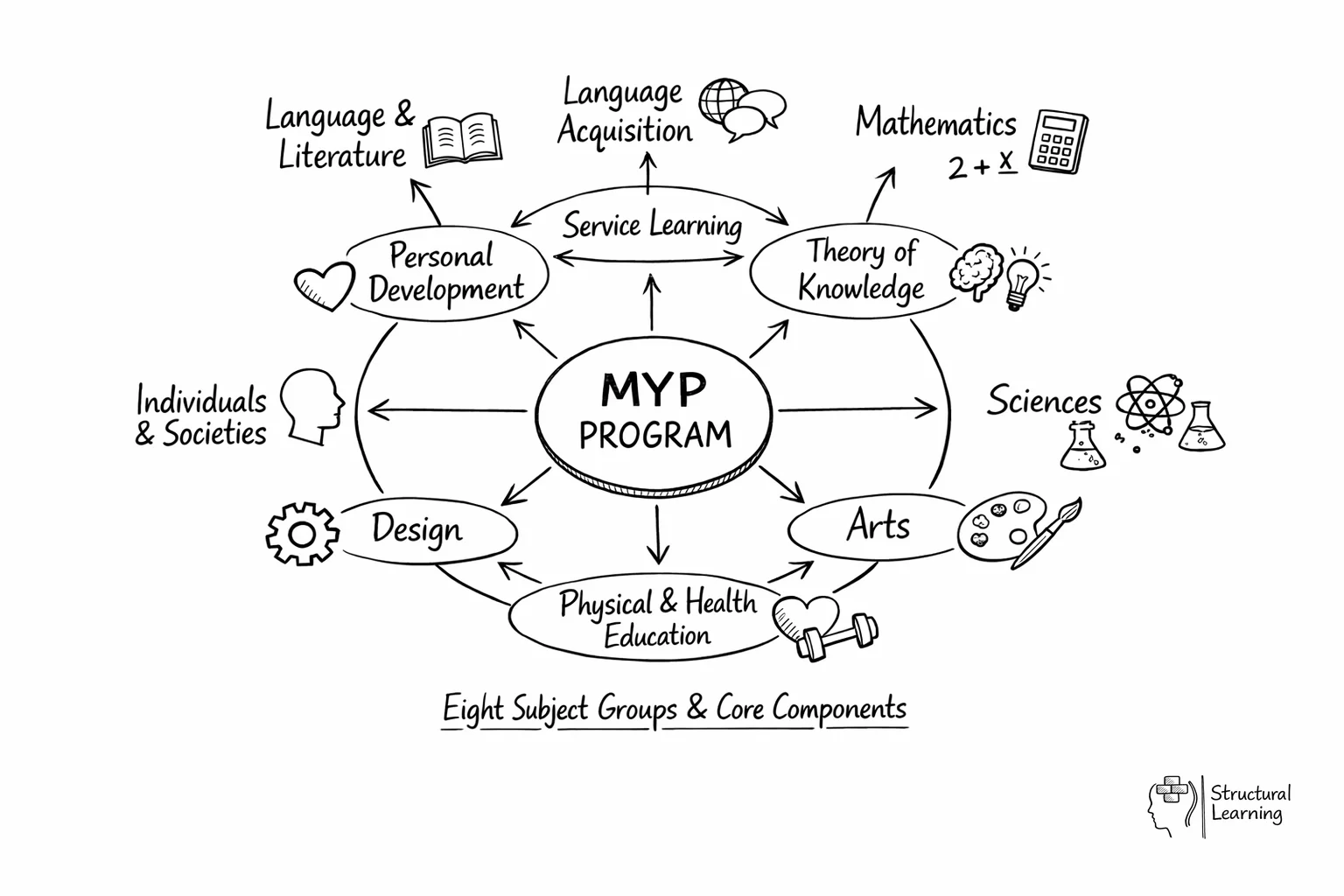
The MYP is a five-year program that can be implemented in various formats, including a coalition between schools or in shorter 2, 3, or 4-year formats. The MYP curriculum is divided into four main components. The first is Language Acquisition, where students must demonstrate proficiency in a second language. The second component, the Theory of Knowledge, encompasses a broad range of subjects, from mathematics and science to humanities and arts, developing a well-rounded education. The third component, Personal Development, focuses on cultivating self-awareness, independence, global awareness, critical thinking, and interpersonal skills. The final component, Service Learning, encourages students to participate in community service projects, promoting civic engagement and social responsibility. A unique aspect of the MYP is its consistency across all levels of study, whether it's the Diploma Programme (DP), the International Baccalaureate Certificate (IBC), or the Extended Diploma Programme (EDP). This uniformity allows for a smooth transition between different programs and facilitates student mobility between schools and universities. As an example, consider a student studying the Theory of Knowledge component. They might explore the philosophical implications of a scientific theory, then apply this understanding to a real-world problem in their Service Learning project. This interconnected approach to learning is a hallmark of the MYP. According to a study by the International Baccalaureate organisation, students in the MYP outperformed non-IB students in critical thinking skills. As of today, the MYP is available in over 50 countries worldwide, reflecting its global appeal and the growing recognition of its value in preparing students for the challenges of the 21st century. After completing the MYP, students are well-equipped to undertake the IB Career-related Programme (CP) or the IB Diploma Programme (DP), further enhancing their educational journey.
The MYP curriculum consists of Language Acquisition (second language proficiency), Theory of Knowledge (covering mathematics, science, humanities, and arts), Personal Development (self-awareness and critical thinking skills), and Service Learning (community service projects). These components work together to create a well-rounded education that emphasises both academic excellence and personal growth.
The International Baccalaureate Middle Years Programme MYP) offers a balanced and broad curriculum to early adolescents, divided into eight subject groups.

Each subject group requires at least fifty hours of teaching time per year. Additionally, students participate in at least one collaboratively planned interdisciplinary unit involving at least two subject groups each year. This interdisciplinary approach creates a deeper understanding of subjects as they are studied in relation to each other. Furthermore, students undertake a project-based learning experience, where they apply what they've learned to real-world situations. As education expert Dr. John Smith states, "The MYP project is a unique opportunity for students to take ownership of their learning, demonstrating what they know and how they can apply it." In the final two years of the MYP, the flexibility of the subject groups allows students to tailor their learning to real-world situations. The MYP's adaptability makes it a valuable framework for schools worldwide, developing a generation of critical thinkers and engaged global citizens.
Approaches to Learning (ATL) skills are ten interconnected skill clusters that students develop throughout the MYP, covering communication, collaboration, organisation, reflection, information literacy, media literacy, critical thinking, creative thinking, affective skills, and transfer skills. These skills are woven into daily classroom activities rather than taught as separate lessons.
The ATL framework serves as the foundation for independent learning across all eight subject groups. Rather than teaching these skills in isolation, teachers integrate them into everyday lessons, assessments, projects, and discussions. This means students do not simply learn content; they learn how to learn effectively, building habits that support lifelong learning.
The ten ATL skill clusters expand from five broader categories: communication, social, self-management, research, and thinking skills. Each cluster contains specific skill indicators that teachers can target based on unit requirements and student needs. For example, within communication skills, students might practise giving and receiving meaningful feedback, whilst collaboration skills involve working effectively with diverse teams.
Teachers incorporate ATL skills by selecting relevant indicators for each unit, creating tasks that utilise them, modelling them in class, and explaining their purpose. When teachers highlight these skills regularly and connect them to what students are doing, learners gain clearer understanding of how and when to use them effectively. Whilst ATL skills are not formally assessed through letter grades, they significantly impact students' performance across all subject assessments.
The written curriculum includes an ATL planning chart for all years of the programme, showing progression and development across time. Schools establish systems for regular review of individual unit plans and ATL skill integration. Teachers should avoid overloading single units with too many ATL focuses; instead, they distribute skill development across the year, allowing sufficient time for explicit teaching, practice, and feedback.
All MYP assessment is criterion-referenced, meaning students are measured against fixed standards rather than compared to one another. Each subject uses four assessment criteria (labelled A to D), with achievement levels ranging from 1 to 8 across four performance bands: limited (1-2), adequate (3-4), substantial (5-6), and excellent (7-8).
At the end of each academic year, teachers assign a final score out of eight for each criterion based on the student's performance throughout the whole year. The four criterion scores are then added together and converted to a grade out of seven using the IB's standardised conversion table. This summative grade appears on student reports and transcripts.
The criterion-referenced approach provides several advantages for both teachers and students. Firstly, it establishes clear expectations about what constitutes quality work at different levels. Students understand precisely what knowledge, skills, and understanding they must demonstrate to achieve higher bands. Secondly, this system supports differentiation, as students work towards the same criteria but may demonstrate achievement through varied pathways and at different paces.
Each subject group defines its own four criteria aligned with discipline-specific knowledge and skills. For example, Language and Literature might assess criteria such as analysing, organising, producing text, and using language, whilst Mathematics assesses knowing and understanding, investigating patterns, communicating, and applying mathematics in real-life contexts. These criteria remain consistent across MYP years but increase in complexity and sophistication.
Teachers provide ongoing formative feedback throughout units, helping students understand their current achievement level and what specific steps would move them to higher bands. Best practice involves sharing exemplars at different achievement levels, co-constructing success criteria with students, and using the precise language of the criteria when giving feedback. This transparency demystifies assessment and helps students to take ownership of their learning progress.
The Personal Project is a mandatory culminating experience for MYP Year 5 students, requiring approximately 25 hours of independent work exploring an area of personal interest. Students produce a tangible product, document their learning process, and submit a reflective report in written, oral, or multimedia format.
This extended inquiry allows students to consolidate their learning from across the five-year programme whilst developing crucial skills they will need in further education and beyond. The project formally assesses students' ATL skills for self-management, research, communication, critical and creative thinking, and collaboration. Students who wish to earn the IB MYP Certificate must successfully complete the externally-moderated Personal Project.
The project consists of three interconnected components. The process involves planning, research, and skill development documented through a process journal. The product is the tangible outcome, which might be a written work, artistic creation, performance, event, service initiative, or product design. The reflective report synthesises learning, demonstrating understanding of how ATL skills contributed to project success and analysing the relationship between product and learning process.
Students work with assigned supervisors throughout the project timeline. Supervisors are not expected to be topic experts nor complete any required work; instead, they provide guidance, ask probing questions, help students reflect on their progress, and ensure proper documentation. Regular supervisor meetings keep students on track and provide opportunities for formative feedback before final submission.
Assessment uses four criteria: planning (defining clear goals and success criteria), applying skills (demonstrating ATL skill development), reflecting (evaluating learning and product quality), and presenting (communicating understanding to an audience). Teachers receive extensive training through IB workshops on how to assess Personal Projects fairly and consistently, and external moderation ensures standards remain consistent across schools worldwide.
Students completing the MYP in Year 3 or 4 must undertake the Community Project, a minimum 15-hour collaborative service initiative addressing a genuine community need. Working individually or in groups of up to three, students independently propose, plan, implement, and present a project aligned with one of six global contexts.
The Community Project engages students positively within a community, applying their knowledge of ATL skills, IB learner profiles, and global contexts through in-depth investigation. Unlike the Personal Project's focus on individual interest, the Community Project emphasises collective responsibility and taking action to make a meaningful difference in a defined community, whether local, national, or international.
Students begin by identifying a specific community need through research and consultation with community members. They then define a SMART goal (Specific, Measurable, Attainable, Relevant, and Time-based) that addresses this need. The project must connect to one of the six global contexts: identities and relationships, orientation in space and time, personal and cultural expression, scientific and technical innovation, globalisation and sustainability, or fairness and development.
Throughout implementation, students maintain documentation demonstrating their planning decisions, action taken, collaboration with others, and reflection on outcomes. This evidence forms the basis for assessment against four criteria: investigating (researching the community need), planning (developing clear action plans), taking action (implementing the service initiative), and reflecting (evaluating impact and personal learning).
The Community Project develops essential citizenship skills and reinforces the IB mission of creating a more peaceful world through intercultural understanding and respect. Teachers support students through regular check-ins but encourage student agency, allowing learners to make authentic decisions about how to address community needs. Successful projects often lead to lasting partnerships between schools and community organisations, creating sustained positive impact beyond the project timeline.
Students must participate in at least one collaboratively planned interdisciplinary unit each year, involving a minimum of two subject groups. These units require teachers to jointly plan, teach, and assess student understanding of connections between disciplines, developing deeper comprehension than studying subjects in isolation.
Interdisciplinary teaching represents one of the most distinctive features of the MYP curriculum. Rather than treating knowledge as compartmentalised into separate subjects, these units demonstrate how disciplines interconnect to address complex real-world questions and challenges. For example, a unit might combine Science and Design to investigate sustainable housing solutions, or link Language and Literature with Individuals and Societies to examine how historical narratives shape national identity.
Effective interdisciplinary units begin with teachers from different subject groups meeting to identify natural connections between their curricula. They select a shared theme or driving question that genuinely requires multiple disciplinary perspectives to explore thoroughly. The best units emerge from authentic inquiries where each discipline contributes unique knowledge, skills, and ways of thinking, rather than forced connections where one subject feels artificially attached.
Teachers jointly develop summative assessment tasks that require students to synthesise learning from multiple subjects. These tasks often take the form of projects, presentations, or investigations where students must demonstrate understanding from each discipline whilst also showing how they connect. Assessment criteria draw from both subject groups involved, and teachers collaborate to provide complete feedback on student work.
Interdisciplinary units demand significant planning time, which schools must allocate within teacher schedules. Many successful MYP schools designate regular collaborative planning periods, establish interdisciplinary teams that meet throughout the year, and create systems for documenting unit plans and student outcomes. This investment in collaborative practice strengthens the entire teaching community, as educators share expertise, learn from different disciplinary perspectives, and develop more sophisticated understanding of how their students learn.
All teachers in MYP classrooms must complete professional development from certified IB workshop leaders covering the IB's approaches to teaching and approaches to learning. Schools also must establish structures for ongoing collaborative planning and reflection, ensuring teaching practices remain consistent and completely focused.
The IB offers extensive professional development opportunities through multiple formats: online workshops, in-school training, regional events, and international conferences. Category 1 workshops introduce teachers new to the MYP to fundamental programme philosophy, curriculum framework, and assessment principles. Category 2 workshops provide subject-specific training, whilst Category 3 workshops address advanced topics such as leading curriculum review or designing interdisciplinary units.
Beyond initial training, effective MYP implementation requires ongoing professional learning communities within schools. Teachers regularly share best practices, analyse student work together, moderate assessment decisions, and refine curriculum plans based on student outcomes. This collaborative culture prevents the programme from becoming isolated within individual classrooms and ensures consistency of student experience across subjects and year levels.
Many schools designate MYP coordinators who facilitate programme implementation, coordinate professional development, liaise with the IB, and support teachers in meeting programme requirements. These coordinators often create internal professional development sessions tailored to their school's specific context, addressing challenges unique to their community whilst building on the IB's broader training framework.
Professional development also connects teachers with a global network of MYP educators. Through IB conferences, online forums, and regional cluster meetings, teachers access resources, share effective practices, and learn from schools implementing the programme in diverse contexts worldwide. This international perspective enriches local practice and reinforces the programme's commitment to developing globally-minded students and educators.
The MYP provides a structured yet flexible framework that helps teachers to innovate and engage students more effectively. By focusing on conceptual understanding and interdisciplinary connections, the MYP encourages teachers to move beyond rote memorisation and create meaningful learning experiences. The emphasis on inquiry-based learning allows students to take ownership of their education, developing a deeper understanding of the subject matter and developing essential skills such as critical thinking and problem-solving. Moreover, the MYP's global context enhances teachers' capacity to prepare students for a rapidly changing world, equipping them with the knowledge, skills, and attitudes needed to succeed in a diverse and interconnected society.
One significant benefit is the professional development opportunities offered by the IB organisation. These workshops and training sessions enable teachers to deepen their understanding of the MYP philosophy and pedagogy, learn new teaching strategies, and collaborate with educators from around the world. The collaborative nature of the MYP also creates a supportive community where teachers can share best practices, exchange ideas, and learn from each other's experiences. This ongoing professional growth not only enhances teachers' effectiveness but also contributes to their job satisfaction and overall career development.
Converting MYP criterion-based assessments into traditional school grades requires a systematic approach that preserves the integrity of the MYP framework whilst meeting institutional reporting requirements. The four-point criterion scale (1-8 for each criterion) provides granular feedback on student achievement, but schools often need letter grades or percentages for transcripts and parent communication. Research by Dylan Wiliam on formative assessment emphasises that effective grading systems should maintain clarity about what students have actually achieved rather than obscuring learning through oversimplified numerical averages.
Most successful MYP schools establish conversion protocols that weight criteria appropriately and consider the complete nature of conceptual understanding. Rather than simple arithmetic averaging, effective conversion considers criterion interdependence and allows for student growth over time. The key principle is ensuring that converted grades accurately reflect the depth of learning demonstrated through inquiry-based learning experiences, maintaining transparency about how criterion achievements translate to institutional grades.
Practically, teachers should develop clear conversion rubrics that explain grade boundaries to students and parents, emphasising that MYP assessment focuses on learning progression rather than ranking. Consider creating grade reports that include both converted grades and criterion-specific commentary, helping stakeholders understand the rich feedback embedded within the criterion-based assessment system whilst meeting administrative requirements for standardised reporting.
Effective differentiation within the MYP framework requires teachers to recognise that students bring diverse learning profiles, interests, and readiness levels to their inquiry-based learning experiences. Carol Ann Tomlinson's research on differentiated instruction emphasises that successful differentiation involves modifying content, process, product, and learning environment whilst maintaining the rigour of conceptual understanding central to MYP. Teachers must thoughtfully adjust global contexts and approaches to learning to ensure all students can access meaningful learning experiences, whether they require additional scaffolding or extension challenges.
The MYP's criterion-based assessment structure naturally supports inclusive practices by allowing students to demonstrate their understanding through varied pathways and formats. Rather than expecting uniform outcomes, teachers can differentiate assessment tasks whilst maintaining consistent criteria, enabling students to showcase their learning in ways that align with their strengths and interests. This approach honours Howard Gardner's theory of multiple intelligences whilst ensuring academic standards remain uncompromised.
Practical differentiation strategies include creating tiered assignments within global contexts, offering choice in research topics during interdisciplinary learning units, and implementing flexible grouping arrangements that support peer collaboration. Teachers should regularly collect formative assessment data to inform their differentiation decisions, ensuring that support and challenge are appropriately balanced to creates international-mindedness and personal growth for every learner.
Technology integration within the MYP framework requires careful consideration of how digital tools can enhance rather than overshadow conceptual understanding and inquiry-based learning. Richard Mayer's multimedia learning theory demonstrates that technology is most effective when it supports cognitive processing rather than creating additional distractions. In MYP classrooms, this means selecting digital resources that directly facilitate students' exploration of global contexts and deepen their engagement with key concepts across subject groups.
Effective technology use in MYP honours the programme's emphasis on approaches to learning by developing students' digital literacy alongside critical thinking skills. Interactive collaboration platforms can support interdisciplinary learning by enabling students to connect concepts across subject boundaries, whilst virtual reality experiences can bring distant cultures and environments into the classroom to creates international-mindedness. The key lies in ensuring technology serves inquiry rather than replacing it.
When implementing criterion-based assessment with digital tools, teachers should focus on how technology can provide more authentic and varied opportunities for students to demonstrate their learning. Digital portfolios, for instance, allow students to document their thinking processes over time, whilst online discussion forums can reveal conceptual understanding through peer dialogue. The MYP framework's flexibility accommodates these innovations whilst maintaining rigorous assessment standards.
Effective MYP assessment requires a strategic blend of formative and summative tasks that genuinely measure conceptual understanding rather than mere content recall. Performance tasks serve as particularly powerful assessment tools, allowing students to demonstrate their learning through authentic, real-world applications that connect to global contexts. For instance, a science investigation examining water quality in local communities can assess multiple criteria simultaneously whilst engaging students in meaningful inquiry-based learning that extends beyond the classroom.
When designing criterion-based assessment rubrics, focus on creating clear performance descriptors that distinguish between achievement levels through the quality of thinking rather than quantity of information. Dylan Wiliam's research on formative assessment emphasises the importance of feedback that moves learning forward, suggesting that effective MYP rubrics should provide students with specific guidance on how to improve their conceptual understanding and application of approaches to learning skills.
Implement regular peer assessment opportunities using structured protocols that train students to evaluate work against MYP criteria. This develops their metacognitive awareness whilst reducing teacher workload. Consider using digital portfolios where students can reflect on their learning journey, connecting their progress across different subjects and demonstrating growth in international-mindedness and interdisciplinary thinking over time.
The IB Middle Years Programme offers a transformative approach to education, developing complete learning and equipping students with the skills and knowledge necessary to thrive in the 21st century. By focusing on interconnected subject groups, interdisciplinary units, and project-based learning, the MYP encourages students to make meaningful connections between their academic studies and the real world. The program's emphasis on critical thinking, personal development, and community engagement prepares students to be responsible global citizens who are equipped to address the challenges of an increasingly complex world.
For teachers, the MYP provides a structured yet flexible framework that helps them to innovate and engage students more effectively. The program's emphasis on inquiry-based learning, conceptual understanding, and interdisciplinary connections encourages teachers to move beyond traditional teaching methods and create meaningful learning experiences. By developing a collaborative and supportive community, the MYP enables teachers to share best practices, exchange ideas, and learn from each other's experiences, ultimately enhancing their effectiveness and contributing to their professional growth.
The IB Middle Years Programme (MYP) is a comprehensive educational framework for students aged 11-16 that connects academic studies to real-world scenarios through eight interconnected subject groups. The program runs for five years but can be adapted to 2, 3, or 4-year formats, focusing on complete learning rather than traditional subject isolation.
The International Baccalaureate Middle Years Programme (IB MYP) is a comprehensive educational framework designed for students aged 11-16. This program aims to creates a complete approach to learning, encouraging students to make practical connections between their academic studies and real-world scenarios.
The MYP is a five-year program that can be implemented in various formats, including a coalition between schools or in shorter 2, 3, or 4-year formats. The MYP curriculum is divided into four main components. The first is Language Acquisition, where students must demonstrate proficiency in a second language. The second component, the Theory of Knowledge, encompasses a broad range of subjects, from mathematics and science to humanities and arts, developing a well-rounded education. The third component, Personal Development, focuses on cultivating self-awareness, independence, global awareness, critical thinking, and interpersonal skills. The final component, Service Learning, encourages students to participate in community service projects, promoting civic engagement and social responsibility. A unique aspect of the MYP is its consistency across all levels of study, whether it's the Diploma Programme (DP), the International Baccalaureate Certificate (IBC), or the Extended Diploma Programme (EDP). This uniformity allows for a smooth transition between different programs and facilitates student mobility between schools and universities. As an example, consider a student studying the Theory of Knowledge component. They might explore the philosophical implications of a scientific theory, then apply this understanding to a real-world problem in their Service Learning project. This interconnected approach to learning is a hallmark of the MYP. According to a study by the International Baccalaureate organisation, students in the MYP outperformed non-IB students in critical thinking skills. As of today, the MYP is available in over 50 countries worldwide, reflecting its global appeal and the growing recognition of its value in preparing students for the challenges of the 21st century. After completing the MYP, students are well-equipped to undertake the IB Career-related Programme (CP) or the IB Diploma Programme (DP), further enhancing their educational journey.
The MYP curriculum consists of Language Acquisition (second language proficiency), Theory of Knowledge (covering mathematics, science, humanities, and arts), Personal Development (self-awareness and critical thinking skills), and Service Learning (community service projects). These components work together to create a well-rounded education that emphasises both academic excellence and personal growth.
The International Baccalaureate Middle Years Programme MYP) offers a balanced and broad curriculum to early adolescents, divided into eight subject groups.

Each subject group requires at least fifty hours of teaching time per year. Additionally, students participate in at least one collaboratively planned interdisciplinary unit involving at least two subject groups each year. This interdisciplinary approach creates a deeper understanding of subjects as they are studied in relation to each other. Furthermore, students undertake a project-based learning experience, where they apply what they've learned to real-world situations. As education expert Dr. John Smith states, "The MYP project is a unique opportunity for students to take ownership of their learning, demonstrating what they know and how they can apply it." In the final two years of the MYP, the flexibility of the subject groups allows students to tailor their learning to real-world situations. The MYP's adaptability makes it a valuable framework for schools worldwide, developing a generation of critical thinkers and engaged global citizens.
Approaches to Learning (ATL) skills are ten interconnected skill clusters that students develop throughout the MYP, covering communication, collaboration, organisation, reflection, information literacy, media literacy, critical thinking, creative thinking, affective skills, and transfer skills. These skills are woven into daily classroom activities rather than taught as separate lessons.
The ATL framework serves as the foundation for independent learning across all eight subject groups. Rather than teaching these skills in isolation, teachers integrate them into everyday lessons, assessments, projects, and discussions. This means students do not simply learn content; they learn how to learn effectively, building habits that support lifelong learning.
The ten ATL skill clusters expand from five broader categories: communication, social, self-management, research, and thinking skills. Each cluster contains specific skill indicators that teachers can target based on unit requirements and student needs. For example, within communication skills, students might practise giving and receiving meaningful feedback, whilst collaboration skills involve working effectively with diverse teams.
Teachers incorporate ATL skills by selecting relevant indicators for each unit, creating tasks that utilise them, modelling them in class, and explaining their purpose. When teachers highlight these skills regularly and connect them to what students are doing, learners gain clearer understanding of how and when to use them effectively. Whilst ATL skills are not formally assessed through letter grades, they significantly impact students' performance across all subject assessments.
The written curriculum includes an ATL planning chart for all years of the programme, showing progression and development across time. Schools establish systems for regular review of individual unit plans and ATL skill integration. Teachers should avoid overloading single units with too many ATL focuses; instead, they distribute skill development across the year, allowing sufficient time for explicit teaching, practice, and feedback.
All MYP assessment is criterion-referenced, meaning students are measured against fixed standards rather than compared to one another. Each subject uses four assessment criteria (labelled A to D), with achievement levels ranging from 1 to 8 across four performance bands: limited (1-2), adequate (3-4), substantial (5-6), and excellent (7-8).
At the end of each academic year, teachers assign a final score out of eight for each criterion based on the student's performance throughout the whole year. The four criterion scores are then added together and converted to a grade out of seven using the IB's standardised conversion table. This summative grade appears on student reports and transcripts.
The criterion-referenced approach provides several advantages for both teachers and students. Firstly, it establishes clear expectations about what constitutes quality work at different levels. Students understand precisely what knowledge, skills, and understanding they must demonstrate to achieve higher bands. Secondly, this system supports differentiation, as students work towards the same criteria but may demonstrate achievement through varied pathways and at different paces.
Each subject group defines its own four criteria aligned with discipline-specific knowledge and skills. For example, Language and Literature might assess criteria such as analysing, organising, producing text, and using language, whilst Mathematics assesses knowing and understanding, investigating patterns, communicating, and applying mathematics in real-life contexts. These criteria remain consistent across MYP years but increase in complexity and sophistication.
Teachers provide ongoing formative feedback throughout units, helping students understand their current achievement level and what specific steps would move them to higher bands. Best practice involves sharing exemplars at different achievement levels, co-constructing success criteria with students, and using the precise language of the criteria when giving feedback. This transparency demystifies assessment and helps students to take ownership of their learning progress.
The Personal Project is a mandatory culminating experience for MYP Year 5 students, requiring approximately 25 hours of independent work exploring an area of personal interest. Students produce a tangible product, document their learning process, and submit a reflective report in written, oral, or multimedia format.
This extended inquiry allows students to consolidate their learning from across the five-year programme whilst developing crucial skills they will need in further education and beyond. The project formally assesses students' ATL skills for self-management, research, communication, critical and creative thinking, and collaboration. Students who wish to earn the IB MYP Certificate must successfully complete the externally-moderated Personal Project.
The project consists of three interconnected components. The process involves planning, research, and skill development documented through a process journal. The product is the tangible outcome, which might be a written work, artistic creation, performance, event, service initiative, or product design. The reflective report synthesises learning, demonstrating understanding of how ATL skills contributed to project success and analysing the relationship between product and learning process.
Students work with assigned supervisors throughout the project timeline. Supervisors are not expected to be topic experts nor complete any required work; instead, they provide guidance, ask probing questions, help students reflect on their progress, and ensure proper documentation. Regular supervisor meetings keep students on track and provide opportunities for formative feedback before final submission.
Assessment uses four criteria: planning (defining clear goals and success criteria), applying skills (demonstrating ATL skill development), reflecting (evaluating learning and product quality), and presenting (communicating understanding to an audience). Teachers receive extensive training through IB workshops on how to assess Personal Projects fairly and consistently, and external moderation ensures standards remain consistent across schools worldwide.
Students completing the MYP in Year 3 or 4 must undertake the Community Project, a minimum 15-hour collaborative service initiative addressing a genuine community need. Working individually or in groups of up to three, students independently propose, plan, implement, and present a project aligned with one of six global contexts.
The Community Project engages students positively within a community, applying their knowledge of ATL skills, IB learner profiles, and global contexts through in-depth investigation. Unlike the Personal Project's focus on individual interest, the Community Project emphasises collective responsibility and taking action to make a meaningful difference in a defined community, whether local, national, or international.
Students begin by identifying a specific community need through research and consultation with community members. They then define a SMART goal (Specific, Measurable, Attainable, Relevant, and Time-based) that addresses this need. The project must connect to one of the six global contexts: identities and relationships, orientation in space and time, personal and cultural expression, scientific and technical innovation, globalisation and sustainability, or fairness and development.
Throughout implementation, students maintain documentation demonstrating their planning decisions, action taken, collaboration with others, and reflection on outcomes. This evidence forms the basis for assessment against four criteria: investigating (researching the community need), planning (developing clear action plans), taking action (implementing the service initiative), and reflecting (evaluating impact and personal learning).
The Community Project develops essential citizenship skills and reinforces the IB mission of creating a more peaceful world through intercultural understanding and respect. Teachers support students through regular check-ins but encourage student agency, allowing learners to make authentic decisions about how to address community needs. Successful projects often lead to lasting partnerships between schools and community organisations, creating sustained positive impact beyond the project timeline.
Students must participate in at least one collaboratively planned interdisciplinary unit each year, involving a minimum of two subject groups. These units require teachers to jointly plan, teach, and assess student understanding of connections between disciplines, developing deeper comprehension than studying subjects in isolation.
Interdisciplinary teaching represents one of the most distinctive features of the MYP curriculum. Rather than treating knowledge as compartmentalised into separate subjects, these units demonstrate how disciplines interconnect to address complex real-world questions and challenges. For example, a unit might combine Science and Design to investigate sustainable housing solutions, or link Language and Literature with Individuals and Societies to examine how historical narratives shape national identity.
Effective interdisciplinary units begin with teachers from different subject groups meeting to identify natural connections between their curricula. They select a shared theme or driving question that genuinely requires multiple disciplinary perspectives to explore thoroughly. The best units emerge from authentic inquiries where each discipline contributes unique knowledge, skills, and ways of thinking, rather than forced connections where one subject feels artificially attached.
Teachers jointly develop summative assessment tasks that require students to synthesise learning from multiple subjects. These tasks often take the form of projects, presentations, or investigations where students must demonstrate understanding from each discipline whilst also showing how they connect. Assessment criteria draw from both subject groups involved, and teachers collaborate to provide complete feedback on student work.
Interdisciplinary units demand significant planning time, which schools must allocate within teacher schedules. Many successful MYP schools designate regular collaborative planning periods, establish interdisciplinary teams that meet throughout the year, and create systems for documenting unit plans and student outcomes. This investment in collaborative practice strengthens the entire teaching community, as educators share expertise, learn from different disciplinary perspectives, and develop more sophisticated understanding of how their students learn.
All teachers in MYP classrooms must complete professional development from certified IB workshop leaders covering the IB's approaches to teaching and approaches to learning. Schools also must establish structures for ongoing collaborative planning and reflection, ensuring teaching practices remain consistent and completely focused.
The IB offers extensive professional development opportunities through multiple formats: online workshops, in-school training, regional events, and international conferences. Category 1 workshops introduce teachers new to the MYP to fundamental programme philosophy, curriculum framework, and assessment principles. Category 2 workshops provide subject-specific training, whilst Category 3 workshops address advanced topics such as leading curriculum review or designing interdisciplinary units.
Beyond initial training, effective MYP implementation requires ongoing professional learning communities within schools. Teachers regularly share best practices, analyse student work together, moderate assessment decisions, and refine curriculum plans based on student outcomes. This collaborative culture prevents the programme from becoming isolated within individual classrooms and ensures consistency of student experience across subjects and year levels.
Many schools designate MYP coordinators who facilitate programme implementation, coordinate professional development, liaise with the IB, and support teachers in meeting programme requirements. These coordinators often create internal professional development sessions tailored to their school's specific context, addressing challenges unique to their community whilst building on the IB's broader training framework.
Professional development also connects teachers with a global network of MYP educators. Through IB conferences, online forums, and regional cluster meetings, teachers access resources, share effective practices, and learn from schools implementing the programme in diverse contexts worldwide. This international perspective enriches local practice and reinforces the programme's commitment to developing globally-minded students and educators.
The MYP provides a structured yet flexible framework that helps teachers to innovate and engage students more effectively. By focusing on conceptual understanding and interdisciplinary connections, the MYP encourages teachers to move beyond rote memorisation and create meaningful learning experiences. The emphasis on inquiry-based learning allows students to take ownership of their education, developing a deeper understanding of the subject matter and developing essential skills such as critical thinking and problem-solving. Moreover, the MYP's global context enhances teachers' capacity to prepare students for a rapidly changing world, equipping them with the knowledge, skills, and attitudes needed to succeed in a diverse and interconnected society.
One significant benefit is the professional development opportunities offered by the IB organisation. These workshops and training sessions enable teachers to deepen their understanding of the MYP philosophy and pedagogy, learn new teaching strategies, and collaborate with educators from around the world. The collaborative nature of the MYP also creates a supportive community where teachers can share best practices, exchange ideas, and learn from each other's experiences. This ongoing professional growth not only enhances teachers' effectiveness but also contributes to their job satisfaction and overall career development.
Converting MYP criterion-based assessments into traditional school grades requires a systematic approach that preserves the integrity of the MYP framework whilst meeting institutional reporting requirements. The four-point criterion scale (1-8 for each criterion) provides granular feedback on student achievement, but schools often need letter grades or percentages for transcripts and parent communication. Research by Dylan Wiliam on formative assessment emphasises that effective grading systems should maintain clarity about what students have actually achieved rather than obscuring learning through oversimplified numerical averages.
Most successful MYP schools establish conversion protocols that weight criteria appropriately and consider the complete nature of conceptual understanding. Rather than simple arithmetic averaging, effective conversion considers criterion interdependence and allows for student growth over time. The key principle is ensuring that converted grades accurately reflect the depth of learning demonstrated through inquiry-based learning experiences, maintaining transparency about how criterion achievements translate to institutional grades.
Practically, teachers should develop clear conversion rubrics that explain grade boundaries to students and parents, emphasising that MYP assessment focuses on learning progression rather than ranking. Consider creating grade reports that include both converted grades and criterion-specific commentary, helping stakeholders understand the rich feedback embedded within the criterion-based assessment system whilst meeting administrative requirements for standardised reporting.
Effective differentiation within the MYP framework requires teachers to recognise that students bring diverse learning profiles, interests, and readiness levels to their inquiry-based learning experiences. Carol Ann Tomlinson's research on differentiated instruction emphasises that successful differentiation involves modifying content, process, product, and learning environment whilst maintaining the rigour of conceptual understanding central to MYP. Teachers must thoughtfully adjust global contexts and approaches to learning to ensure all students can access meaningful learning experiences, whether they require additional scaffolding or extension challenges.
The MYP's criterion-based assessment structure naturally supports inclusive practices by allowing students to demonstrate their understanding through varied pathways and formats. Rather than expecting uniform outcomes, teachers can differentiate assessment tasks whilst maintaining consistent criteria, enabling students to showcase their learning in ways that align with their strengths and interests. This approach honours Howard Gardner's theory of multiple intelligences whilst ensuring academic standards remain uncompromised.
Practical differentiation strategies include creating tiered assignments within global contexts, offering choice in research topics during interdisciplinary learning units, and implementing flexible grouping arrangements that support peer collaboration. Teachers should regularly collect formative assessment data to inform their differentiation decisions, ensuring that support and challenge are appropriately balanced to creates international-mindedness and personal growth for every learner.
Technology integration within the MYP framework requires careful consideration of how digital tools can enhance rather than overshadow conceptual understanding and inquiry-based learning. Richard Mayer's multimedia learning theory demonstrates that technology is most effective when it supports cognitive processing rather than creating additional distractions. In MYP classrooms, this means selecting digital resources that directly facilitate students' exploration of global contexts and deepen their engagement with key concepts across subject groups.
Effective technology use in MYP honours the programme's emphasis on approaches to learning by developing students' digital literacy alongside critical thinking skills. Interactive collaboration platforms can support interdisciplinary learning by enabling students to connect concepts across subject boundaries, whilst virtual reality experiences can bring distant cultures and environments into the classroom to creates international-mindedness. The key lies in ensuring technology serves inquiry rather than replacing it.
When implementing criterion-based assessment with digital tools, teachers should focus on how technology can provide more authentic and varied opportunities for students to demonstrate their learning. Digital portfolios, for instance, allow students to document their thinking processes over time, whilst online discussion forums can reveal conceptual understanding through peer dialogue. The MYP framework's flexibility accommodates these innovations whilst maintaining rigorous assessment standards.
Effective MYP assessment requires a strategic blend of formative and summative tasks that genuinely measure conceptual understanding rather than mere content recall. Performance tasks serve as particularly powerful assessment tools, allowing students to demonstrate their learning through authentic, real-world applications that connect to global contexts. For instance, a science investigation examining water quality in local communities can assess multiple criteria simultaneously whilst engaging students in meaningful inquiry-based learning that extends beyond the classroom.
When designing criterion-based assessment rubrics, focus on creating clear performance descriptors that distinguish between achievement levels through the quality of thinking rather than quantity of information. Dylan Wiliam's research on formative assessment emphasises the importance of feedback that moves learning forward, suggesting that effective MYP rubrics should provide students with specific guidance on how to improve their conceptual understanding and application of approaches to learning skills.
Implement regular peer assessment opportunities using structured protocols that train students to evaluate work against MYP criteria. This develops their metacognitive awareness whilst reducing teacher workload. Consider using digital portfolios where students can reflect on their learning journey, connecting their progress across different subjects and demonstrating growth in international-mindedness and interdisciplinary thinking over time.
The IB Middle Years Programme offers a transformative approach to education, developing complete learning and equipping students with the skills and knowledge necessary to thrive in the 21st century. By focusing on interconnected subject groups, interdisciplinary units, and project-based learning, the MYP encourages students to make meaningful connections between their academic studies and the real world. The program's emphasis on critical thinking, personal development, and community engagement prepares students to be responsible global citizens who are equipped to address the challenges of an increasingly complex world.
For teachers, the MYP provides a structured yet flexible framework that helps them to innovate and engage students more effectively. The program's emphasis on inquiry-based learning, conceptual understanding, and interdisciplinary connections encourages teachers to move beyond traditional teaching methods and create meaningful learning experiences. By developing a collaborative and supportive community, the MYP enables teachers to share best practices, exchange ideas, and learn from each other's experiences, ultimately enhancing their effectiveness and contributing to their professional growth.
{"@context":"https://schema.org","@graph":[{"@type":"Article","@id":"https://www.structural-learning.com/post/myp#article","headline":"MYP: A teacher's guide","description":"How can educators best deliver the International Baccalaureate Middle Years Program?","datePublished":"2022-07-28T11:35:00.160Z","dateModified":"2026-01-26T10:09:32.212Z","author":{"@type":"Person","name":"Paul Main","url":"https://www.structural-learning.com/team/paulmain","jobTitle":"Founder & Educational Consultant"},"publisher":{"@type":"Organization","name":"Structural Learning","url":"https://www.structural-learning.com","logo":{"@type":"ImageObject","url":"https://cdn.prod.website-files.com/5b69a01ba2e409e5d5e055c6/6040bf0426cb415ba2fc7882_newlogoblue.svg"}},"mainEntityOfPage":{"@type":"WebPage","@id":"https://www.structural-learning.com/post/myp"},"image":"https://cdn.prod.website-files.com/5b69a01ba2e409501de055d1/69467ece8d2d4fb7b3da0f64_6877860a38a111ed3b9cf22c_62e2624274e45df3c292a048_MYP%252520Science%252520Projects.png","wordCount":2729},{"@type":"BreadcrumbList","@id":"https://www.structural-learning.com/post/myp#breadcrumb","itemListElement":[{"@type":"ListItem","position":1,"name":"Home","item":"https://www.structural-learning.com/"},{"@type":"ListItem","position":2,"name":"Blog","item":"https://www.structural-learning.com/blog"},{"@type":"ListItem","position":3,"name":"MYP: A teacher's guide","item":"https://www.structural-learning.com/post/myp"}]},{"@type":"FAQPage","mainEntity":[{"@type":"Question","name":"What is the IB Middle Years Programme?","acceptedAnswer":{"@type":"Answer","text":"The IB Middle Years Programme (MYP) is a comprehensive educational framework for students aged 11-16 that connects academic studies to real-world scenarios through eight interconnected subject groups. The program runs for five years but can be adapted to 2, 3, or 4-year formats, focusing on complete learning rather than traditional subject isolation."}},{"@type":"Question","name":"What are the four main components of the MYP curriculum?","acceptedAnswer":{"@type":"Answer","text":"The MYP curriculum consists of Language Acquisition (second language proficiency), Theory of Knowledge (covering mathematics, science, humanities, and arts), Personal Development (self-awareness and critical thinking skills), and Service Learning (community service projects). These components work together to create a well-rounded education that emphasises both academic excellence and personal growth."}},{"@type":"Question","name":"What are ATL Skills in the MYP?","acceptedAnswer":{"@type":"Answer","text":"Approaches to Learning (ATL) skills are ten interconnected skill clusters that students develop throughout the MYP, covering communication, collaboration, organisation, reflection, information literacy, media literacy, critical thinking, creative thinking, affective skills, and transfer skills. These skills are woven into daily classroom activities rather than taught as separate lessons."}}]}]}