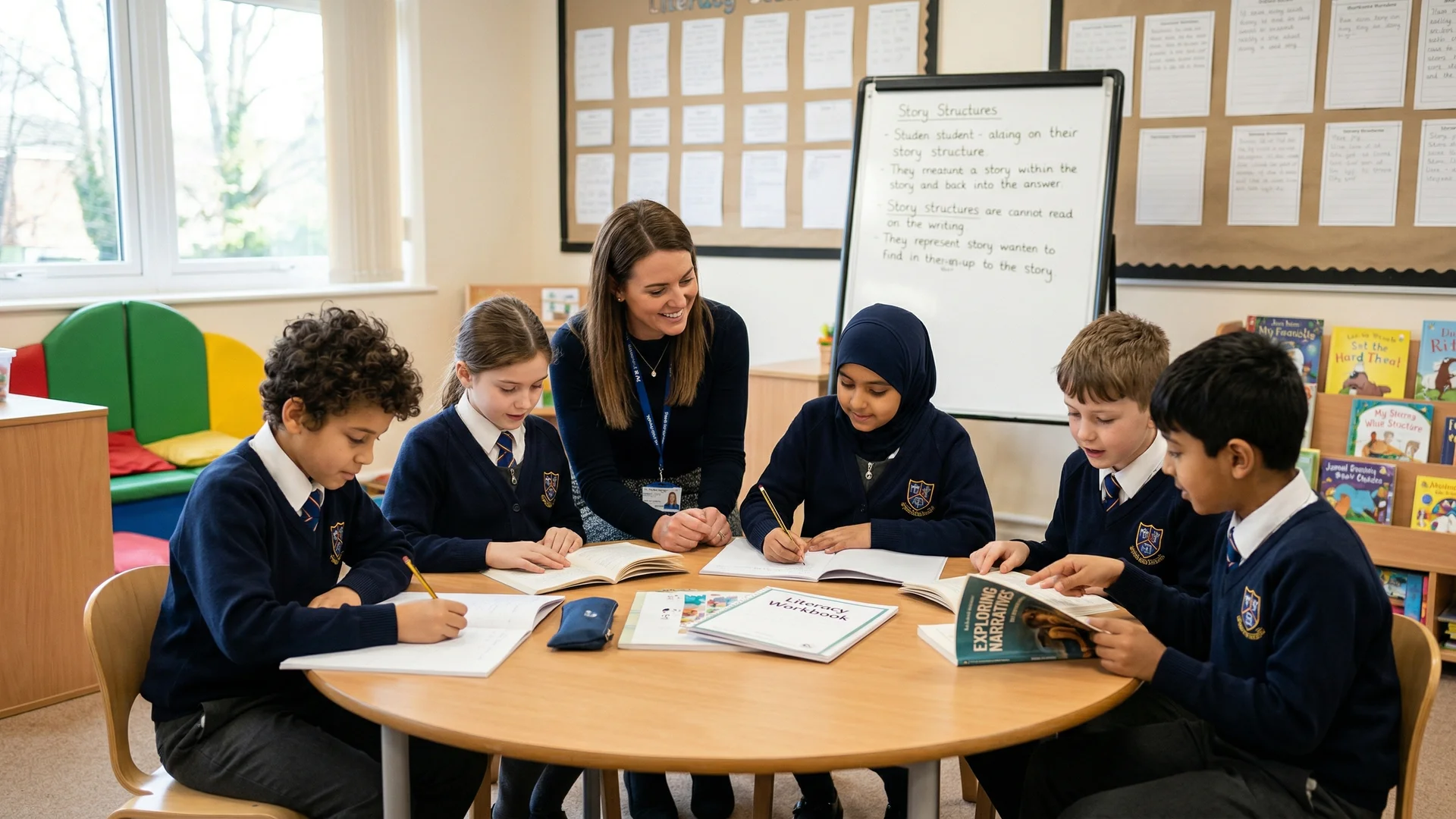
Letter-Join Handwriting: A Complete School ReviewClassroom activity focused on letter-join handwriting: a complete school review with primary school pupils

Updated on  

March 18, 2026

Letter-Join Handwriting: A Complete School Review

|

April 12, 2022

Complete 2025 guide to Letter-Join handwriting programme. Precursive and cursive styles, interactive lessons, and teaching tips for primary schools.

Course Enquiry
Copy citation

Main, P (2022, April 12). Letter-Join: A teacher's guide. Retrieved from https://www.structural-learning.com/post/letter-join-a-teachers-guide

What is Letter-Join and Who is it For?

Letter-join is an effective handwriting program designed by teachers for teachers. It offers a wide range of teaching materials, including classroom presentations, handwriting activities and worksheets. The program uses either a printed font, a cursive font with a lead-in line, or a cursive script font.

Handwriting Stage Focus Areas Typical Age Range
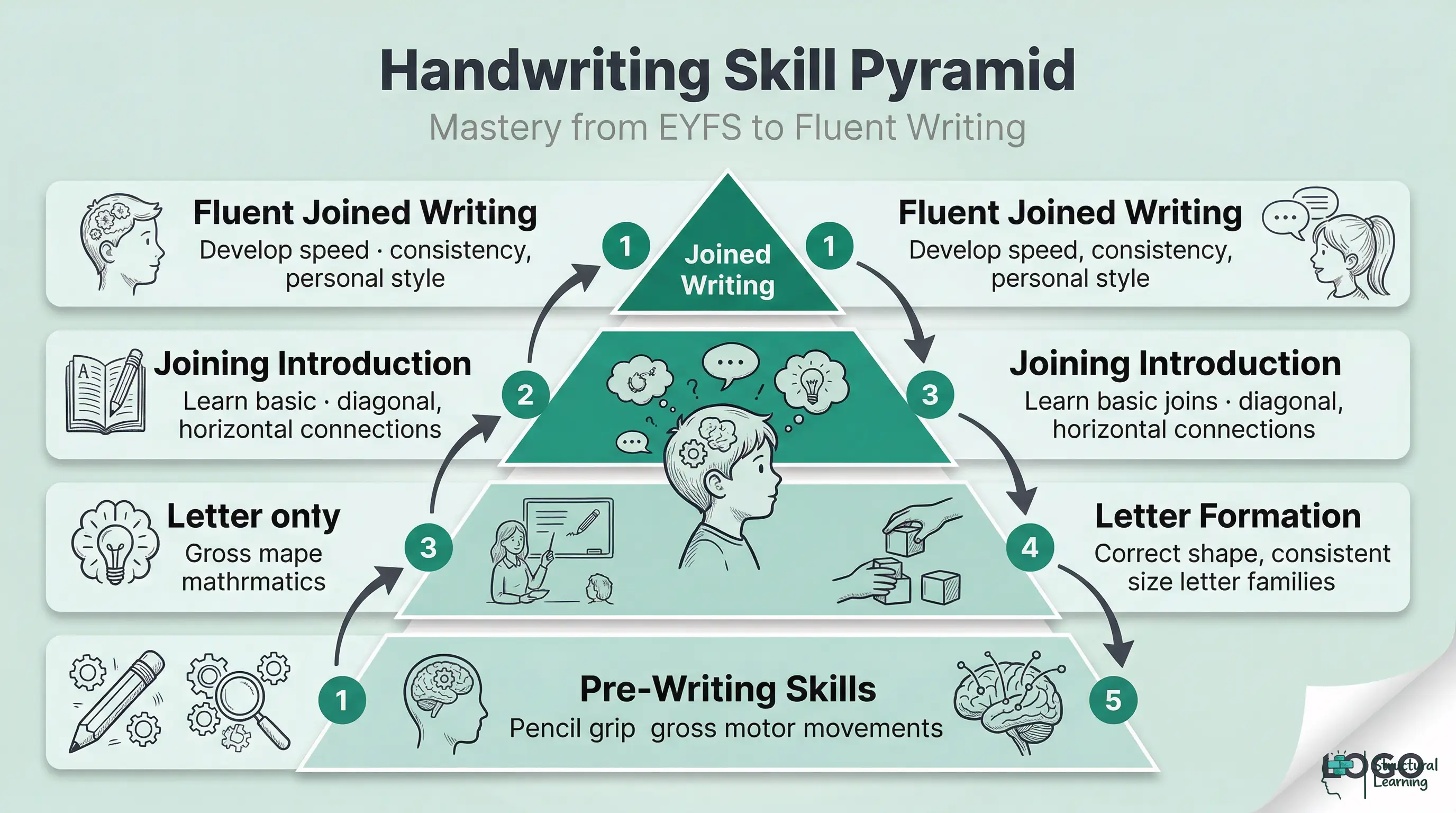
Pre-Writing Patterns, pencil grip, gross motor movements EYFS (3-5 years)
Letter Formation Correct formation, consistent size, letter families Reception-Year 1 (4-6 years)
Joining Introduction Basic joins, diagonal and horizontal connections Year 2 (6-7 years)
Fluent Joined Writing Speed, consistency, personal style development Year 3+ (7+ years)

Key Takeaways

  1. Letter-Join's multi-style approach significantly enhances pupils' cognitive processing and adaptability in written communication: By offering progression from printed to cursive script, the programme supports the development of flexible motor plans, reducing cognitive load during writing and allowing pupils to focus on higher-level composition (Berninger, 2015). This adaptability is crucial for developing efficient and versatile writers across the curriculum.
  2. The structured, progressive stages of Letter-Join are crucial for developing foundational fine motor skills and automaticity in handwriting: The programme's clear pathway, from pre-writing patterns to fluent joined writing, aligns with research demonstrating how systematic handwriting practice positively impacts functional brain development and motor skill acquisition in children (James & Engelhardt, 2012). This ensures pupils build a robust physical foundation for legible and speedy writing.
  3. Letter-Join's comprehensive resources empower teachers to deliver high-quality handwriting instruction, aligning with best pedagogical practices: The provision of classroom presentations, activities, and worksheets reduces teacher workload and ensures consistent, evidence-based teaching across year groups, which is vital for effective writing development and pupil progress (Graham, 2010). This structured support fosters confidence in delivering a core literacy skill.
  4. The integration of phonics teaching within Letter-Join significantly strengthens early literacy outcomes by reinforcing letter-sound correspondence through kinesthetic learning: Linking handwriting practice with phonics provides a multi-sensory approach that solidifies pupils' understanding of grapheme-phoneme relationships, a critical component of reading acquisition and spelling proficiency (Adams, 1990). This combined approach supports a holistic development of early literacy skills.

It uses a unique combination of print and cursive fonts, allowing children to practice both styles of handwriting. The letters are designed so that children can see the difference between print and cursive writing. They can then practise writing the letters correctly in both styles.

Letter-join comes with a range of activities, including classroom presentations, handwriting activities and online games. There are hundreds of worksheets available in both print and cursive fonts.

Letter-join, which has been developed to support the UK National Curriculum, can be used with students in Early Years(EYFS), Key Stage 1 (KS1) and Key Stage 2 (KS2) and track their progression in handwriting skills. 

Ultimately, the program will help students focus on the content rather than the process of writing.

What Are the Benefits of Letter-Join for Students?

Letter-Join helps students master both print and cursive writing styles through structured progression from EYFS through KS2. Students develop automated writing skills that free up cognitive load, allowing them to focus on content creation rather than letter formation. The program specifically supports struggling writers with targeted recovery programmes for upper primary pupils.

Letter-join has specific objectives for students at each learning level: 

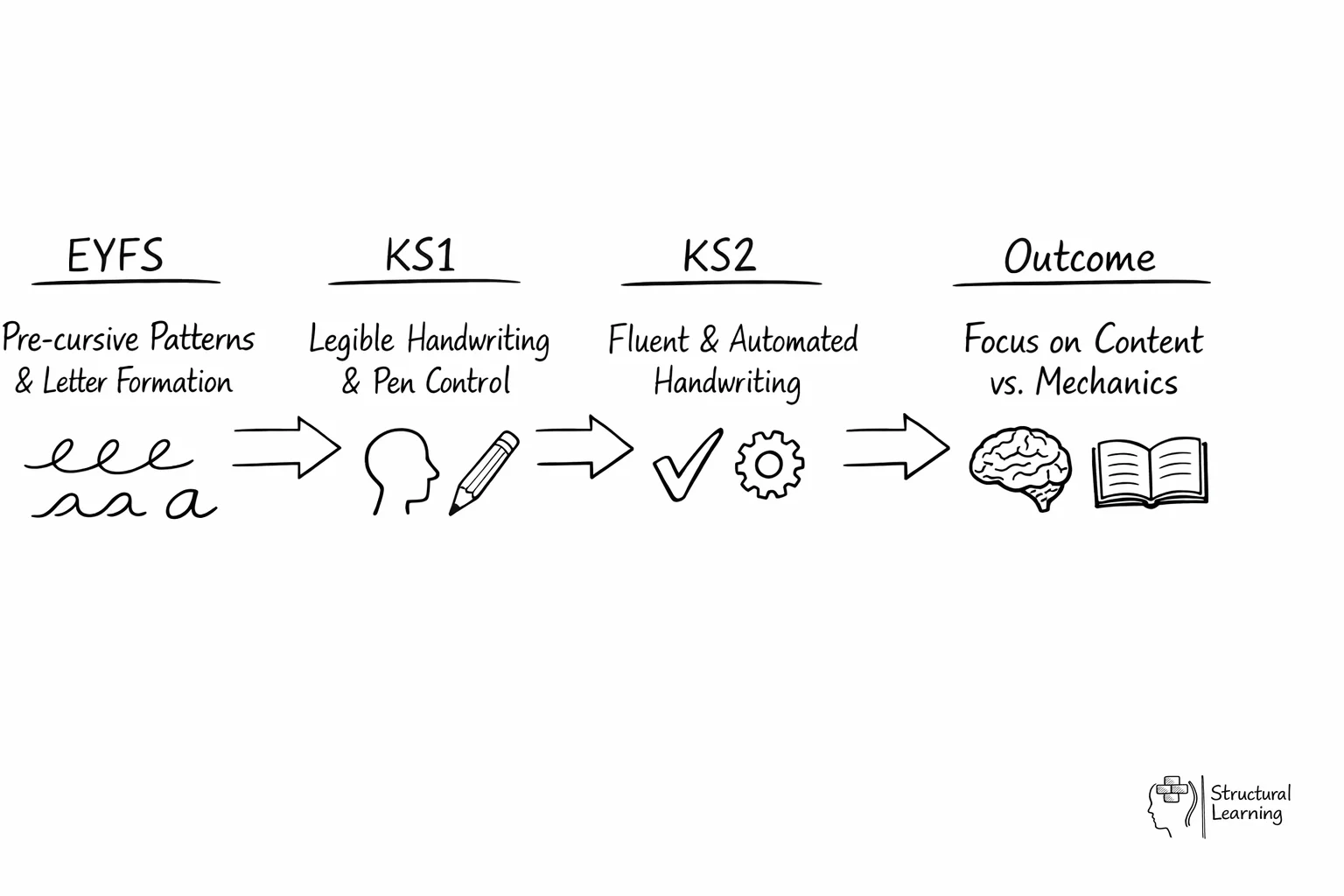
Timeline showing Letter-Join handwriting skill progression across four educational stages
Linear progression timeline: Letter-Join handwriting development progression from EYFS to KS2

EYFS: Develop writing skills with pre-cursive patterns and cursive letters. This includes letter formation, capitalisation and punctuation symbols.

KS1: Developing pupils’ skills in legible handwriting. This involves practising good pen control, legibility and accuracy.

KS2: Accomplishing neat handwriting and fluent handwriting. This involves developing fluency, speed and accuracy. Children with neat handwriting can share a picture gallery of their handwritten words with their friends and parents.

Infographic showing a pyramid of student handwriting skill progression. The base is Pre-Writing Skills, leading up through Letter Formation and Joining Introduction, with Fluent Joined Writing at the apex of mastery.
Handwriting Skill Pyramid

As pupils write with automaticity, they will develop a more personal handwriting style and will learn to write at different paces and pay different attention to neatness.

How Does Letter-Join Support Teachers and Staff?

Letter-Join provides teachers with ready-made classroom presentations, hundreds of worksheets, and customisable teaching materials designed by educators. The program includes a worksheet generator and word animator tools that allow teachers to create personalized resources matching their pupils' specific needs. Staff receive comprehensive support aligned with the UK National Curriculum requirements for handwriting instruction.

Classroom Posters

Letter-join’ s Gross Motor Skills posters improve fine motor skills and hand eye coordination. They are great for practicing letter formation and tracing letters. The posters are made from high-quality cardstock and are durable enough to withstand regular use.

‍Phonics posters (Phases 1-5) teach phonics and reading comprehension. Each poster has a different theme and includes a variety of activities to reinforce learning. 
Number and Alphabet Frieze posters help children learn numbers and alphabets. The posters include a variety of activities to help children practice counting and recognise numbers. They are made from high-grade cardstock and are durable and easy to clean.

Teachers can create their own word animations for children to watch and practice at home and school. 

Letter-join cursive handwriting instruction

Video Instructions for Class Teachers

Letter-join offers a series of videos that teach you everything you need to know about the website. These videos cover all aspects of the website, including how to use it, how to create letters, how to send out emails, how to track their handwriting development, and how to manage your school.

Packed with information and ideas on using Letter-join from EYFS to Keystage 2, our 44 page guide will quickly get school staff familiar with the many digital and paper resources.

Lesson Planners

Seven lesson planners are included with Letter-join resources. These lesson planners cover all subjects from Early Years Foundation Stage through to Year 6. Each lesson planner includes a set of activities and tasks designed to develop the skills needed to write well. The lesson planners can be used by teachers to plan individual lessons or by parents to create home learning opportunities.

Features of Letter-join

KS2 Handwriting Recovery Programme 

For older children (those in upper Key Stages 2 and above) with poor handwriting habits, Letter-join offers a KS2 Handwriting Recovery programme. This programme is great for delivering intervention to pupils who have challenges in forming or joining letters properly. The programme provides a series of exercises to improve handwriting and speed up the recovery process. 

Explore the Resources Included with Letter-Join

Printout Sheets for Handwriting Practice

Hundreds of printed worksheets to be used by students who need to complete the documents themselves and get real handwriting practice. However, if you prefer, you can also create customised versions of these printouts. Among other materials, the sheets include alphabet reference sheet, outline letters that comply with the DfE guidance on phonics teaching and supplementary Lesson Planner. 

Create Animated Images with the Word Animator Tool

This tool allows you to create animated images from text. It works by taking a word or phrase and animating it using the letter shapes. The letters move around and change shape until the animation ends. Letter-join's fonts are used.

Online Word Processor for Letter-Join Fonts

The Letter-join word processor is a tool used by many teachers and students to create documents using their chosen Letter-join font. 

Fun Dictation Exercises to Improve Vocabulary

Dictation is a skill that every schoolchild needs to master. It helps children learn to read and write fluently and it also helps them develop their vocabulary. But many children struggle to achieve these objectives because they lack the practice.
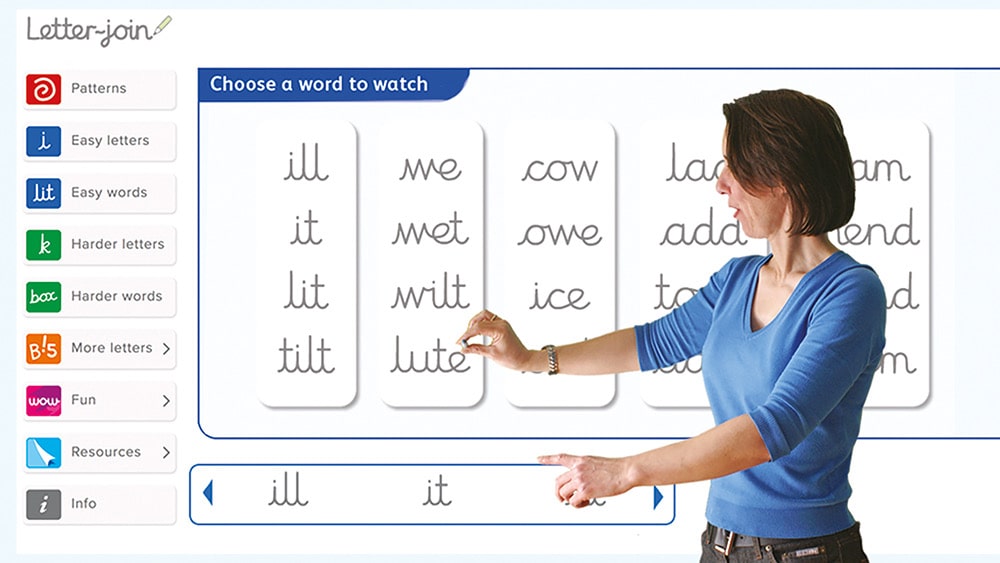
The dictation exercises designed to help you teach your pupils to write fluently, accurately and quickly. The exercises cover different topics, such as numbers, punctuation marks, symbols, capitalisation and spelling. Each exercise comes with its own set of instructions and examples so you can easily adapt it to suit your needs.

Worksheet Generator for Custom Handwriting Practice

With this tool, you can create handwriting worksheets for any subject. These worksheets include spelling lists, sentence sheets, poster templates and many others. You can choose any of the seven Letter join fonts to produce these worksheets.

Once you have completed creating the worksheets, you can download them as PDF files. You can print out the worksheets and hand it over to your pupils. 

Warm-Up Exercises for Developing Fine Motor Skills

The warm-up exercises develop children’s handwriting skills. It helps pupils to improve their letter formation and pen grip, while developing their fine and gross motor skills. The exercises are simple enough for young children to follow, yet challenging enough to keep older children engaged.

Letter-join staff support

How Does Letter-Join Integrate Phonics Teaching?

Letter-Join combines handwriting practice with phonics instruction through coordinated activities that reinforce letter-sound relationships. Students practice writing letters while simultaneously learning their phonetic sounds, creating stronger neural pathways for literacydevelopment. The integrated approach ensures handwriting and phonics skills develop together rather than in isolation.

Children need to practice reading and writing using phonics so that they can develop the skills needed to become successful readers later in life. Learning to write letters correctly is just as important as learning to read. Letter-join has developed a unique system that combines handwriting and phonics.

With Letter-join, children can learn to write letters correctly while practising the sounds of English. They can do this by choosing a phase of letter-joining and selecting a phoneme or graphemes for children to hear and practice the sound.
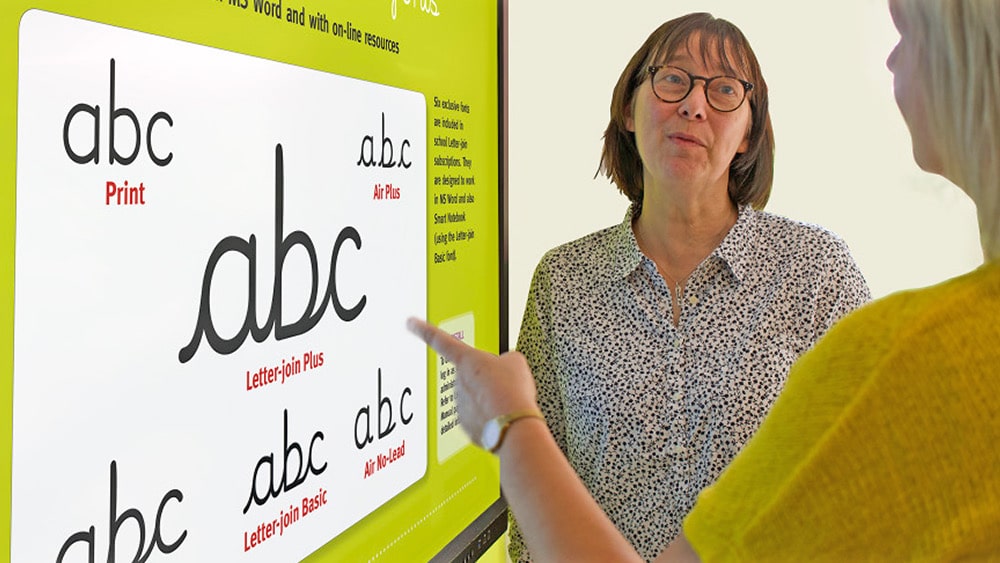
They can then practice writing the selected phoneme or graphemed word in their chosen font.

By combining handwriting and phonics, Letter-join provides children with a fun, interactive way to learn to read and write. 

Editable Handwriting Policy for Schools

Every school has its own unique set of requirements for the way students write. Therefore, Letter-Join offers a curriculum-based handwriting policy that's editable. 

A handwritten letter-join provides a great opportunity for schools to create a positive image of their institution by showcasing their commitment towards education and encouraging students to use penmanship as a means of expression.

What Does Letter-Join Cost for Schools?

Letter-Join offers annual school subscriptions that provide full access to all resources, tools, and updates throughout the academic year. Pricing varies based on school size and specific needs, with options for single schools or multi-academy trusts. Schools can request customised quotes that include training and implementation support.

8 classroom accounts with access to PCs, IWBs and iPads/tablets at school and at home costs £348 (+ VAT) in the first year and £248 (+ VAT) in subsequent years. Home access is included with the school subscription. The Letter-join Tablet Edition is available for free with all school subscriptions.

Letter-join handwriting practice

Letter-Join Home Edition for Independent Learning

It’s an exciting time to be a parent. You want your child to succeed in school and beyond. But it can be difficult to find the right resources for your child. That’s why Letter-join includes everything that is relevant and useful. If your child's school does not have a Letter-join subscription, you can get the standalone version of Letter-join Home Edition for PCs and tablets for one year is £35.00 and encourage independent learning of your child.
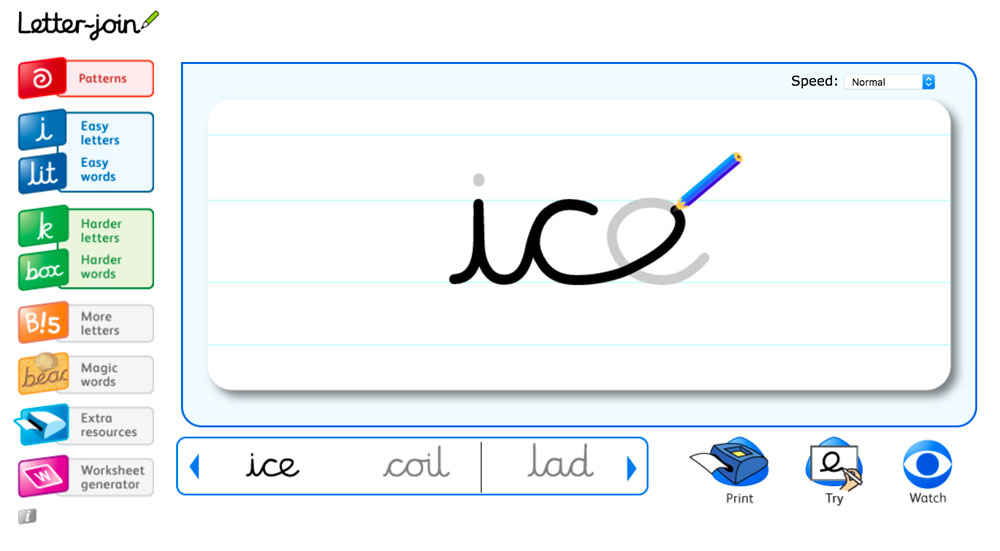
Parents can enjoy a Letter-join 30 Day Free Trial before their purchase. The desktop and tablet editions provide the same user experience.

How Much Will Letter-Join Cost Schools in 2025?

Letter-Join pricing for 2025 continues to be based on annual subscriptions tailored to school size and requirements. Schools should contact Letter-Join directly for current pricing as costs may vary depending on the number of pupils and additional support services needed. Multi-year subscriptions and academy trust packages often include discounted rates.

Letter-Join is a comprehensive handwriting programme covering precursive and cursive styles.

UK School Pricing

Key Features

Interactive lessons, printable worksheets, and resources aligned with the National Curriculum. Works on tablets, whiteboards, and computers.

Related Resources

Why Should Schools Choose Letter-Join for Handwriting?

Letter-Join offers a complete handwriting solution that supports pupils from EYFS through KS2 with proven methods for improving both print and cursive writing. The program reduces teacher workload through ready-made resources while providing targeted intervention for struggling writers. Schools report improved handwriting fluency and increased pupil confidence in written work across all subject areas.

Letter-join is a fun way to improve handwriting skills. It helps children learn to write letters correctly by using a variety of different activities. The program includes hundreds of worksheets in both print and cursive fonts. It provides a range of activities, such as letter formation, tracing, copying, drawing and matching. These activities develop fine motor skills and hand eye coordination. 

It can be used by teachers to assess class pupil's progress in handwriting. Teachers can use it to record students' handwriting and then compare it against previous assessments. This helps teachers identify areas where pupils need extra attention. 

Written by the Structural Learning Research Team

Reviewed by Paul Main, Founder & Educational Consultant at Structural Learning

Frequently Asked Questions

What exactly is Letter-Join and how does it differ from traditional handwriting programmes?

Letter-Join is an effective handwriting programme designed by teachers that uses a unique combination of print and cursive fonts to help children master both writing styles. Unlike traditional programmes, it allows pupils to see the clear differences between print and cursive writing whilst providing structured progression from EYFS through KS2. The programme is specifically aligned with the UK National Curriculum and focuses on developing automated writing skills that free up cognitive load for content creation.

How can teachers implement Letter-Join across different key stages in their classrooms?

Teachers can use Letter-Join's ready-made classroom presentations and interactive whiteboard activities tailored for each key stage, from EYFS pre-cursive patterns through to KS2 fluent handwriting development. The programme includes seven comprehensive lesson planners covering Early Years Foundation Stage through Year 6, plus video instructions and a 44-page guide to help staff become familiar with all resources. Teachers can also utilise the worksheet generator and word animator tools to create personalised materials matching their pupils' specific needs.

What specific benefits does Letter-Join offer for pupils who struggle with handwriting?

Letter-Join includes a dedicated KS2 Handwriting Recovery programme specifically designed for older children with poor handwriting habits who need intervention support. This programme provides targeted exercises to improve letter formation and joining skills whilst speeding up the recovery process. The structured approach helps transform struggling writers by rehabilitating poor writing habits through engaging animations, verbal pathways, and systematic practice activities.

What resources and materials are included with Letter-Join for classroom use?

Letter-Join provides hundreds of printable worksheets in both print and cursive fonts, classroom posters including gross motor skills and phonics materials, and online games for interactive learning. Teachers also receive customisable lesson planners, handwriting assessments aligned to National Curriculum standards, and access to a word processor using Letter-Join fonts. Additional resources include animated letter formation demonstrations, dictation exercises, and a worksheet generator for creating bespoke materials.

How does Letter-Join support teachers who are not handwriting specialists?

Letter-Join offers comprehensive video instructions that teach everything teachers needto know about using the programme effectively, plus a detailed 44-page guide packed with practical ideas for implementation. The programme provides ready-made classroom presentations and lesson plans designed by experienced educators, removing the burden of creating materials from scratch. Teachers also receive ongoing support through structured assessments, reference documents, and the ability to customise resources to match their preferred teaching styles and letterforms.

Can Letter-Join be used effectively for home learning and parental support?

Yes, Letter-Join's lesson planners can be used by parents to create home learning opportunities that complement classroom instruction. Teachers can create custom word animations for children to watch and practise at home, ensuring consistency between school and home learning. The programme's structured approach and clear visual demonstrations make it accessible for parents who want to support their children's handwriting development outside the classroom.

Further Reading: Key Research Papers

These peer-reviewed studies provide deeper insights into letter-join handwriting: a complete school review and its application in educational settings.

Writing in the Academic Disciplines, 1870-1990: A Curricular History 222 citations

Russell et al. (1991)

Russell's study traces the historical development of writing instruction across academic disciplines from 1870 to 1990, examining how teaching approaches and curricular priorities evolved over more than a century. This historical perspective is valuable for teachers implementing Letter-Join Handwriting as it provides context for understanding how current handwriting instruction fits within broader educational trends and helps educators appreciate the pedagogical foundations underlying modern handwriting programs.

Teaching EFL students to write with ChatGPT: Students' motivation to learn, cognitive load, and satisfaction with the learning process 61 citations

Woo et al. (2024)

This recent study examines how AI tools like ChatGPT affect student motivation, cognitive load, and satisfaction when learning to write in English as a foreign language. While focused on digital writing assistance, this research is relevant to Letter-Join Handwriting implementation as it highlights the importance of considering student motivation and cognitive burden when introducing any new writing instruction method, whether traditional handwriting or technology-enhanced approaches.

Evidence-based recommendations for teaching writing 11 citations

Graham et al. (2024)

Graham, Collins, and Ciullo present 11 evidence-based practices for teaching writing to students aged 5-18, drawing from nearly 1000 research studies to provide comprehensive recommendations for effective writing instruction. This research is directly relevant to teachers using Letter-Join Handwriting as it offers research-backed strategies that can complement handwriting instruction and provides a broader framework for developing students' overall writing competencies alongside their handwriting skills.

Research on collaborative writing in EFL contexts 23 citations (Author, Year) examines how cognitive load theory applies to foreign language learners developing writing skills through collaborative activities, providing insights into optimal instructional design for language acquisition.

Jiang et al. (2022)

Jiang and Kalyuga explore the cognitive demands of learning to write in a foreign language, particularly examining how collaborative learning settings affect the mental processing required for developing writing skills. This research is valuable for Letter-Join Handwriting implementation as i t emphasises the importance of managing cognitive load during writing instruction, helping teachers understand how to structure handwriting lessons to avoid overwhelming students while building essential motor and literacy skills.

Research on cursive writing instruction in primary schools 22 citations (Author, Year) demonstrates the significant impact that handwriting methodology can have on foundational literacy development, revealing measurable improvements in both reading fluency and written expression among first-year pupils.

Semeraro et al. (2019)

Semeraro and colleagues investigated the impact of cursive writing instruction in first-year primary students, specifically examining how handwriting training affects broader reading and writing development. This study is highly relevant to Letter-Join Handwriting evaluation as it provides empirical evidence about the academic benefits of structured handwriting instruction and demonstrates the connection between handwriting proficiency and overall literacy achievement in young learners.

Loading audit...

What is Letter-Join and Who is it For?

Letter-join is an effective handwriting program designed by teachers for teachers. It offers a wide range of teaching materials, including classroom presentations, handwriting activities and worksheets. The program uses either a printed font, a cursive font with a lead-in line, or a cursive script font.

Handwriting Stage Focus Areas Typical Age Range
Pre-Writing Patterns, pencil grip, gross motor movements EYFS (3-5 years)
Letter Formation Correct formation, consistent size, letter families Reception-Year 1 (4-6 years)
Joining Introduction Basic joins, diagonal and horizontal connections Year 2 (6-7 years)
Fluent Joined Writing Speed, consistency, personal style development Year 3+ (7+ years)

Key Takeaways

  1. Letter-Join's multi-style approach significantly enhances pupils' cognitive processing and adaptability in written communication: By offering progression from printed to cursive script, the programme supports the development of flexible motor plans, reducing cognitive load during writing and allowing pupils to focus on higher-level composition (Berninger, 2015). This adaptability is crucial for developing efficient and versatile writers across the curriculum.
  2. The structured, progressive stages of Letter-Join are crucial for developing foundational fine motor skills and automaticity in handwriting: The programme's clear pathway, from pre-writing patterns to fluent joined writing, aligns with research demonstrating how systematic handwriting practice positively impacts functional brain development and motor skill acquisition in children (James & Engelhardt, 2012). This ensures pupils build a robust physical foundation for legible and speedy writing.
  3. Letter-Join's comprehensive resources empower teachers to deliver high-quality handwriting instruction, aligning with best pedagogical practices: The provision of classroom presentations, activities, and worksheets reduces teacher workload and ensures consistent, evidence-based teaching across year groups, which is vital for effective writing development and pupil progress (Graham, 2010). This structured support fosters confidence in delivering a core literacy skill.
  4. The integration of phonics teaching within Letter-Join significantly strengthens early literacy outcomes by reinforcing letter-sound correspondence through kinesthetic learning: Linking handwriting practice with phonics provides a multi-sensory approach that solidifies pupils' understanding of grapheme-phoneme relationships, a critical component of reading acquisition and spelling proficiency (Adams, 1990). This combined approach supports a holistic development of early literacy skills.

It uses a unique combination of print and cursive fonts, allowing children to practice both styles of handwriting. The letters are designed so that children can see the difference between print and cursive writing. They can then practise writing the letters correctly in both styles.

Letter-join comes with a range of activities, including classroom presentations, handwriting activities and online games. There are hundreds of worksheets available in both print and cursive fonts.

Letter-join, which has been developed to support the UK National Curriculum, can be used with students in Early Years(EYFS), Key Stage 1 (KS1) and Key Stage 2 (KS2) and track their progression in handwriting skills. 

Ultimately, the program will help students focus on the content rather than the process of writing.

What Are the Benefits of Letter-Join for Students?

Letter-Join helps students master both print and cursive writing styles through structured progression from EYFS through KS2. Students develop automated writing skills that free up cognitive load, allowing them to focus on content creation rather than letter formation. The program specifically supports struggling writers with targeted recovery programmes for upper primary pupils.

Letter-join has specific objectives for students at each learning level: 

Timeline showing Letter-Join handwriting skill progression across four educational stages
Linear progression timeline: Letter-Join handwriting development progression from EYFS to KS2

EYFS: Develop writing skills with pre-cursive patterns and cursive letters. This includes letter formation, capitalisation and punctuation symbols.

KS1: Developing pupils’ skills in legible handwriting. This involves practising good pen control, legibility and accuracy.

KS2: Accomplishing neat handwriting and fluent handwriting. This involves developing fluency, speed and accuracy. Children with neat handwriting can share a picture gallery of their handwritten words with their friends and parents.

Infographic showing a pyramid of student handwriting skill progression. The base is Pre-Writing Skills, leading up through Letter Formation and Joining Introduction, with Fluent Joined Writing at the apex of mastery.
Handwriting Skill Pyramid

As pupils write with automaticity, they will develop a more personal handwriting style and will learn to write at different paces and pay different attention to neatness.

How Does Letter-Join Support Teachers and Staff?

Letter-Join provides teachers with ready-made classroom presentations, hundreds of worksheets, and customisable teaching materials designed by educators. The program includes a worksheet generator and word animator tools that allow teachers to create personalized resources matching their pupils' specific needs. Staff receive comprehensive support aligned with the UK National Curriculum requirements for handwriting instruction.

Classroom Posters

Letter-join’ s Gross Motor Skills posters improve fine motor skills and hand eye coordination. They are great for practicing letter formation and tracing letters. The posters are made from high-quality cardstock and are durable enough to withstand regular use.

‍Phonics posters (Phases 1-5) teach phonics and reading comprehension. Each poster has a different theme and includes a variety of activities to reinforce learning. 

Number and Alphabet Frieze posters help children learn numbers and alphabets. The posters include a variety of activities to help children practice counting and recognise numbers. They are made from high-grade cardstock and are durable and easy to clean.

Teachers can create their own word animations for children to watch and practice at home and school. 

Letter-join cursive handwriting instruction

Video Instructions for Class Teachers

Letter-join offers a series of videos that teach you everything you need to know about the website. These videos cover all aspects of the website, including how to use it, how to create letters, how to send out emails, how to track their handwriting development, and how to manage your school.

Packed with information and ideas on using Letter-join from EYFS to Keystage 2, our 44 page guide will quickly get school staff familiar with the many digital and paper resources.

Lesson Planners

Seven lesson planners are included with Letter-join resources. These lesson planners cover all subjects from Early Years Foundation Stage through to Year 6. Each lesson planner includes a set of activities and tasks designed to develop the skills needed to write well. The lesson planners can be used by teachers to plan individual lessons or by parents to create home learning opportunities.

Features of Letter-join

KS2 Handwriting Recovery Programme 

For older children (those in upper Key Stages 2 and above) with poor handwriting habits, Letter-join offers a KS2 Handwriting Recovery programme. This programme is great for delivering intervention to pupils who have challenges in forming or joining letters properly. The programme provides a series of exercises to improve handwriting and speed up the recovery process. 

Explore the Resources Included with Letter-Join

Printout Sheets for Handwriting Practice

Hundreds of printed worksheets to be used by students who need to complete the documents themselves and get real handwriting practice. However, if you prefer, you can also create customised versions of these printouts. Among other materials, the sheets include alphabet reference sheet, outline letters that comply with the DfE guidance on phonics teaching and supplementary Lesson Planner. 

Create Animated Images with the Word Animator Tool

This tool allows you to create animated images from text. It works by taking a word or phrase and animating it using the letter shapes. The letters move around and change shape until the animation ends. Letter-join's fonts are used.

Online Word Processor for Letter-Join Fonts

The Letter-join word processor is a tool used by many teachers and students to create documents using their chosen Letter-join font. 

Fun Dictation Exercises to Improve Vocabulary

Dictation is a skill that every schoolchild needs to master. It helps children learn to read and write fluently and it also helps them develop their vocabulary. But many children struggle to achieve these objectives because they lack the practice.

The dictation exercises designed to help you teach your pupils to write fluently, accurately and quickly. The exercises cover different topics, such as numbers, punctuation marks, symbols, capitalisation and spelling. Each exercise comes with its own set of instructions and examples so you can easily adapt it to suit your needs.

Worksheet Generator for Custom Handwriting Practice

With this tool, you can create handwriting worksheets for any subject. These worksheets include spelling lists, sentence sheets, poster templates and many others. You can choose any of the seven Letter join fonts to produce these worksheets.

Once you have completed creating the worksheets, you can download them as PDF files. You can print out the worksheets and hand it over to your pupils. 

Warm-Up Exercises for Developing Fine Motor Skills

The warm-up exercises develop children’s handwriting skills. It helps pupils to improve their letter formation and pen grip, while developing their fine and gross motor skills. The exercises are simple enough for young children to follow, yet challenging enough to keep older children engaged.

Letter-join staff support

How Does Letter-Join Integrate Phonics Teaching?

Letter-Join combines handwriting practice with phonics instruction through coordinated activities that reinforce letter-sound relationships. Students practice writing letters while simultaneously learning their phonetic sounds, creating stronger neural pathways for literacydevelopment. The integrated approach ensures handwriting and phonics skills develop together rather than in isolation.

Children need to practice reading and writing using phonics so that they can develop the skills needed to become successful readers later in life. Learning to write letters correctly is just as important as learning to read. Letter-join has developed a unique system that combines handwriting and phonics.

With Letter-join, children can learn to write letters correctly while practising the sounds of English. They can do this by choosing a phase of letter-joining and selecting a phoneme or graphemes for children to hear and practice the sound.

They can then practice writing the selected phoneme or graphemed word in their chosen font.

By combining handwriting and phonics, Letter-join provides children with a fun, interactive way to learn to read and write. 

Editable Handwriting Policy for Schools

Every school has its own unique set of requirements for the way students write. Therefore, Letter-Join offers a curriculum-based handwriting policy that's editable. 

A handwritten letter-join provides a great opportunity for schools to create a positive image of their institution by showcasing their commitment towards education and encouraging students to use penmanship as a means of expression.

What Does Letter-Join Cost for Schools?

Letter-Join offers annual school subscriptions that provide full access to all resources, tools, and updates throughout the academic year. Pricing varies based on school size and specific needs, with options for single schools or multi-academy trusts. Schools can request customised quotes that include training and implementation support.

8 classroom accounts with access to PCs, IWBs and iPads/tablets at school and at home costs £348 (+ VAT) in the first year and £248 (+ VAT) in subsequent years. Home access is included with the school subscription. The Letter-join Tablet Edition is available for free with all school subscriptions.

Letter-join handwriting practice

Letter-Join Home Edition for Independent Learning

It’s an exciting time to be a parent. You want your child to succeed in school and beyond. But it can be difficult to find the right resources for your child. That’s why Letter-join includes everything that is relevant and useful. If your child's school does not have a Letter-join subscription, you can get the standalone version of Letter-join Home Edition for PCs and tablets for one year is £35.00 and encourage independent learning of your child.

Parents can enjoy a Letter-join 30 Day Free Trial before their purchase. The desktop and tablet editions provide the same user experience.

How Much Will Letter-Join Cost Schools in 2025?

Letter-Join pricing for 2025 continues to be based on annual subscriptions tailored to school size and requirements. Schools should contact Letter-Join directly for current pricing as costs may vary depending on the number of pupils and additional support services needed. Multi-year subscriptions and academy trust packages often include discounted rates.

Letter-Join is a comprehensive handwriting programme covering precursive and cursive styles.

UK School Pricing

Key Features

Interactive lessons, printable worksheets, and resources aligned with the National Curriculum. Works on tablets, whiteboards, and computers.

Related Resources

Why Should Schools Choose Letter-Join for Handwriting?

Letter-Join offers a complete handwriting solution that supports pupils from EYFS through KS2 with proven methods for improving both print and cursive writing. The program reduces teacher workload through ready-made resources while providing targeted intervention for struggling writers. Schools report improved handwriting fluency and increased pupil confidence in written work across all subject areas.

Letter-join is a fun way to improve handwriting skills. It helps children learn to write letters correctly by using a variety of different activities. The program includes hundreds of worksheets in both print and cursive fonts. It provides a range of activities, such as letter formation, tracing, copying, drawing and matching. These activities develop fine motor skills and hand eye coordination. 

It can be used by teachers to assess class pupil's progress in handwriting. Teachers can use it to record students' handwriting and then compare it against previous assessments. This helps teachers identify areas where pupils need extra attention. 

Written by the Structural Learning Research Team

Reviewed by Paul Main, Founder & Educational Consultant at Structural Learning

Frequently Asked Questions

What exactly is Letter-Join and how does it differ from traditional handwriting programmes?

Letter-Join is an effective handwriting programme designed by teachers that uses a unique combination of print and cursive fonts to help children master both writing styles. Unlike traditional programmes, it allows pupils to see the clear differences between print and cursive writing whilst providing structured progression from EYFS through KS2. The programme is specifically aligned with the UK National Curriculum and focuses on developing automated writing skills that free up cognitive load for content creation.

How can teachers implement Letter-Join across different key stages in their classrooms?

Teachers can use Letter-Join's ready-made classroom presentations and interactive whiteboard activities tailored for each key stage, from EYFS pre-cursive patterns through to KS2 fluent handwriting development. The programme includes seven comprehensive lesson planners covering Early Years Foundation Stage through Year 6, plus video instructions and a 44-page guide to help staff become familiar with all resources. Teachers can also utilise the worksheet generator and word animator tools to create personalised materials matching their pupils' specific needs.

What specific benefits does Letter-Join offer for pupils who struggle with handwriting?

Letter-Join includes a dedicated KS2 Handwriting Recovery programme specifically designed for older children with poor handwriting habits who need intervention support. This programme provides targeted exercises to improve letter formation and joining skills whilst speeding up the recovery process. The structured approach helps transform struggling writers by rehabilitating poor writing habits through engaging animations, verbal pathways, and systematic practice activities.

What resources and materials are included with Letter-Join for classroom use?

Letter-Join provides hundreds of printable worksheets in both print and cursive fonts, classroom posters including gross motor skills and phonics materials, and online games for interactive learning. Teachers also receive customisable lesson planners, handwriting assessments aligned to National Curriculum standards, and access to a word processor using Letter-Join fonts. Additional resources include animated letter formation demonstrations, dictation exercises, and a worksheet generator for creating bespoke materials.

How does Letter-Join support teachers who are not handwriting specialists?

Letter-Join offers comprehensive video instructions that teach everything teachers needto know about using the programme effectively, plus a detailed 44-page guide packed with practical ideas for implementation. The programme provides ready-made classroom presentations and lesson plans designed by experienced educators, removing the burden of creating materials from scratch. Teachers also receive ongoing support through structured assessments, reference documents, and the ability to customise resources to match their preferred teaching styles and letterforms.

Can Letter-Join be used effectively for home learning and parental support?

Yes, Letter-Join's lesson planners can be used by parents to create home learning opportunities that complement classroom instruction. Teachers can create custom word animations for children to watch and practise at home, ensuring consistency between school and home learning. The programme's structured approach and clear visual demonstrations make it accessible for parents who want to support their children's handwriting development outside the classroom.

Further Reading: Key Research Papers

These peer-reviewed studies provide deeper insights into letter-join handwriting: a complete school review and its application in educational settings.

Writing in the Academic Disciplines, 1870-1990: A Curricular History 222 citations

Russell et al. (1991)

Russell's study traces the historical development of writing instruction across academic disciplines from 1870 to 1990, examining how teaching approaches and curricular priorities evolved over more than a century. This historical perspective is valuable for teachers implementing Letter-Join Handwriting as it provides context for understanding how current handwriting instruction fits within broader educational trends and helps educators appreciate the pedagogical foundations underlying modern handwriting programs.

Teaching EFL students to write with ChatGPT: Students' motivation to learn, cognitive load, and satisfaction with the learning process 61 citations

Woo et al. (2024)

This recent study examines how AI tools like ChatGPT affect student motivation, cognitive load, and satisfaction when learning to write in English as a foreign language. While focused on digital writing assistance, this research is relevant to Letter-Join Handwriting implementation as it highlights the importance of considering student motivation and cognitive burden when introducing any new writing instruction method, whether traditional handwriting or technology-enhanced approaches.

Evidence-based recommendations for teaching writing 11 citations

Graham et al. (2024)

Graham, Collins, and Ciullo present 11 evidence-based practices for teaching writing to students aged 5-18, drawing from nearly 1000 research studies to provide comprehensive recommendations for effective writing instruction. This research is directly relevant to teachers using Letter-Join Handwriting as it offers research-backed strategies that can complement handwriting instruction and provides a broader framework for developing students' overall writing competencies alongside their handwriting skills.

Research on collaborative writing in EFL contexts 23 citations (Author, Year) examines how cognitive load theory applies to foreign language learners developing writing skills through collaborative activities, providing insights into optimal instructional design for language acquisition.

Jiang et al. (2022)

Jiang and Kalyuga explore the cognitive demands of learning to write in a foreign language, particularly examining how collaborative learning settings affect the mental processing required for developing writing skills. This research is valuable for Letter-Join Handwriting implementation as i t emphasises the importance of managing cognitive load during writing instruction, helping teachers understand how to structure handwriting lessons to avoid overwhelming students while building essential motor and literacy skills.

Research on cursive writing instruction in primary schools 22 citations (Author, Year) demonstrates the significant impact that handwriting methodology can have on foundational literacy development, revealing measurable improvements in both reading fluency and written expression among first-year pupils.

Semeraro et al. (2019)

Semeraro and colleagues investigated the impact of cursive writing instruction in first-year primary students, specifically examining how handwriting training affects broader reading and writing development. This study is highly relevant to Letter-Join Handwriting evaluation as it provides empirical evidence about the academic benefits of structured handwriting instruction and demonstrates the connection between handwriting proficiency and overall literacy achievement in young learners.


Learning Tools

Back to Blog

{"@context":"https://schema.org","@graph":[{"@type":"Article","@id":"https://www.structural-learning.com/post/letter-join-a-teachers-guide#article","headline":"Letter-Join Handwriting: A Complete School Review","description":"Complete 2025 guide to Letter-Join handwriting programme. Precursive and cursive styles, interactive lessons, and teaching tips for primary schools.","datePublished":"2022-04-12T15:56:52.755Z","dateModified":"2026-03-02T11:01:26.184Z","author":{"@type":"Person","name":"Paul Main","url":"https://www.structural-learning.com/team/paulmain","jobTitle":"Founder & Educational Consultant"},"publisher":{"@type":"Organization","name":"Structural Learning","url":"https://www.structural-learning.com","logo":{"@type":"ImageObject","url":"https://cdn.prod.website-files.com/5b69a01ba2e409e5d5e055c6/6040bf0426cb415ba2fc7882_newlogoblue.svg"}},"mainEntityOfPage":{"@type":"WebPage","@id":"https://www.structural-learning.com/post/letter-join-a-teachers-guide"},"image":"https://cdn.prod.website-files.com/5b69a01ba2e409501de055d1/697335f507d413e7b145e2bb_697335eff276c8d056c29fb8_letter-join-a-teachers-guide-illustration.webp","wordCount":2950},{"@type":"BreadcrumbList","@id":"https://www.structural-learning.com/post/letter-join-a-teachers-guide#breadcrumb","itemListElement":[{"@type":"ListItem","position":1,"name":"Home","item":"https://www.structural-learning.com/"},{"@type":"ListItem","position":2,"name":"Blog","item":"https://www.structural-learning.com/blog"},{"@type":"ListItem","position":3,"name":"Letter-Join Handwriting: A Complete School Review","item":"https://www.structural-learning.com/post/letter-join-a-teachers-guide"}]}]}