Exploring adult learning theory
What are the major adult learning theories and principles? How can we apply these theories to promote better learning experiences?


Do adults learn differently from children? It is clear that knowledge acquisition plays an important part within the workplace and beyond. The amount of information that we all receive on a daily basis means that we could all do with learning more about how to develop a deep understanding of new knowledge and skills.
Knowles said adult learners differ from children. Children need guiding, while adults seek independence and experience. Rachal (2002) found no real difference in learning outcomes. Some adults need structure; some learners prefer independence. Avoid harming learners by assuming adult needs are universal.
The text draws on research by Knowles (1980), Mezirow (1991) and Jarvis (2004). It offers insights into adult learning engagement. This could help with staff training or your own professional development. It covers expertise needed to engage adult learners in learning activities.
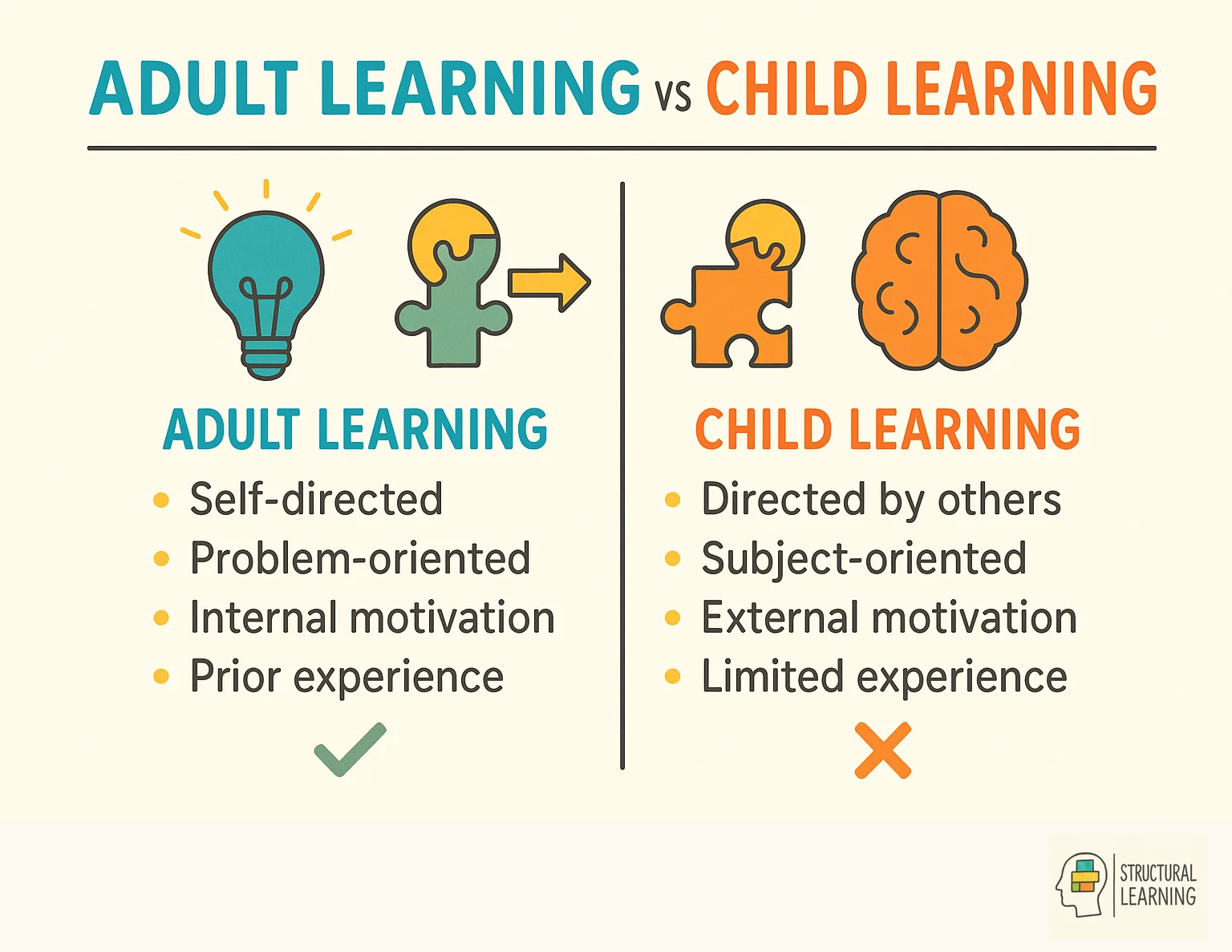
Learners develop cognitive skills and apply them to new situations. Adult learning differs from childhood contexts (sociocultural approaches). Many adults do not realise they use learning theory they learned as children.
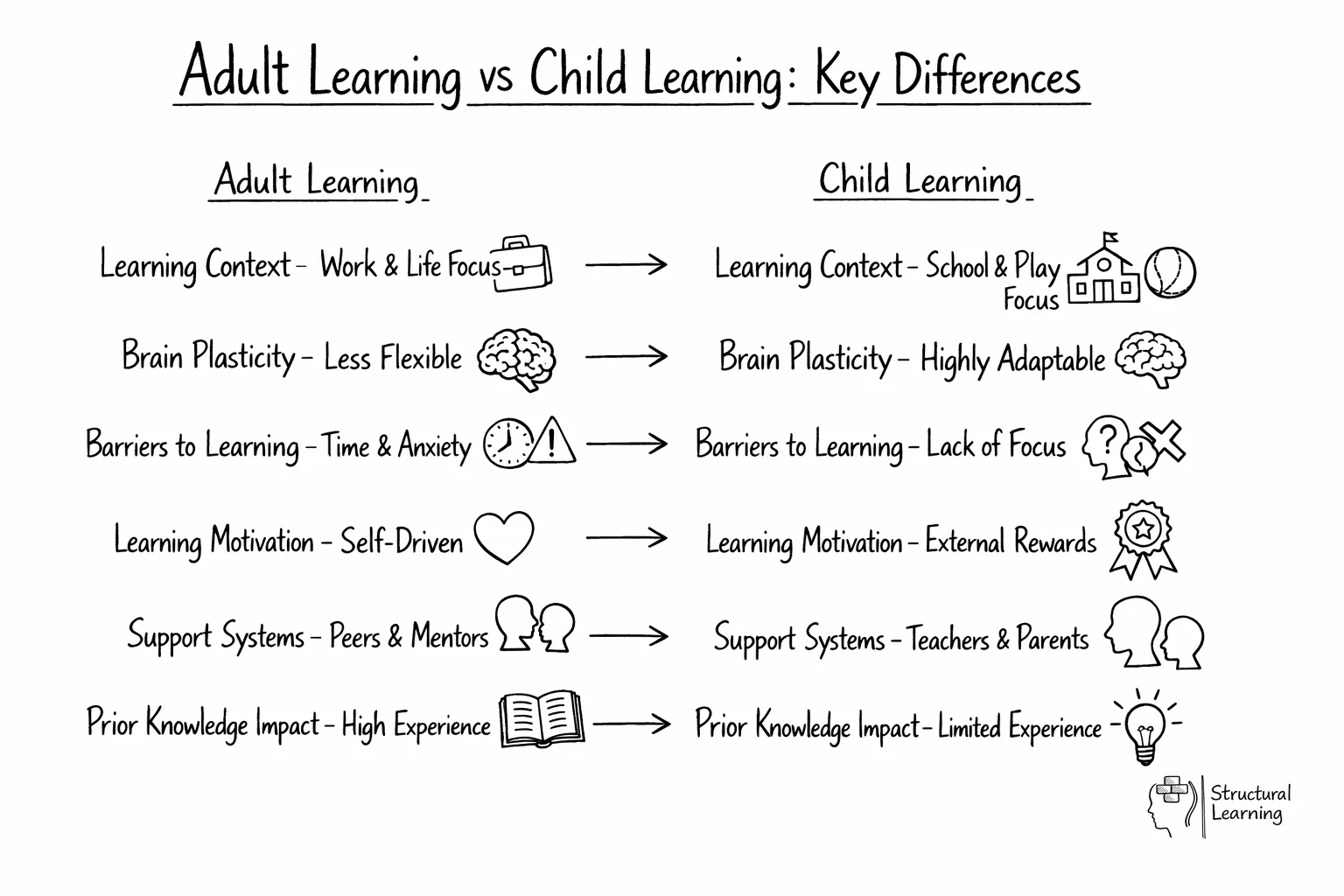
For the most part, learning remains a hidden mental process inside our minds, though social learning theory shows us how observation and modelling play crucial roles in how adults acquire new behaviours and skills. The same barriers to student understanding apply to adults, and if we can embrace some all-important systems theoryprinciples, then we stand a better chance of being able to understand and remember new knowledge. This article explains why adults should learn theory and how to teach themselves. It also shows you how to apply in everyday life.
Adult learning is a process of adults seeking education in a formal setting, trade school, or apprenticeship. Adult learning may also occur for those adults who wish to pursue education to learn a specific skill. There are many theories, techniques and aspects of adult learning that guide how to educate adults. Adults and children learn in very different ways. Hence, to make the adult learning process more effective people need to use more effective study techniques.
Learning in adults can be more difficult than for child learners for the following reasons:
Some adult learners often think they learn through trial and error. This means that they try things out until they get the desired result. However, most professions don't allow for these sorts of expensive mistakes and we have to take a closer look at how we provide learning experiences that enable adult learners to develop deep conceptual understanding.
For example, if someone wants experiences to learn how to play the guitar, he/she might start practising chords and strumming patterns until he/she gets the hang of it. If the learner was afforded the opportunity to understand some basic musical theory, this might provide them with a platform for more purposeful practice. Some learners prefer to watch others perform tasks before attempting them themselves. These types of learners tend to mimic other people's actions.

Knowles (1960s) created andragogy for adult learners, contrasting it with teaching children. Andragogy assumes learners direct themselves and use prior experiences. This method values problem-solving, using knowledge, and internal motivation.
The concept of andragogy was popularized by Malcolm Knowles in 1980. Andragogy demonstrates the art and science of learning to help adults learn and this concept was contrasted by Knowles M with pedagogy (art and science of learning to help children learn). The andragogy theory or Andragogy Model Of Adult Learningproposed that adult learners and young learners are different from one another in many ways. For example,
Knowles (1980) says learners need to know why they learn something. Intrinsic and extrinsic motivation, plus hands-on tasks, help, with minimal instruction. Some find this approach helpful for understanding. However, others, like Pratt (1993) and Merriam (2001), note it may not consider diverse learning needs.
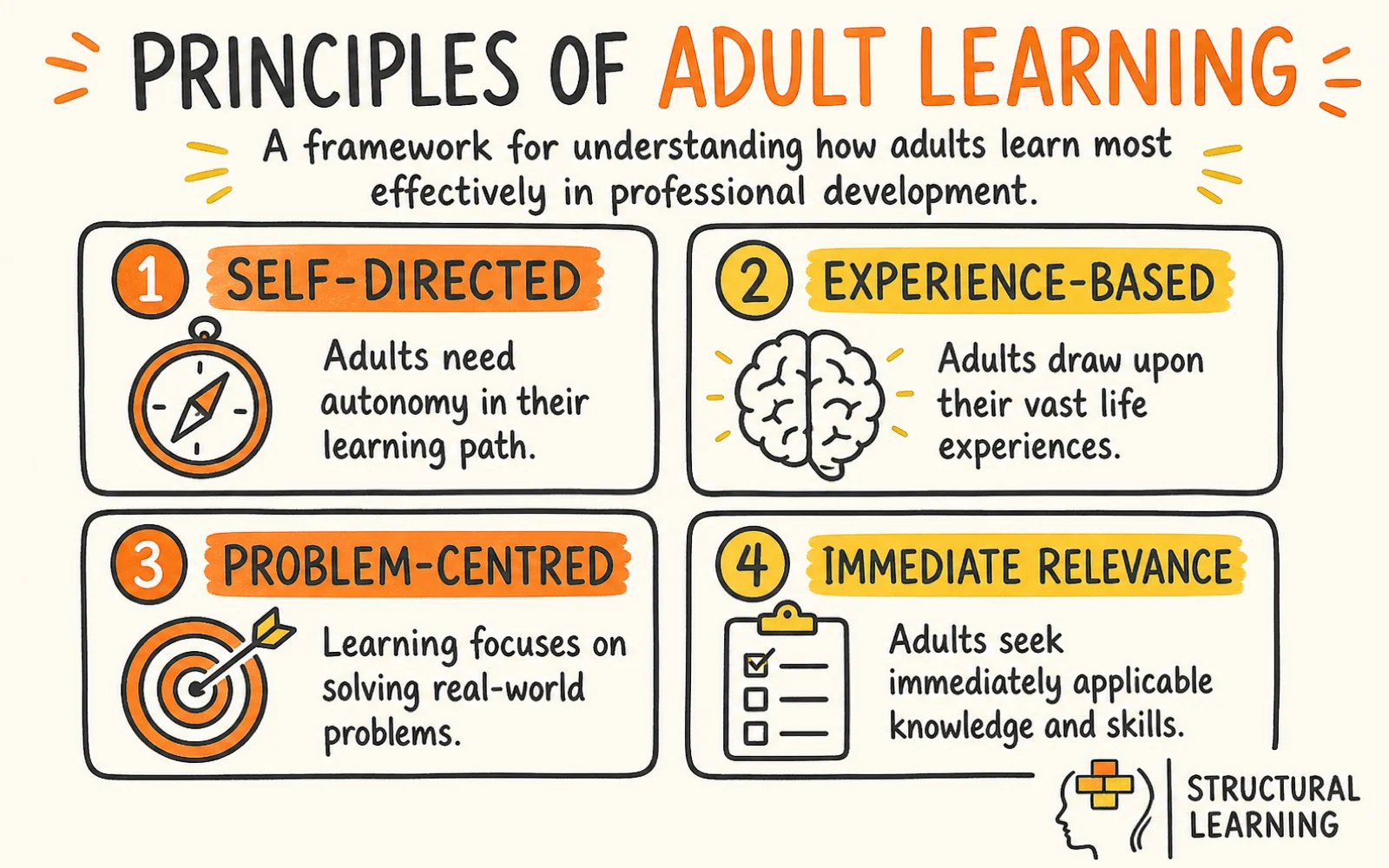
Mezirow (1991) stated learners change beliefs by reflecting. They question assumptions and explore fresh views for understanding. This explains why some professional development works, yet other training fades (Mezirow, 2000).
Mezirow (1970s) proposed transformative learning theory. This model changes how learners view themselves and the world. Learners studying religion may gain new perspectives on different faiths.
Transformative learning theory focuses on helping students develop self-awareness and self-knowledge. This means that students must learn to understand their own strengths and weaknesses, and then use this knowledge to improve their performance. Students who are able to recognise their strengths and weaknesses are more likely to succeed in school and life.
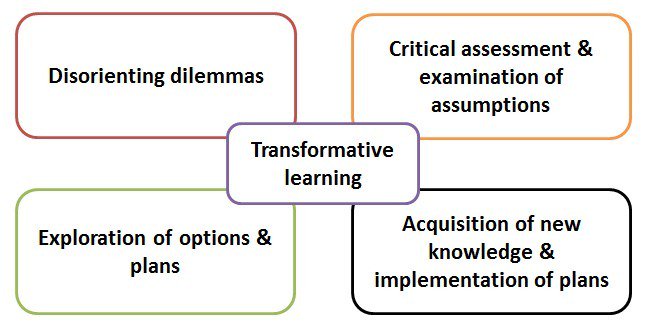
Knowles (1975) stated adults take charge of their learning. Learners find gaps, set goals, and pick resources. This helps them self-assess, as described by Knowles (1975). Grow (1991) noted this suits adults using existing skills.
Self-regulated learning means learners take charge of their education. Learners plan, do, and review their learning without help from others. To understand deeply, a learner sets goals (Zimmerman, 1990). They assess learning, use a plan, and focus on improving (Schunk & Zimmerman, 1998; Pintrich, 2000).
Adult learners may need support with challenging topics. Zimmerman (2000) found they can lack self-confidence for solo study. However, Knowles (1975) suggested adults develop self-regulation skills naturally.
Kolb's (1984) experiential learning theory has four stages. Learners experience, reflect, conceptualise, and experiment. Adults learn best by connecting new information to existing experience. They also learn when they can use it straight away (Kolb, 1984).
Kolb championed experiential learning in the 1970s, building on earlier work. Learners succeed through experiences. Effective learning happens when people understand things deeply (Kolb, 1970s) without needing mentors.
Experiential learning means learners reflect on doing, not just learning facts. Kolb's (1984) theory informs post-16 teaching through action. Role play gives learners practical experience, boosting engagement (Dewey, 1938; Piaget, 1954).
Bandura (1977) said learners gain info by watching rewards and punishments. For social learning to work, consistency is vital. Kolb (1984) noted experiential learning might overlook other advantages.
Project-based learning helps adult learners with real-world problems relevant to their lives. Learners apply new knowledge and use existing skills, as stated in ( researcher, date). Engagement grows when learners see the clear practical value, as per (researcher, date). This boosts knowledge retention, notes (researcher, date).
Dewey (dates unknown) backed learning through doing. Project work mirrors this active experience. Learners grasp ideas more firmly by doing tasks, not just listening or reading (Dewey, dates unknown).
Problem-based learning builds understanding with real situations. Some question if problem-based learning findings are verified (Schmidt, 1983). Adult learners often find this approach useful. They apply classroom learning (Barrows & Tamblyn, 1980; Knowles, 1984).

Knowles (1980) stated that adult learners thrive on problem-based group tasks. Reflecting on prior knowledge is important for them. Case studies and discussions are useful for learning. These activities connect new information to past experiences, valuing learner independence.
The following are some of the most useful techniques that may help a successful learner to demonstrate deeper level of learning processes. These include:
Adult brains find forming new connections harder (Hebb, 1949). Learners should actively build understanding to help create these connections (Ericsson et al., 1993). Reviewing material strengthens pathways (Anderson, 1983) for lasting learning.
Adult learners need information on adult learning theories and techniques. Knowing these aspects, like strengths and weaknesses, aids success. Understanding their learning styles is also vital (Knowles, 1980; Kolb, 1984; Mezirow, 1991).
Jung (n.d.) highlighted personality types; consider these when planning. These archetypes provide useful insights, despite some criticism. This approach may improve the learning experience for each learner.
Knowles (1980) found adult learners differ. Traditional teaching may fail, noted Smith (1996). Trainers need suitable theories for workplace learning (Brown, 2001). Learners want motivation tips, suggested Jones (2010). Time management and accepting change are crucial (Davis, 2015). Addressing this improves training, according to Green (2022).
What is knowledge acquisition?
Knowledge acquisition is the act of acquiring new knowledge. When we acquire new knowledge, we store it in our brains. We use this stored knowledge to solve problems and make decisions.
What is a schema?
Schemas, as per Bartlett (1932), link information. They explain how learners connect ideas. This helps them understand and find information (Rumelhart, 1980; Piaget, 1954).
What is Working Memory?
Working memory briefly stores and processes information. It helps learners follow instructions (Baddeley, 2012). Learners with better working memory often achieve more at school and work (Cowan, 2014). They can remember and use lots of information at once (Engle, 2002).
Researcher Alloway (2009) showed learners with strong working memory scored higher on critical thinking tests. These learners were also more likely to use technology to improve their work, according to Alloway (2009).
What is Metacognition?
Metacognition refers to thinking about our own thoughts. We all do it constantly, but we rarely stop to consider why we're thinking the way we are. Metacognitive awareness involves understanding how our minds work, and how we can improve ourselves.
Metacognition supports all learners, especially adult learners. Often, learners memorise facts, but don't consider their learning. Metacognition lets adult learners use their strongest approaches. Brown (1987), Flavell (1979) and Zimmerman (2002) list planning, self-monitoring, and reflection.
What is a Self-Regulated Learner?
A self-regulated learner is someone who learns best when he or she sets his or her own pace and direction. They may also enjoy taking tests and quizzes to see how much they understand. However, these learners aren't always comfortable with traditional classroom settings.
Instead, they might like to learn in small groups, where they can ask questions and receive feedback from peers. Self-regulated learners tend to be independent thinkers, and they're motivated by challenges and rewards. They also tend to be good problem-solvers and critical thinkers.

Knowles (1980) focused on andragogy for adult learners. Mezirow (1991) investigated transformative learning experiences. Kolb (1984) described the experiential learning cycle. *Adult Education Quarterly* and *Studies in Continuing Education* share research. Professional bodies apply theory, supporting learners, to guide practice.
Knowles (1980) looked at adult learning. Merriam and Bierema (2014) studied adult lives and drive. These researchers give lesson planning ideas. They compare adult and child learning, helpful for UK teachers.
1. McGuire, D. (2020). Adult Learning Theories. The SAGE Encyclopedia of Higher Education.
Knowles (1980) found adult life experiences matter for learners. Tough (1971) and Mezirow (1991) agree, noting this is important. Internal motivation and using knowledge practically are key to teaching.
2. Knowles, M. (1979). The adult learner: a neglected species. Educational Researcher, 8(20).
Knowles (1970) says adult learners differ from child learners. Adults' life experiences strongly affect their learning. Internal drive and practical needs shape learning aims (Knowles, 1980, 1984).
3. Norman, G. (1999). The adult learner: a mythical species. Academic Medicine, 74(8), 886-889.
Norman (date unspecified) questions adult learning ideas. They find that age differences may be less important. Norman's research asks us to rethink learner traits. Review separate teaching styles for adult and child learners, they suggest.
4. Merriam, S. (1987). Adult Learning and Theory Building: A Review. Adult Education Quarterly, 37, 187-198.
Merriam (2007) reviewed adult learning theory. She grouped theories by learner traits, life, and awareness. Understanding context and motives helps create effective theories (Merriam, 2007).
5. Taylor, D. C. M., & Hamdy, H. (2013). Adult learning theories: Implications for learning and teaching in medical education: AMEE Guide No. 83. Medical Teacher, 35, e1561-e1572.
Knowles' (1980) theories shape this guide for adult learning. Use these theories in lesson planning for a useful model. Bandura (1977) and Deci & Ryan (1985) show knowledge application and motivation help learners. Kolb (1984) and Mezirow (1991) find this useful for medical education.
Knowles (1960s) created andragogy for adult learners. It differs from pedagogy, used for children. Andragogy views adults as self-directed. They use life experiences to learn and value problem-solving (Knowles, 1960s).
Adult brains become less flexible as they age, due to neuroplasticity. This makes accepting new ideas harder for experienced staff. This is known as the 'Adult Learning Paradox'. Different training methods are needed for adult learners (changes based on research).
These barriers hinder adult learners. Full-time work and family life eat into their time. Finances are often tight without parents' help. Learners sometimes doubt they are 'too old' (Knowles, 1984). Support systems might be lacking. Prior knowledge can clash with new ideas (Mezirow, 1991). Reduced brain flexibility makes learning harder (Merriam et al., 2007).
Adult learners need to know 'why' before 'how'. Explain relevance to their jobs. Task-focused learning mirrors their work (Knowles, 1980). Let learners lead their own learning, instead of teachers (Kolb, 1984; Mezirow, 1991).
Transformative learning shows experienced teachers can resist new approaches (Mezirow, 1991). They have strong beliefs from established practice. Acknowledge expertise and link new methods to better results for learners (Cranton, 2016). This supports professional growth (Kitchenham, 2008).
Use learners' life experiences and existing knowledge to solve problems. Apply learning quickly and make tasks relevant to their work. Show learners how training benefits them professionally to boost motivation. (Knowles, 1980; Kolb, 1984; Vygotsky, 1978).
Staff can learn online at their own pace, fitting studies around their schedules. Offer funding, scholarships, or time within work for learning. Support learners with mentors and cover their duties (Reeves, 2000; Smith, 2010).
Knowles (1980) and Mezirow (1991) give teachers helpful adult learning ideas. Kolb (1984) and Vygotsky (1978) offer frameworks for practice too. These frameworks help learners succeed.
Andragogy and Self‐Directed Learning: Pillars of Adult Learning Theory 1577 citations
Merriam et al. (2001)
Merriam (date unspecified) notes andragogy and self-directed learning. This separates adult education from teaching learners. Teachers can use this framework to understand adult learners. Experience and learner independence improve teaching, suggest researchers.
Transformative Learning as Discourse 1534 citations
Mezirow et al. (2003)
Mezirow studied transformative learning in adults. Adults examine their beliefs during learning (Mezirow, date not provided). Teachers can plan activities for meaningful learning. These activities help learners change perspectives, boosting understanding.
Significant dimensions of lifelong learning: Mezirow, Rorty and COVID-19 69 citations
Eschenbacher et al. (2020)
Researchers highlight new learning challenges after the pandemic. Mezirow's theory helps teachers understand global disruption (Smith, 2023). Crises can transform adult learners, Jones argues (2024). Brown's research shows major events affect learning (2022).
Advancing Leadership Education and Development: Integrating Adult Learning Theory 51 citations
Allen et al. (2021)
Researchers question lectures in leadership training (Knowles, 1980; Mezirow, 1991). Programmes should use adult learning theory. Teachers can switch to adult-centred methods. This improves learner outcomes (Kolb, 1984; Schön, 1983).
Vygotsky's constructivism (Author, Year) focuses on social learning. It backs each learner's unique requirements. Differentiated teaching boosts learner results (64 citations).
Vygotsky's (date) constructivism informs differentiated learning. Social interaction and scaffolding support each learner's needs. Vygotsky (date) gives teachers insights, even with younger learners. Adapt his ideas for adult learners, too.
Do adults learn differently from children? It is clear that knowledge acquisition plays an important part within the workplace and beyond. The amount of information that we all receive on a daily basis means that we could all do with learning more about how to develop a deep understanding of new knowledge and skills.
Knowles said adult learners differ from children. Children need guiding, while adults seek independence and experience. Rachal (2002) found no real difference in learning outcomes. Some adults need structure; some learners prefer independence. Avoid harming learners by assuming adult needs are universal.
The text draws on research by Knowles (1980), Mezirow (1991) and Jarvis (2004). It offers insights into adult learning engagement. This could help with staff training or your own professional development. It covers expertise needed to engage adult learners in learning activities.

Learners develop cognitive skills and apply them to new situations. Adult learning differs from childhood contexts (sociocultural approaches). Many adults do not realise they use learning theory they learned as children.

For the most part, learning remains a hidden mental process inside our minds, though social learning theory shows us how observation and modelling play crucial roles in how adults acquire new behaviours and skills. The same barriers to student understanding apply to adults, and if we can embrace some all-important systems theoryprinciples, then we stand a better chance of being able to understand and remember new knowledge. This article explains why adults should learn theory and how to teach themselves. It also shows you how to apply in everyday life.
Adult learning is a process of adults seeking education in a formal setting, trade school, or apprenticeship. Adult learning may also occur for those adults who wish to pursue education to learn a specific skill. There are many theories, techniques and aspects of adult learning that guide how to educate adults. Adults and children learn in very different ways. Hence, to make the adult learning process more effective people need to use more effective study techniques.
Learning in adults can be more difficult than for child learners for the following reasons:
Some adult learners often think they learn through trial and error. This means that they try things out until they get the desired result. However, most professions don't allow for these sorts of expensive mistakes and we have to take a closer look at how we provide learning experiences that enable adult learners to develop deep conceptual understanding.
For example, if someone wants experiences to learn how to play the guitar, he/she might start practising chords and strumming patterns until he/she gets the hang of it. If the learner was afforded the opportunity to understand some basic musical theory, this might provide them with a platform for more purposeful practice. Some learners prefer to watch others perform tasks before attempting them themselves. These types of learners tend to mimic other people's actions.

Knowles (1960s) created andragogy for adult learners, contrasting it with teaching children. Andragogy assumes learners direct themselves and use prior experiences. This method values problem-solving, using knowledge, and internal motivation.
The concept of andragogy was popularized by Malcolm Knowles in 1980. Andragogy demonstrates the art and science of learning to help adults learn and this concept was contrasted by Knowles M with pedagogy (art and science of learning to help children learn). The andragogy theory or Andragogy Model Of Adult Learningproposed that adult learners and young learners are different from one another in many ways. For example,
Knowles (1980) says learners need to know why they learn something. Intrinsic and extrinsic motivation, plus hands-on tasks, help, with minimal instruction. Some find this approach helpful for understanding. However, others, like Pratt (1993) and Merriam (2001), note it may not consider diverse learning needs.

Mezirow (1991) stated learners change beliefs by reflecting. They question assumptions and explore fresh views for understanding. This explains why some professional development works, yet other training fades (Mezirow, 2000).
Mezirow (1970s) proposed transformative learning theory. This model changes how learners view themselves and the world. Learners studying religion may gain new perspectives on different faiths.
Transformative learning theory focuses on helping students develop self-awareness and self-knowledge. This means that students must learn to understand their own strengths and weaknesses, and then use this knowledge to improve their performance. Students who are able to recognise their strengths and weaknesses are more likely to succeed in school and life.

Knowles (1975) stated adults take charge of their learning. Learners find gaps, set goals, and pick resources. This helps them self-assess, as described by Knowles (1975). Grow (1991) noted this suits adults using existing skills.
Self-regulated learning means learners take charge of their education. Learners plan, do, and review their learning without help from others. To understand deeply, a learner sets goals (Zimmerman, 1990). They assess learning, use a plan, and focus on improving (Schunk & Zimmerman, 1998; Pintrich, 2000).
Adult learners may need support with challenging topics. Zimmerman (2000) found they can lack self-confidence for solo study. However, Knowles (1975) suggested adults develop self-regulation skills naturally.
Kolb's (1984) experiential learning theory has four stages. Learners experience, reflect, conceptualise, and experiment. Adults learn best by connecting new information to existing experience. They also learn when they can use it straight away (Kolb, 1984).
Kolb championed experiential learning in the 1970s, building on earlier work. Learners succeed through experiences. Effective learning happens when people understand things deeply (Kolb, 1970s) without needing mentors.
Experiential learning means learners reflect on doing, not just learning facts. Kolb's (1984) theory informs post-16 teaching through action. Role play gives learners practical experience, boosting engagement (Dewey, 1938; Piaget, 1954).
Bandura (1977) said learners gain info by watching rewards and punishments. For social learning to work, consistency is vital. Kolb (1984) noted experiential learning might overlook other advantages.
Project-based learning helps adult learners with real-world problems relevant to their lives. Learners apply new knowledge and use existing skills, as stated in ( researcher, date). Engagement grows when learners see the clear practical value, as per (researcher, date). This boosts knowledge retention, notes (researcher, date).
Dewey (dates unknown) backed learning through doing. Project work mirrors this active experience. Learners grasp ideas more firmly by doing tasks, not just listening or reading (Dewey, dates unknown).
Problem-based learning builds understanding with real situations. Some question if problem-based learning findings are verified (Schmidt, 1983). Adult learners often find this approach useful. They apply classroom learning (Barrows & Tamblyn, 1980; Knowles, 1984).

Knowles (1980) stated that adult learners thrive on problem-based group tasks. Reflecting on prior knowledge is important for them. Case studies and discussions are useful for learning. These activities connect new information to past experiences, valuing learner independence.
The following are some of the most useful techniques that may help a successful learner to demonstrate deeper level of learning processes. These include:
Adult brains find forming new connections harder (Hebb, 1949). Learners should actively build understanding to help create these connections (Ericsson et al., 1993). Reviewing material strengthens pathways (Anderson, 1983) for lasting learning.
Adult learners need information on adult learning theories and techniques. Knowing these aspects, like strengths and weaknesses, aids success. Understanding their learning styles is also vital (Knowles, 1980; Kolb, 1984; Mezirow, 1991).
Jung (n.d.) highlighted personality types; consider these when planning. These archetypes provide useful insights, despite some criticism. This approach may improve the learning experience for each learner.
Knowles (1980) found adult learners differ. Traditional teaching may fail, noted Smith (1996). Trainers need suitable theories for workplace learning (Brown, 2001). Learners want motivation tips, suggested Jones (2010). Time management and accepting change are crucial (Davis, 2015). Addressing this improves training, according to Green (2022).
What is knowledge acquisition?
Knowledge acquisition is the act of acquiring new knowledge. When we acquire new knowledge, we store it in our brains. We use this stored knowledge to solve problems and make decisions.
What is a schema?
Schemas, as per Bartlett (1932), link information. They explain how learners connect ideas. This helps them understand and find information (Rumelhart, 1980; Piaget, 1954).
What is Working Memory?
Working memory briefly stores and processes information. It helps learners follow instructions (Baddeley, 2012). Learners with better working memory often achieve more at school and work (Cowan, 2014). They can remember and use lots of information at once (Engle, 2002).
Researcher Alloway (2009) showed learners with strong working memory scored higher on critical thinking tests. These learners were also more likely to use technology to improve their work, according to Alloway (2009).
What is Metacognition?
Metacognition refers to thinking about our own thoughts. We all do it constantly, but we rarely stop to consider why we're thinking the way we are. Metacognitive awareness involves understanding how our minds work, and how we can improve ourselves.
Metacognition supports all learners, especially adult learners. Often, learners memorise facts, but don't consider their learning. Metacognition lets adult learners use their strongest approaches. Brown (1987), Flavell (1979) and Zimmerman (2002) list planning, self-monitoring, and reflection.
What is a Self-Regulated Learner?
A self-regulated learner is someone who learns best when he or she sets his or her own pace and direction. They may also enjoy taking tests and quizzes to see how much they understand. However, these learners aren't always comfortable with traditional classroom settings.
Instead, they might like to learn in small groups, where they can ask questions and receive feedback from peers. Self-regulated learners tend to be independent thinkers, and they're motivated by challenges and rewards. They also tend to be good problem-solvers and critical thinkers.

Knowles (1980) focused on andragogy for adult learners. Mezirow (1991) investigated transformative learning experiences. Kolb (1984) described the experiential learning cycle. *Adult Education Quarterly* and *Studies in Continuing Education* share research. Professional bodies apply theory, supporting learners, to guide practice.
Knowles (1980) looked at adult learning. Merriam and Bierema (2014) studied adult lives and drive. These researchers give lesson planning ideas. They compare adult and child learning, helpful for UK teachers.
1. McGuire, D. (2020). Adult Learning Theories. The SAGE Encyclopedia of Higher Education.
Knowles (1980) found adult life experiences matter for learners. Tough (1971) and Mezirow (1991) agree, noting this is important. Internal motivation and using knowledge practically are key to teaching.
2. Knowles, M. (1979). The adult learner: a neglected species. Educational Researcher, 8(20).
Knowles (1970) says adult learners differ from child learners. Adults' life experiences strongly affect their learning. Internal drive and practical needs shape learning aims (Knowles, 1980, 1984).
3. Norman, G. (1999). The adult learner: a mythical species. Academic Medicine, 74(8), 886-889.
Norman (date unspecified) questions adult learning ideas. They find that age differences may be less important. Norman's research asks us to rethink learner traits. Review separate teaching styles for adult and child learners, they suggest.
4. Merriam, S. (1987). Adult Learning and Theory Building: A Review. Adult Education Quarterly, 37, 187-198.
Merriam (2007) reviewed adult learning theory. She grouped theories by learner traits, life, and awareness. Understanding context and motives helps create effective theories (Merriam, 2007).
5. Taylor, D. C. M., & Hamdy, H. (2013). Adult learning theories: Implications for learning and teaching in medical education: AMEE Guide No. 83. Medical Teacher, 35, e1561-e1572.
Knowles' (1980) theories shape this guide for adult learning. Use these theories in lesson planning for a useful model. Bandura (1977) and Deci & Ryan (1985) show knowledge application and motivation help learners. Kolb (1984) and Mezirow (1991) find this useful for medical education.
Knowles (1960s) created andragogy for adult learners. It differs from pedagogy, used for children. Andragogy views adults as self-directed. They use life experiences to learn and value problem-solving (Knowles, 1960s).
Adult brains become less flexible as they age, due to neuroplasticity. This makes accepting new ideas harder for experienced staff. This is known as the 'Adult Learning Paradox'. Different training methods are needed for adult learners (changes based on research).
These barriers hinder adult learners. Full-time work and family life eat into their time. Finances are often tight without parents' help. Learners sometimes doubt they are 'too old' (Knowles, 1984). Support systems might be lacking. Prior knowledge can clash with new ideas (Mezirow, 1991). Reduced brain flexibility makes learning harder (Merriam et al., 2007).
Adult learners need to know 'why' before 'how'. Explain relevance to their jobs. Task-focused learning mirrors their work (Knowles, 1980). Let learners lead their own learning, instead of teachers (Kolb, 1984; Mezirow, 1991).
Transformative learning shows experienced teachers can resist new approaches (Mezirow, 1991). They have strong beliefs from established practice. Acknowledge expertise and link new methods to better results for learners (Cranton, 2016). This supports professional growth (Kitchenham, 2008).
Use learners' life experiences and existing knowledge to solve problems. Apply learning quickly and make tasks relevant to their work. Show learners how training benefits them professionally to boost motivation. (Knowles, 1980; Kolb, 1984; Vygotsky, 1978).
Staff can learn online at their own pace, fitting studies around their schedules. Offer funding, scholarships, or time within work for learning. Support learners with mentors and cover their duties (Reeves, 2000; Smith, 2010).
Knowles (1980) and Mezirow (1991) give teachers helpful adult learning ideas. Kolb (1984) and Vygotsky (1978) offer frameworks for practice too. These frameworks help learners succeed.
Andragogy and Self‐Directed Learning: Pillars of Adult Learning Theory 1577 citations
Merriam et al. (2001)
Merriam (date unspecified) notes andragogy and self-directed learning. This separates adult education from teaching learners. Teachers can use this framework to understand adult learners. Experience and learner independence improve teaching, suggest researchers.
Transformative Learning as Discourse 1534 citations
Mezirow et al. (2003)
Mezirow studied transformative learning in adults. Adults examine their beliefs during learning (Mezirow, date not provided). Teachers can plan activities for meaningful learning. These activities help learners change perspectives, boosting understanding.
Significant dimensions of lifelong learning: Mezirow, Rorty and COVID-19 69 citations
Eschenbacher et al. (2020)
Researchers highlight new learning challenges after the pandemic. Mezirow's theory helps teachers understand global disruption (Smith, 2023). Crises can transform adult learners, Jones argues (2024). Brown's research shows major events affect learning (2022).
Advancing Leadership Education and Development: Integrating Adult Learning Theory 51 citations
Allen et al. (2021)
Researchers question lectures in leadership training (Knowles, 1980; Mezirow, 1991). Programmes should use adult learning theory. Teachers can switch to adult-centred methods. This improves learner outcomes (Kolb, 1984; Schön, 1983).
Vygotsky's constructivism (Author, Year) focuses on social learning. It backs each learner's unique requirements. Differentiated teaching boosts learner results (64 citations).
Vygotsky's (date) constructivism informs differentiated learning. Social interaction and scaffolding support each learner's needs. Vygotsky (date) gives teachers insights, even with younger learners. Adapt his ideas for adult learners, too.
{"@context":"https://schema.org","@graph":[{"@type":"Article","@id":"https://www.structural-learning.com/post/adult-learning-theory#article","headline":"Exploring adult learning theory","description":"What are the major adult learning theories and principles? How can we apply these theories to promote better learning experiences?","datePublished":"2022-12-12T13:05:30.873Z","dateModified":"2026-03-02T11:01:08.960Z","author":{"@type":"Person","name":"Paul Main","url":"https://www.structural-learning.com/team/paulmain","jobTitle":"Founder & Educational Consultant"},"publisher":{"@type":"Organization","name":"Structural Learning","url":"https://www.structural-learning.com","logo":{"@type":"ImageObject","url":"https://cdn.prod.website-files.com/5b69a01ba2e409e5d5e055c6/6040bf0426cb415ba2fc7882_newlogoblue.svg"}},"mainEntityOfPage":{"@type":"WebPage","@id":"https://www.structural-learning.com/post/adult-learning-theory"},"image":"https://cdn.prod.website-files.com/5b69a01ba2e409501de055d1/69526188dca759cd1aabecd2_69526186556299ab427e95f4_adult-learning-theory-infographic.webp","wordCount":4221},{"@type":"BreadcrumbList","@id":"https://www.structural-learning.com/post/adult-learning-theory#breadcrumb","itemListElement":[{"@type":"ListItem","position":1,"name":"Home","item":"https://www.structural-learning.com/"},{"@type":"ListItem","position":2,"name":"Blog","item":"https://www.structural-learning.com/blog"},{"@type":"ListItem","position":3,"name":"Exploring adult learning theory","item":"https://www.structural-learning.com/post/adult-learning-theory"}]}]}