Updated on
September 24, 2026
Twinkl Resources: A Complete Guide
Explore Twinkl resources tailored for teachers. Compare subscription tiers, understand pricing, and learn how to effectively utilize this valuable platform.

Updated on
September 24, 2026
Explore Twinkl resources tailored for teachers. Compare subscription tiers, understand pricing, and learn how to effectively utilize this valuable platform.
Online platforms help teachers in many ways, from lesson planning to pre-made curriculum-matched resources that boost efficiency and learner involvement (Higgins et al., 2019). Twinkl is popular in UK primary schools, with 800,000+ resources.
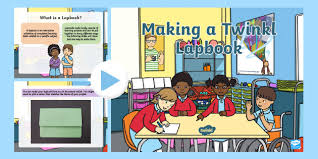
Twinkl is an online educational publishing house. It provides a large variety of resources for teachers, schools, and parents. These include schemes of work, assessments, games, resources that build cultural capital, and much more.
Teachers use Twinkl to create lesson plans, share videos, and support scaffolding learning whilst working with students and colleagues. They can upload photos, documents, and web pages to their account. This makes it easy to add content to blogs and websites.
When teachers share their resources online, they can reach thousands of students at once. Parents can stay connected with their children's learning. And teachers help others learn at the same time.
Twinkl is an online educational publishing house founded on 3rd February 2010 by Susie and Jonathan Seaton in Sheffield. Started from their back bedroom, it has grown to serve over one million subscribers worldwide with teaching resources and lesson materials.
Twinkl Educational Publishing is based in Sheffield. It was founded on 3rd February 2010 by Susie Seaton and Jonathan Seaton. They started the company from their back bedroom. Today it has more than one million subscribers around the world.
Their resources save teachers valuable time and support effective teaching strategies for a wide range of educators. In 2019, the company received the Queen's Award f or Enterprise in International Trade.
Ex-teachers founded Twinkl, giving insight into lesson prep challenges. This experience shaped material development addressing classroom needs. The founders understood time pressures and engaging learners, which informed Twinkl's design. Resources are comprehensive and user-friendly.
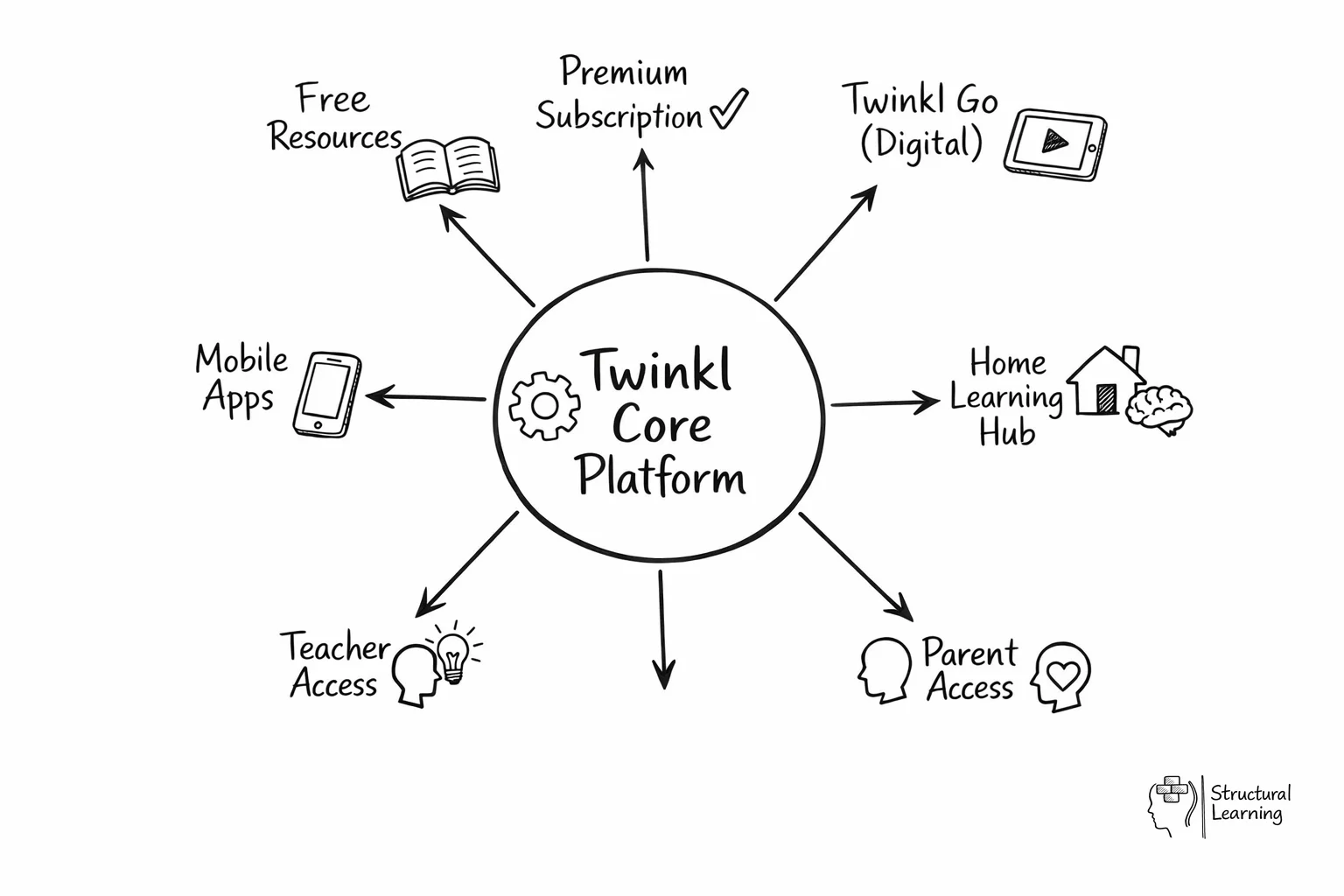
Twinkl launched as schools adopted more tech. Teachers needed resources for both online and offline learning. This proved useful during remote learning periods (Higgins et al., 2019). This showed Twinkl's foresight.
Twinkl resources support teachers, not replace them. Educators build upon this foundation, adapting content for each learner. This approach values resources and the teacher's professional judgement.
Teachers can access Twinkl resources by creating a free account at twinkl.co.uk, which provides access to thousands of free materials. For full access to over 525,000 resources, teachers can upgrade to a paid membership starting from £4.49 per month.
Once you have signed into the platform and set up a free or paid account, it is easy to access resources. Just type what you need in the search box, such as sounds, letters, or phonics. Or click on the options provided.
Twinkl's resources are sorted into categories:
After clicking on a category, you can choose a specific topic such as science, reading, or maths. Twinkl keeps adding new services including 'Activities and Games' and 'Health and Wellbeing'.
Free learning audit
Two quick ratings and two questions. We'll show you where your school sits and give you the learner observation toolkit (PDF).
Twinkl contains more than 525,000 different educational resources. New content is added every day. Many resources are free to use, while some are only for subscribers.
The free Twinkl resources are a useful starting point for your classroom. Many schools invest in a site licence. The membership options mean that investing in the platform is affordable for most teachers.
Another free resource that works well with Twinkl is the Universal Thinking Framework. You can download a high resolution copy and use it as a planning tool to develop critical thinking.
Free plans limit lesson planning and curriculum resources. Learners may get worksheets but lack teacher guides or assessments. This makes adapting materials for different learner needs time-consuming.
Shared subscriptions can save money for schools. Teachers access more resources and teaching teams share costs. Ready-made materials save time creating lessons, teachers report. This justifies subscription costs, especially with tight schedules.
Twinkl's home learning area helps parents with curriculum-linked resources. They can find worksheets, games and activities for all ages. Both free and paid options support learner development at home.
The Home Learning Hub at Twinkl has a complete timetable of content that is updated daily. All content in the Home Learning Hub is free. It offers a time-saving solution if you need to switch to online education at short notice.
This service saw a spike in membership during the pandemic. Parents needed somewhere to turn for quick and easy solutions. It remains a popular platform for homeschooled children around the globe and helps improve student engagement.
Twinkl apps provide a great way to create lasting learning experiences at home. These apps offer a large variety of choices. Parents and teachers can browse all available resources and explore the collection of online learning materials.
The 'Twinkl Originals' app contains many storybooks for children that help develop literacy skills and expand vocabulary. The 'Learn & Explore' app brings learning to life using a ugmented reality. Everything in the apps is free for subscribers and supports curriculum objectives.
image w-richtext-align-center" data-rt-type="image" data-rt-align="center">
Twinkl offers a range of membership options to suit different needs and budgets. While a free account provides access to a selection of resources, full access to the entire library of over 525,000 resources requires a paid subscription. These subscriptions vary in price depending on the level of access and the duration of the membership, with options available for individuals, schools, and entire districts. Prices start from as little as £4.49 per month.
Twinkl provides different levels of membership. The Core membership gives access to the basic resources. The Extra membership has interactive activities, online games, and handwriting resources. The Ultimate membership includes everything in Core and Extra as well as Twinkl Boost, which is a targeted intervention toolkit.
For schools, a site licence provides access for all staff members. This often proves to be the most cost-effective solution when multiple teachers are using the platform. Contact Twinkl directly for a quote and to discuss your school's specific needs.
It provides many teaching resources for all key stages and subjects. Teachers can find worksheets, activities, PowerPoints and assessments aligned with the National Curriculum. Resources cover English, maths, and science, plus history, geography, art and languages.
Differentiated materials support inclusion. John Sweller's cognitive load theory shows suitable information complexity is vital. Tiered resources help teachers meet varied learner needs in lessons. The set includes visuals, manipulatives, and activities for all learner types, maintaining standards.
The platform provides lesson plans, unit overviews, and assessment tools. New teachers will find these resources support their practice. Experienced teachers can adapt the materials to fit their style. Display items, certificates, and parent resources support school wide learning.
Digital resources must match subject needs for good teaching. (Laurillard, 2002) Maths learners need visuals and skills practice. (Piaget, 1936) English learners gain from varied texts and writing help. (Vygotsky, 1978) Science learners use diagrams and guides, (Bruner, 1966) whilst humanities learners need sources. (Bloom, 1956)
Mayer (2009) showed learners learn better with multiple information channels. This matters when picking resources, as subjects need different media. Geography and art benefit from images; language needs audio and varied text.
Subject resources need learners' prior knowledge and task difficulty considered. Familiar formats first, then complex ones ensure tech supports, not distracts. Evaluate resource success in subjects to understand best practices (Wiliam, 2011).
Plan lessons strategically, linking resources to learning aims, not the other way around. First, pinpoint core concepts. Next, choose resources that support these, thinking about what learners know and how they learn. This ensures resources help, not hinder, your teaching.
Sweller's (1988) cognitive load theory shows the value of digestible information. Carefully sequence digital lesson materials. Use visuals for explanations, interactive tasks for practice, and worksheets to consolidate learning. Transition smoothly between resources to maintain engagement (Mayer, 2009; Paivio, 1971).
Plan time each week to preview and adapt resources. Tailor difficulty, add extension work, or use real examples. Effective use needs flexibility. Adjust resources based on learner needs and outcomes. Resources are tools, not rigid scripts (Willingham, 2021).
Curriculum alignment is key for good resources. It links resources to the curriculum and teaching practice. Resources should meet learning outcomes and assessment needs. This helps teachers use resources in lesson plans (Marzano, 2003; Hattie, 2009). They can teach with confidence (Wiliam, 2011; Black & Wiliam, 1998).
Good resources need strong teaching principles, not just curriculum links. Sweller's cognitive load theory shows chunking information helps learners. Scaffolding, differentiation, and clear progress support all learners (Sweller, 1988).
Assess resources by checking the clarity of learning aims (Wiliam, 2011). Is the content difficulty right for each learner? Do resources match assessment expectations? They should link to the curriculum and guide support for learners who struggle.
Twinkl is an online educational publisher that provides many resources for schools and home learning. It offers lesson plans, schemes of work, and interactive materials across all UK key stages. Most teachers use the platform to reduce their weekly planning time and find specific curriculum support.
Educators search for specific topics like phonics or maths to find ready made worksheets and presentations. These materials can be used for direct instruction, independent tasks, or as scaffolds for learners with additional needs. Many schools use site licences to ensure consistency across different year groups.
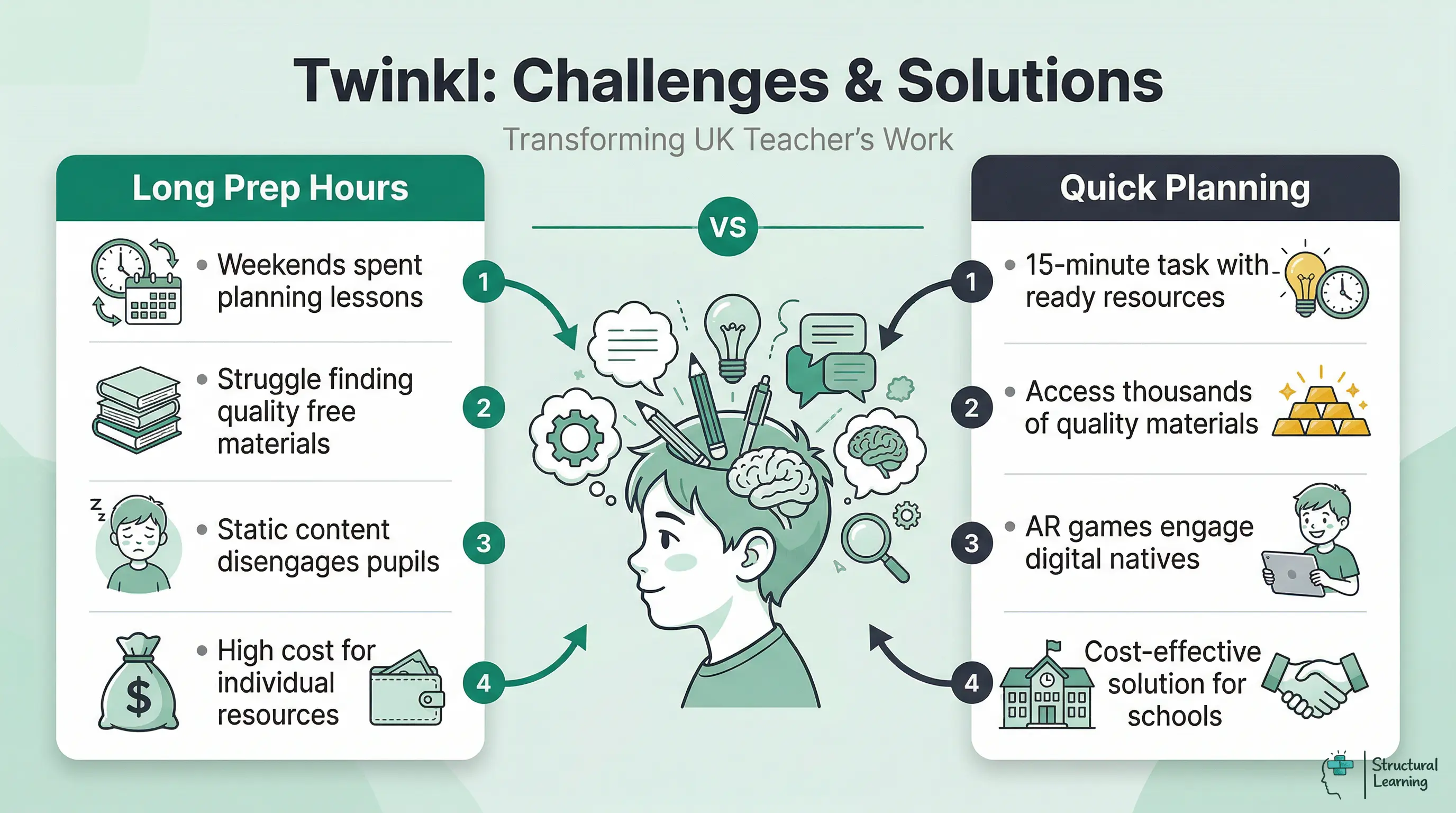
Prepared materials cut teacher admin. Teachers gain time for classroom work by using resources linked to the curriculum. These resources support differentiated tasks for diverse learners.
Structured resources support consistent teaching, research shows (Slavin, 1987). Teachers using these resources with their judgement create effective lessons. Reduced workload improves staff retention and school outcomes (Hattie, 2012; Marzano, 2003).
A frequent error is relying too heavily on worksheets without adapting them to the specific needs of the class. Teachers should ensure they review and modify materials to maintain high expectations for every learner. Another mistake is using resources that do not fully align with the specific learning objectives of the lesson.
The free version of the website allows teachers to download many resources without a paid subscription. For more advanced materials and full schemes of work, a monthly membership is required. Many educational organisations choose to invest in a school licence to support their entire staff.
Twinkl aids many UK teachers by cutting workload. Resources, like plans and games, improve learner experience. They publish quality, curriculum materials. This has cemented Twinkl's place as a leading publisher.
Twinkl helps teachers, new or experienced. It gives resources to support your lessons and inspire learners. Free resources and paid memberships offer many tools (Twinkl, 2024).
Scholarly research offers insights into online resource use. Research on digital tools indicates increased learner engagement (Higgins et al., 2019). Clark and Mayer (2016) highlight multimedia learning principles. Kirschner and Hendrick (2020) discuss cognitive load theory for effective learning. See research by Hattie (2009) for evidence-based teaching strategies.
Digital technology offers learning possibilities (EEF). The DfE highlighted technology's potential for education. Research by Higgins et al. (2019) found benefits and challenges. Slavin (1987) stressed evidence-based instructional design and Wiliam (2011) urged careful planning around formative assessment for tech integration.