Updated on
October 8, 2026
What Is Oracy? A Teacher’s Guide to Classroom Talk
Oracy is the ability to speak and listen well. A teacher’s guide to what oracy is, why it matters, and how to build classroom talk that develops thinking.

Updated on
October 8, 2026
Oracy is the ability to speak and listen well. A teacher’s guide to what oracy is, why it matters, and how to build classroom talk that develops thinking.
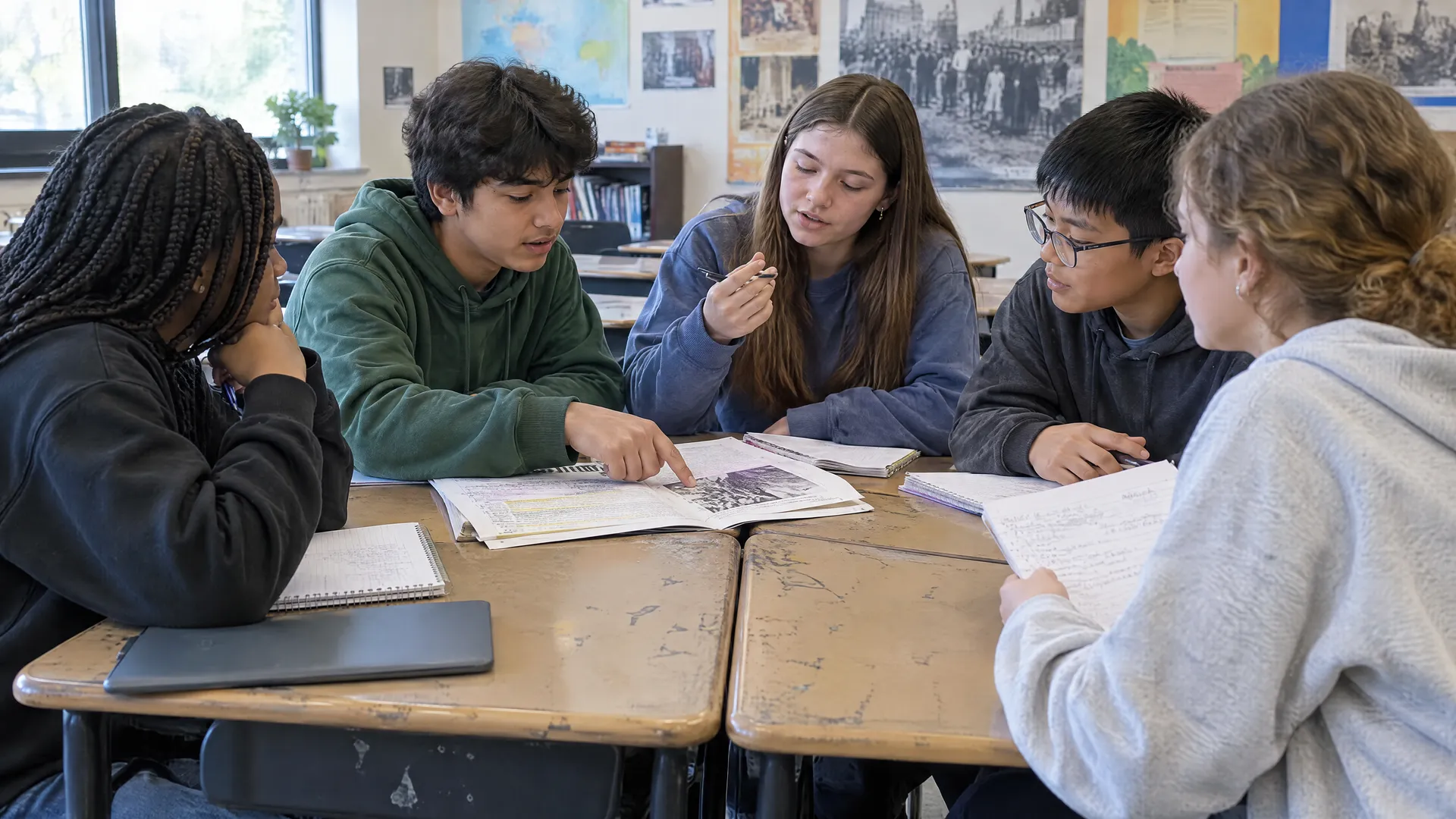
Here, we explore ways of developing a strong culture of language use in the classroom. The importance of oracy in language development cannot be emphasised enough. Discussion is central to all aspects of the curriculum including areas such as grammar development. If the conditions are set up correctly with the right sort of tools, children can have purposeful discussions about the possibilities, effects and meaning of the curriculum through active questioning.
For a structured early-language intervention, our guide to Talk Boost shows how small-group talk routines can build vocabulary, sentence structure and confidence.
For a broader view of how this fits alongside other classroom methods, see our guide to classroom pedagogy.
For a comprehensive exploration of this approach in practice, see our talk-based learning strategies guide.
Oracy can be described as learning to talk and learning through talk. This article focuses on the latter, we are particularly interested in how using active discussions can form the foundation for learners understanding of curriculum content.
Discussion roles boost talk, Mercer (2000). Clear frameworks aid interactions. Learners share ideas and probe assumptions via speaking skills, Alexander (2008), Reznitskaya et al. (2009).
This area of pedagogy has particular significance for disadvantaged or low-attaining learners, especially those with sen. With the guide below and the rest of the website you will find examples of how classroom talk can be used for knowledge acquisition and the development of spoken language development skills. Oracy is the art of speaking eloquently and persuasively. When someone speaks in a persuasive manner, they try to convince others of their point of view. While this type of communication is common in everyday life, it's also a fundamental part of the curriculum.
Speaking is one of the most basic skills that humans possess. We learn to talk early in life, and our ability to communicate continues to develop throughout adulthood. Regardless of whether someone speaks fluently or struggles to express themselves, learning to speak is the foundational building block of literacy. Learning to read and write is much easier when you understand the basics of spoken communication.
For example, knowing how to pronounce certain letters and sounds allows children to recognise letter patterns and build vocabulary. When kids grow into adults, they continue to rely on their knowledge of pronunciation to decode written text. It's no surprise then that mastering the art of speech is a critical part of developing literacy. People who lack proficiency in speaking tend to fall behind academically, especially with reading comprehension. Organisations such as Voice 21 I've been promoting effective oracy skills across schools in the UK, it is clear that providing children with the tool of communication sets them up for a lifetime of success.
Oracy is to communicate what literacy is to reading and writing; and numeracy to mathematics. The term 'oracy' was first used by Andrew Wilkinson in the 1960s. Andrew believed that oracy, one's ability to express themself with fluency in speech, must get equal status to math performance and literacy in school curriculums.
Wilkinson (1965) defined "oracy" as speaking clearly and communicating well. He believed oracy was key, like literacy and numeracy. The National Oracy Project (1987-1993) showed talk improved learner results. Wilkinson's idea stands: teach speaking directly for gains (Wilkinson, 1965).
In its simplest form, oracy is to be able to express oneself well. It relates to having a broad range of vocabulary to say what one needs to say and the proficiency to structure thoughts so that the person makes sense to others.
Oracy matters now more than ever. Many learners speak another language at home, impacting their English communication in schools. Educators noticed oracy skills declined after lockdown, especially for disadvantaged learners.
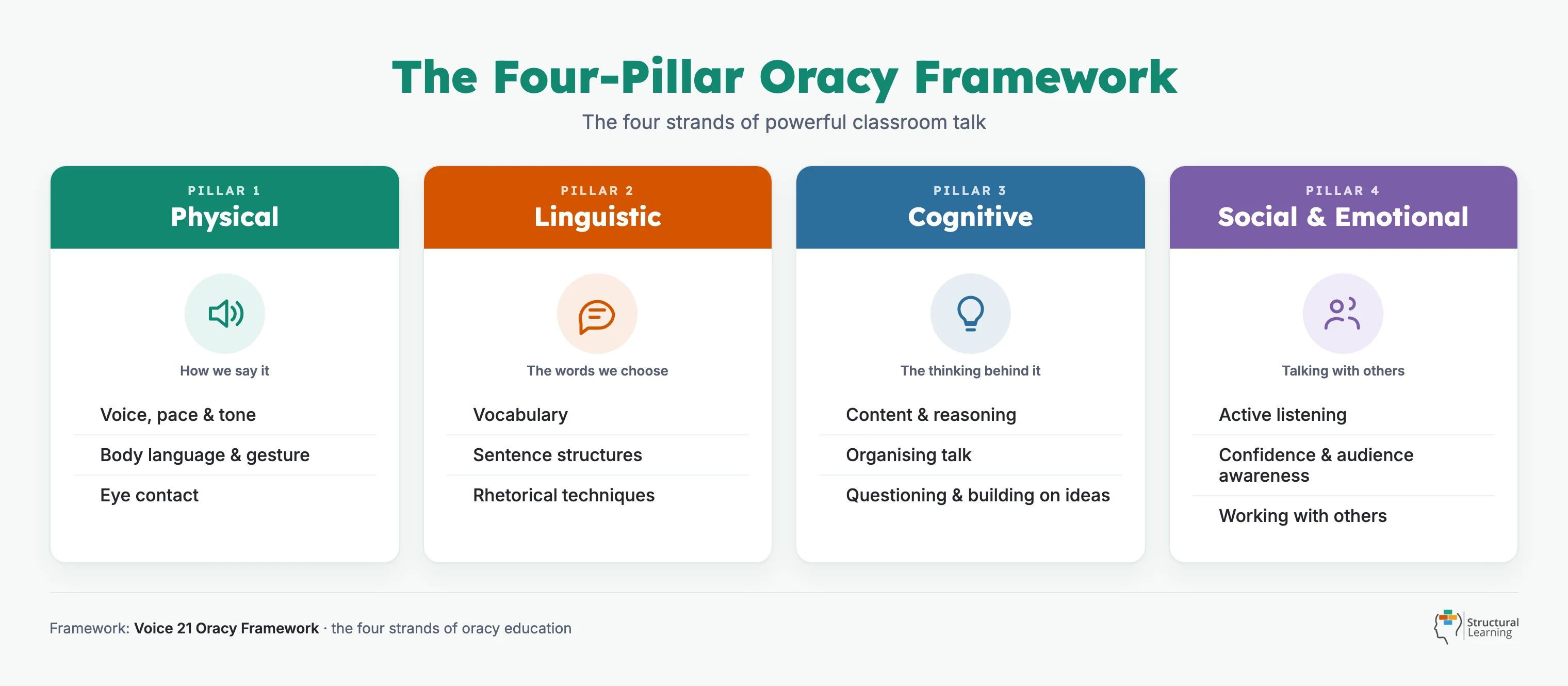
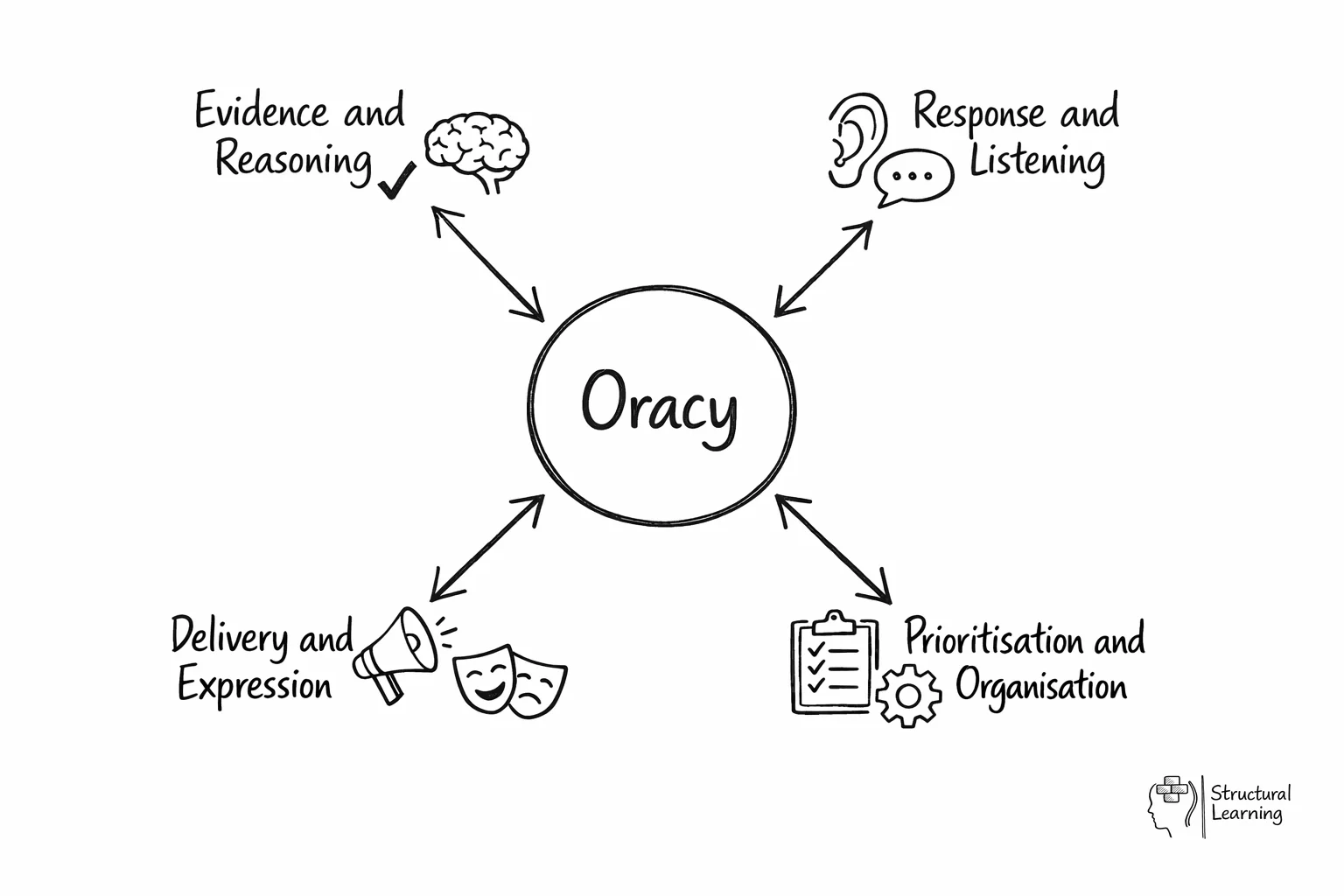
Teachers and schools can build learners' oracy through planned speaking and listening activities. The Oracy Framework describes four interlinked strands: physical, linguistic, cognitive, and social and emotional. See our Rosenshine's principles guide for help.
The Education Endowment Foundation (EEF, 2021) says oral language boosts learner progress by +6 months. Despite low cost and strong evidence, oracy lacks focus in schools. The EEF advises structured teaching: model academic language and practice verbal responses. Unstructured talk gives limited improvement.
To measure oracy skills schools can use a range of assessment tools. These include observation checklists, self and peer assessment, and structured discussions. Teachers can also use formative assessment techniques, such as think-pair-share, to gauge students' understanding and speaking skills in real-time. By using a variety of assessment methods, teachers can gain a comprehensive understanding of students' oracy skills and identify areas where they need additional support.
Hattie and Timperley (2007) found effective feedback greatly impacts learning. Dylan Wiliam (2011) gives teachers useful ways to use formative assessment daily.
Here are some practical strategies that teachers can use to develop oracy in the classroom:
For early years conversation examples, see the ShREC guide to adult interaction.
Vygotsky (1978) argued that all higher mental functions originate in social interaction. Thought does not simply find expression in speech; thought is completed in speech. Inner speech, the private verbal thinking we use to plan and self-regulate, develops from external dialogue between child and adult. This means oracy is not a peripheral communication skill but the foundational mechanism through which higher-order thinking develops. When a teacher asks a learner to explain their reasoning aloud, they are not merely checking understanding: they are building the internal dialogue the learner will later use to think independently. Mercer (2000) calls this "interthinking," where collaborative talk creates shared understanding that neither participant could reach alone. For Vygotsky's broader theory, see Vygotsky's theory of cognitive development.
Oracy assessment differs from literacy tests. Spoken language happens live and covers varied communication aspects. Teachers need tools to track what learners say and how they say it. This should happen without breaking up discussions (Mercer, 2000; Barnes, 2008).
Oracy assessment uses observation and learner self-reflection. Use simple rubrics that check key skills like clarity. Rubrics should also cover vocabulary use, building on ideas, and register (Mercer, 1995). Learners understand rubrics best when using them to assess peers (Vygotsky, 1978).
Learners record speaking tasks on tablets regularly. They explain maths or present science as a practical classroom strategy recommended by educational bodies such as Voice 21 and the EEF. Recordings evidence vocabulary growth and confidence over time. These become formative assessments, aiding learner reflection (Vygotsky, 1978; Barnes, 2008).
For younger learners or those with special educational needs, visual progress trackers work particularly well. Create a classroom display showing different oracy skills as stepping stones: from 'I can speak clearly' to 'I can explain my reasoning using because'. Learners move their name along the path as they demonstrate each skill, providing immediate recognition of progress whilst identifying next steps.
Oracy activities should match learners' ages but stretch their reasoning skills. Structured talk helps younger learners (Foundation, KS1). Role play also develops basic conversation. "Barrier Games" build precise language and keep learners engaged (Mercer & Littleton, 2007).
As learners move through Key Stage 2, introduce more sophisticated discussion formats. 'Philosophy for Children' sessions work exceptionally well for Years 3 and 4, encouraging learners to explore abstract concepts through structured dialogue. By Years 5 and 6, learners should engage in formal debates, panel discussions, and 'Expert Groups' where they research and teach specific topics to their peers.
Oracy tasks should mirror real life for secondary learners. This helps them prep for university and work through practice. Subject-specific oracy matters because science differs from history. Teachers must show these differences, helping learners adapt (Barnes, 1976; Vygotsky, 1978).
Oracy activities help EAL learners build language skills. Speaking gives instant feedback, unlike writing. Group tasks lower anxiety, say researchers (e.g., Swain, 1985; Vygotsky, 1978). Learners join at their level, accessing harder topics.
Oracy games help EAL learners access lessons. 'Word Tennis' builds fluency; research showed quick vocabulary exchange works. 'Sentence Builders' teach syntax as learners create sentences together. Research found fun activities support learning instead of grammar drills.
Structured talk groups aid EAL learners (Walsh, 2006). Assign roles to match language skills. Newer learners could collect vocabulary (Mercer, 2000). Confident learners could summarise (Littleton & Mercer, 2013). This helps all learners contribute and develop language skills (Gillies, 2003).
Voice 21 and Cambridge University created an oracy framework. It gives teachers a structure for teaching spoken language. The framework has four parts to teach and assess, based on classroom work. This helps learners communicate well, as shown by research (Voice 21, n.d.). Many UK schools use it to build oracy into their lessons.
Physical Strand: How we use our voice and body
Fluency, pace, and tone matter, alongside pronunciation, voice, and body language. Learners see communication's "how" is as vital as its "what". Teachers create "Talk Rules" covering physical cues like eye contact. Debates and presentations let learners practise physical presence with peer feedback (Hattie & Timperley, 2007).
Linguistic Strand: The words and structures we use
Linguistic skills involve vocabulary, register, grammar, and idea structure. Some learners have limited vocabulary for explaining complex ideas (Hart & Risley, 1995). Teachers can use "Talk Frames" to support speech (Mercer & Dawes, 2008). Teach Tier 2/3 vocabulary and require its spoken use to improve literacy (Beck et al., 2013).
Cognitive Strand: The thought processes behind the talk
Cognitive skills involve reasoning and critical thought in speech. Learners choose content, structure arguments, and summarise others (Mercer, 1995). Teachers should use "Think-Pair-Share" to provide processing time (Lyman, 1981). Assign talk roles like Summariser, Challenger, or Clarifier in group work (Johnson & Johnson, 2009). This strengthens learners' reasoning (Vygotsky, 1978).
Social & Emotional Strand: How we interact with others
Oracy covers listening, responding, turn-taking, and speaking confidence. It also includes respecting different opinions and connects to social-emotional learning. Teachers develop learner oracy by teaching active listening. Harkness tables or Socratic seminars build confidence and include quieter learners.
Voice 21's Oracy Assessment Toolkit uses tasks, not impressions, to assess learners' speaking. Teachers use group work or debates to draw out oracy skills in all areas. The toolkit has rubrics to track learner progress from EYFS to KS4. It shows strengths and areas for improvement.
The toolkit helps teachers assess learners' needs, not just give grades. Teachers may find learners are strong at idea generation. They might also need help building on peers' contributions regarding social-emotional skills. This clarity allows for targeted intervention.
Integrate Voice 21 by focusing on classroom talk, not rewriting schemes. Identify relevant strands like cognitive skills (Mercer, 1995) for your lesson. For Tudor history, use reasoning (Alexander, 2008) and precise language. Plan activities to boost these, like debates using evidence (Barnes, 1976) or Fishbowl discussions.
Next, be explicit about expectations. Rather than saying "discuss in pairs," say: "In your pair, one person will explain your theory about why Henry VIII broke with Rome, and the other will ask clarifying questions using the sentence stem 'Can you explain what you mean by...?' You will then swap roles." This clarity transforms talk from incidental interaction into deliberate skill-building. Finally, allocate time for reflection. After a discussion activity, ask learners: "Which strand did we focus on today? Which was hardest? What will you do differently next time?" This metacognitive awareness embeds oracy as a taught skill, not a talent some learners are born with.
Alexander (2020) and Mercer, Wegerif and Dawes (1999) show talk improves thinking. Dialogic teaching and ground rules help learners test ideas. Learners then show better problem-solving across subjects.
The All-Party Parliamentary Group on Oracy influences spoken language development in the UK. Their 2021 "Speak for Change" inquiry raised oracy's profile, with implications for teachers. It puts oracy central to education policy (APPG, 2021).
The APPG (2021) found oracy predicts life chances, but is sidelined. School closures worsened a "language gap". disadvantaged learners struggled with talking about ideas. Few teachers (primary or secondary) feel ready to teach spoken language. Teachers need training and schools need oracy resources.
The APPG linked the gap to curriculum pressures. High-stakes tests and a focus on written work were also factors. Oracy is seen as less vital than reading and maths.
The APPG recommend oracy matches literacy and numeracy in the curriculum. This doesn't mean separate speech lessons; integrate oracy across subjects. Learners in maths can reason aloud about problem-solving. History learners can debate historical causation, and science learners can discuss to test ideas.
The inquiry also highlighted the urgent need for teacher training. The APPG recommended that Initial Teacher Training (ITT) programmes must include explicit training in how to teach through dialogue and teach for oracy. The Early Career Framework (ECF) should support new teachers in developing oracy pedagogy as a core competency, not an optional extension. This systemic investment in teacher knowledge is essential to shift classroom practice at scale.
UK schools are acting on the APPG's work. Some have appointed an "Oracy Lead," a senior teacher. They develop oracy strategies, train colleagues, and embed progression across key stages. This reflects oracy's importance beyond English lessons.
Researchers have shown oracy is vital (Voice 21). Schools map oracy alongside literacy and numeracy. This ensures communication skills develop for each learner. Mapping prepares schools for Ofsted inspections. Oracy frameworks, like Voice 21, help schools showcase their oracy provision.
The APPG's work signals that investment in oracy is not optional or aspirational; it is a policy imperative. For classroom teachers, this means support is increasingly available (through frameworks like Voice 21, training networks, and specialist resources), but it also means expectations are rising. The question facing schools is no longer "Should we teach oracy?" but "How will we teach oracy systematically and hold ourselves accountable for learner progress?"
Oracy helps learning across all subjects. Teachers create talk-rich classrooms using structured discussions and communication skills. This supports learners to speak confidently, boosting their attainment and social skills (Vygotsky, 1978; Mercer, 1995; Alexander, 2008).
Investing in oracy is an investment in our students' future. By prioritising the development of spoken language skills, we can equip them with the tools they need to succeed in education, employment, and life. Let's make oracy a cornerstone of our teaching practice and reveal the full potential of every student.

Consider the impact of talk on learners’ engagement and progress (Mercer & Dawes, 2008). Develop oracy with structured discussions and sentence starters for each key stage. Check learner understanding regularly using varied assessment methods (Alexander, 2020; Barnes, 1976). Review protocols using research-based strategies (Fisher & Frey, 2018).
Download this free Oracy, Dialogic Teaching & Classroom Dialogue resource pack for your classroom and staff room. Includes printable posters, desk cards, and CPD materials.
Philosophy for Children, developed by Matthew Lipman in the 1970s, uses philosophical enquiry to develop reasoning through structured dialogue. In a P4C session, learners sit in a circle, share a stimulus such as a picture book, news story, or unusual object, then generate philosophical questions. The class votes on the most interesting question and discusses it using stems like "I agree with X because..." and "I want to challenge that because..." The EEF trial of P4C showed +2 months additional progress in reading and maths, with larger gains for disadvantaged learners. P4C works because it requires learners to listen, build on others' ideas, and justify their reasoning, all transferable oracy skills. For critical thinking strategies, see our guide to critical thinking.
Neelands' (1992) drama conventions structure learning and develop spoken language. Hot-seating and freeze-frame boost speech. Drama builds oracy; learners rehearse register. Year 5 could hot-seat Henry VIII with history questions.
Researchers have explored how oracy helps learners express themselves clearly. Oracy involves speaking and listening to improve subject knowledge. It is, in effect, the spoken form of literacy and numeracy.
Teachers can use structured discussion techniques such as think, pair, share and dialogic teaching to create purposeful talk. Scaffolding tools like sentence stems and assigned discussion roles help learners structure their thoughts and respond to others. Explicit instruction in specific oracy skillsets ensures children know how to reason, listen, and organise their ideas effectively.
Vygotsky (1978) said spoken language supports literacy. Learners improve reading and writing by developing speaking skills. Chomsky (1965) found learners recognise patterns and build vocabulary. Hart & Risley (1995) linked early mastery to later academic success.
Classroom talk boosts learner outcomes, research suggests. Structured discussions help learners think strategically and solve problems (Mercer & Dawes, 2008). Explicit oracy teaching closes the communication gap for disadvantaged learners (Alexander, 2020; Barnes, 1976).
A frequent error is assuming that any classroom talk is the same as oracy. Without structure and explicit instruction, talk can become unproductive or dominated by only a few voices. Teachers should ensure they focus on the cognitive aspects of speaking rather than simply allowing learners to chat without a clear purpose.
Oracy provides a vital bridge for learners with additional needs to access the curriculum without the immediate pressure of writing. It allows them to practise their thoughts verbally and build confidence through structured interactions. Using a clear framework helps these learners participate in deep learning activities and challenge assumptions alongside their peers.