Updated on
September 24, 2026
Supporting Dyslexic Students: Practical Strategies
Dyslexic learners need structured literacy and clear classroom adjustments. Evidence-based strategies, assistive technology and a dyslexia-friendly room.


Updated on
September 24, 2026
Dyslexic learners need structured literacy and clear classroom adjustments. Evidence-based strategies, assistive technology and a dyslexia-friendly room.
Quick answer: Dyslexia is a specific learning difference. It affects how a learner's brain processes written language. Learners often have slower phonological processing, which means working with speech sounds, working-memory constraints, and difficulty making reading and spelling automatic. Around 10% of the UK school population is dyslexic, so effective support includes structured multi-sensory phonics, dual coding, extended reading time, and a clear view that many dyslexic learners are strong visual and spatial thinkers.
Dyslexia affects reading and spelling in 10% of learners, whatever their level of intellect. Research shows that it comes from brain differences in how learners process language (Lyon et al., 2003). Learners find it hard to decode text, even when they have strong abilities (Shaywitz & Shaywitz, 2005). Phonological processing, which means working with the sounds in words, is a key difficulty area (Ramus & Szenkovits, 2008).
Dyslexia mainly affects learners' reading and spelling. The condition stems from neurological differences (Lyon et al., 2003). These differences change how the brain handles language. Dyslexia exists across all intellectual ranges and backgrounds (Shaywitz et al., 1998).
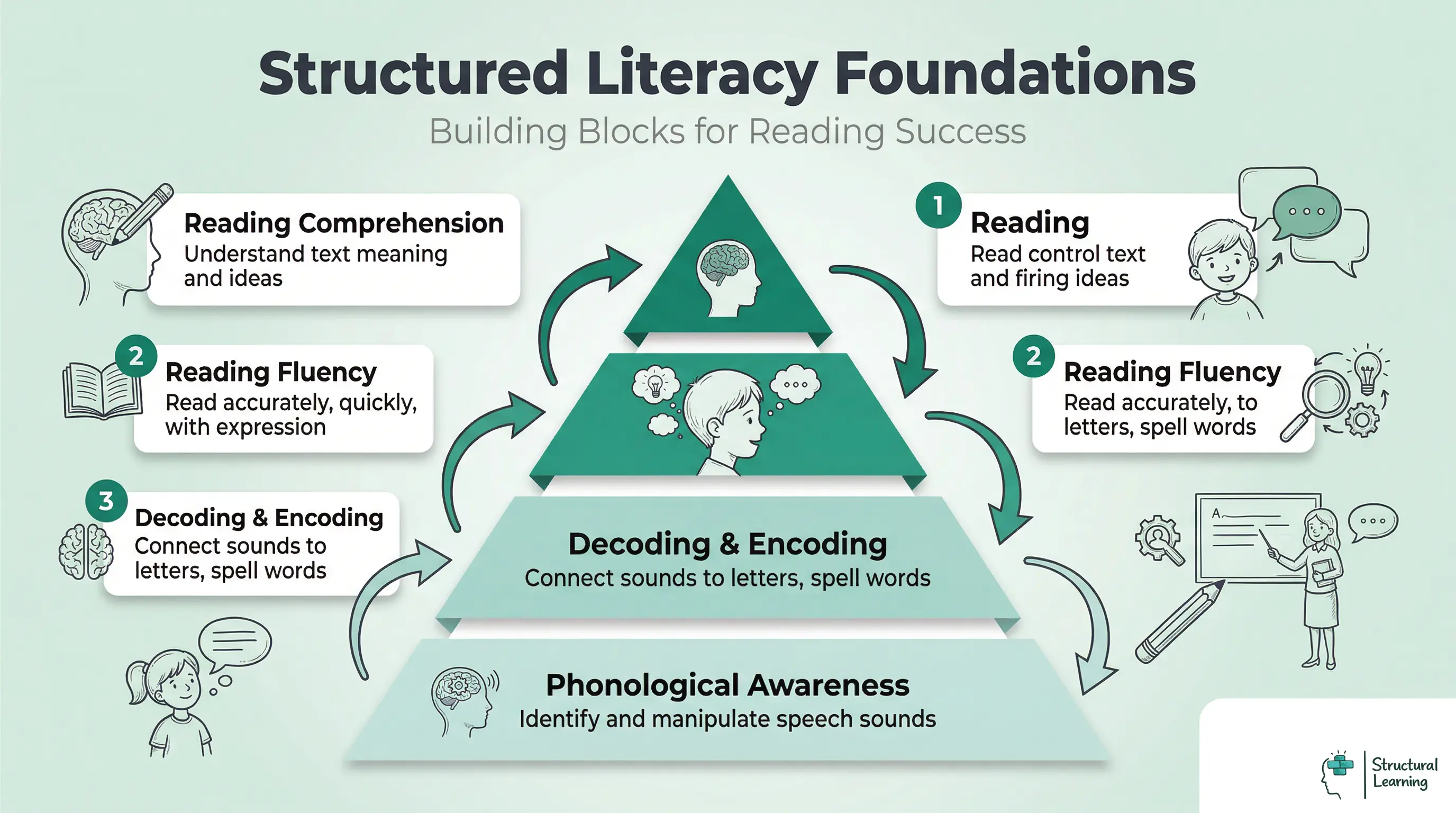
The Rose Report (2009) defined dyslexia as characterised by difficulties with accurate and fluent word reading and spelling. These difficulties typically result from a deficit in the phonological component of language. This means learners with dyslexia often struggle to identify and manipulate the sounds within words. These sound skills are the foundation of decoding written text.
These ideas sit within a broader toolkit covered in our guide to reading comprehension strategies.
Dyslexia is common. Estimates vary, but it is widely suggested that up to 10% of the population shows some degree of dyslexic characteristics, with around 4% experiencing severe difficulties. In a typical class of 30 learners, three are likely to have dyslexic characteristics, and one may have significant difficulties. Dyslexia can also co-occur with other conditions, so ADHD assessments sometimes matter for comprehensive support.
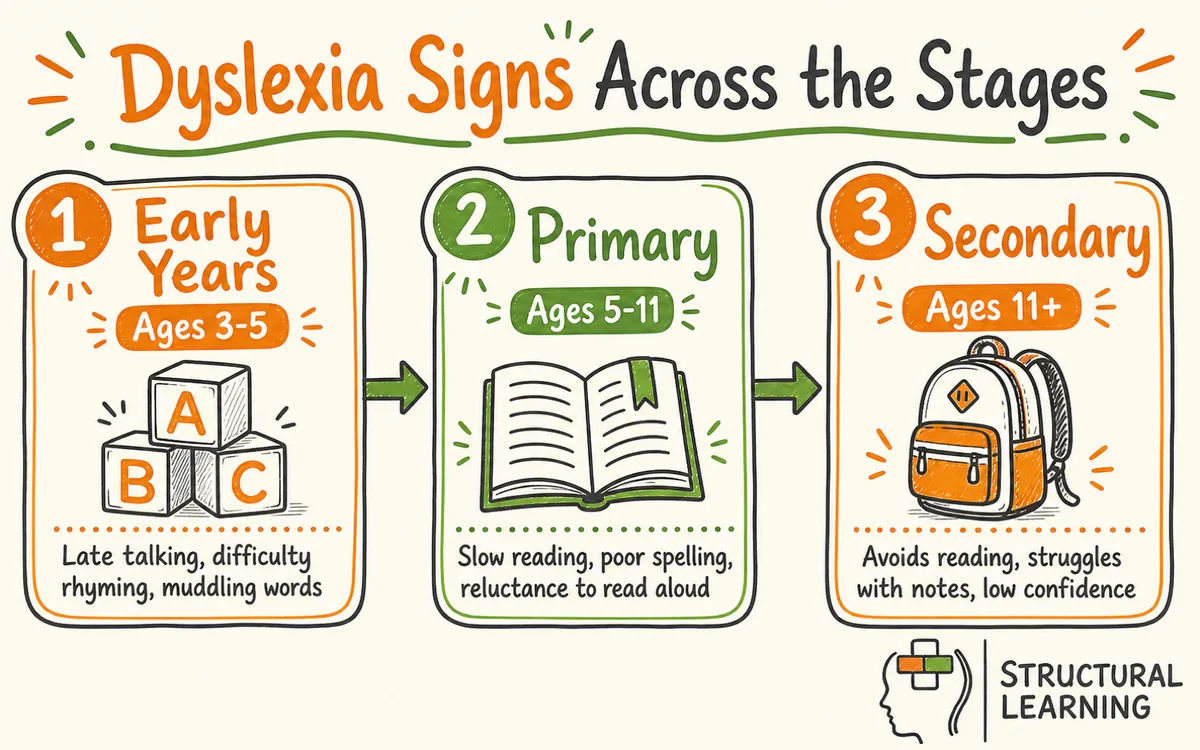
Early signs may include trouble learning nursery rhymes, recognising rhyming patterns, and developing speech. Children may also find it hard to learn letter names and sounds, or they may confuse similar-looking letters (b/d, p/q). They may also struggle to remember sequences, such as days of the week.
As reading demands increase, difficulties often become easier to see. Signs include slow reading progress despite good teaching, phonological difficulties (sounding out words, blending sounds), spelling that does not improve with practice, effortful and error-prone reading, and avoidance of reading aloud. Working memory difficulties may also affect how well learners follow multi-step instructions. Over time, these challenges can significantly affect learner wellbeing and academic confidence.
Some learners develop ways to hide difficulties (Ganschow et al., 1998). Academic struggles cause frustration and low self-esteem. Learners struggle with reading speed (Vellutino et al., 2004).
Spelling is difficult, impacting note-taking (Lyon et al., 2003). Language learning and written work are also challenging (Ramus & Szenkovits, 2008).
Shaywitz (2003) recommends structured, explicit reading instruction for dyslexic learners.' For an evidence claim, cite Rose 2009: systematic phonological/phonic interventions are effective for children with dyslexia. Multisensory methods are also key because they use sight, sound, and touch together (Birsh, 2018). Instruction should move in a clear order and give learners time to practise (Kilpatrick, 2015; National Reading Panel, 2000).
Multisensory methods use senses together. Learners could trace letters while saying sounds (visual, kinaesthetic, auditory). Colour-coded syllables or letter tiles also help learners build words. These channels help memory and retrieval (Shams & Seitz, 2008).
Dyslexic learners often need more repetition before skills become automatic (Nicolson & Fawcett, 2007). When skills are not automatic, they use working memory. This can affect comprehension (Swanson & Alloway, 2012). Spaced practice builds lasting automaticity better than cramming (Cepeda et al., 2006).
Teachers can quickly improve the learning experience for dyslexic learners with adjustments. Use larger fonts and give learners more time for written work. Allow verbal answers, and use colour coding to aid organisation. Mind mapping assists learners to structure thoughts.
Technology can support learning well when teachers use it with care. Text-to-speech helps learners with dyslexia read harder texts (MacArthur, 2009). Speech-to-text helps learners put their ideas into writing (MacArthur, 2009). Digital tools also aid organisation, but teachers must still provide literacy lessons (Rose & Meyer, 2002).
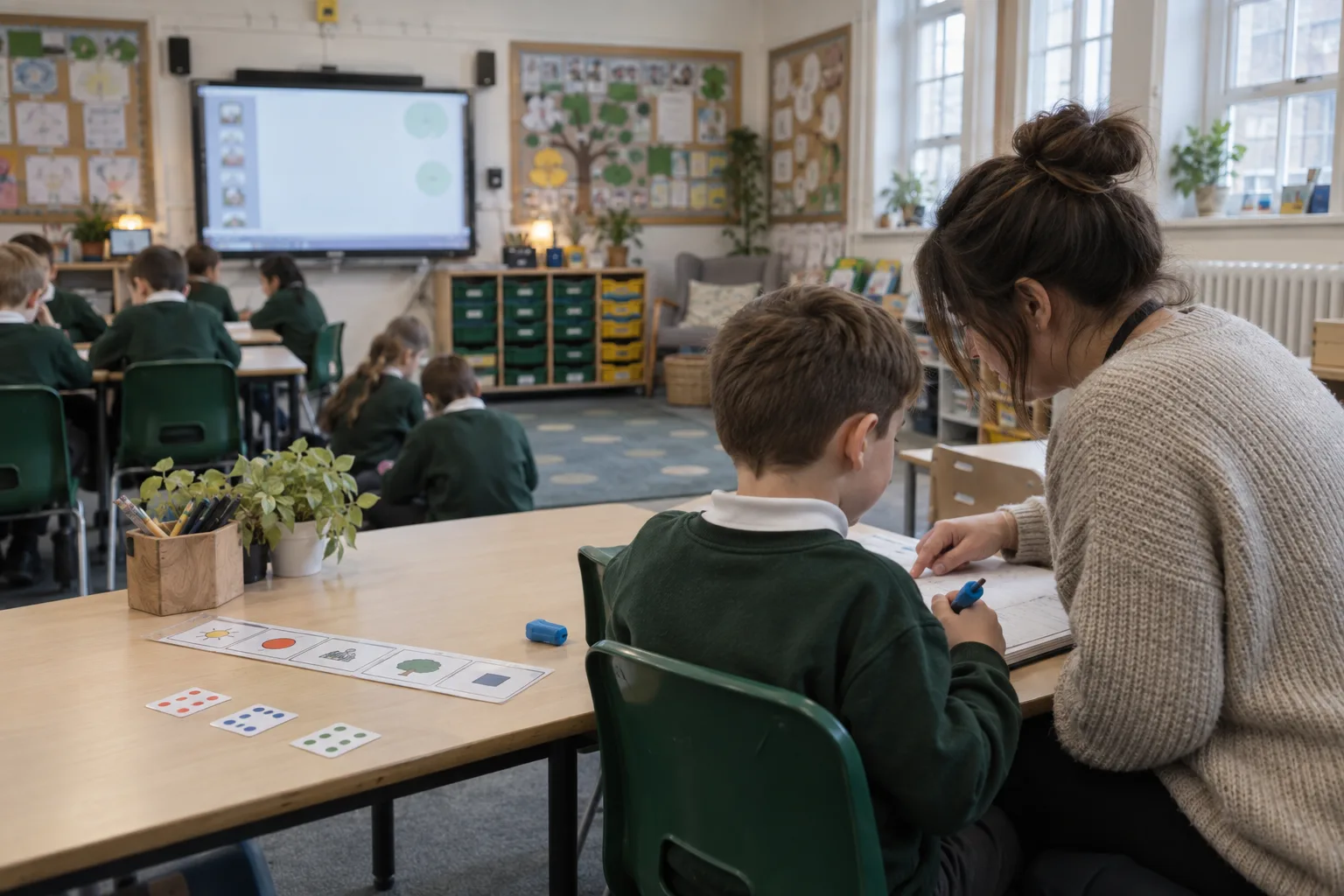
Flexible groups and regular checks help include all learners. Formative assessment shows where learners need more help, as found by Black and Wiliam (1998). Peer support, pairing learners with different skills, boosts learning for everyone (Vygotsky, 1978).
Key adjustments include extra time for reading and writing tasks. They also include other ways to show knowledge, such as oral presentations and mind maps, and assistive technology such as text-to-speech software. Written instructions alongside verbal ones reduce the load on phonological working memory, which helps learners hold and use speech sounds.
Use a clear sans-serif font at a larger point size and generous line spacing (the British Dyslexia Association recommends Arial, Verdana or Tahoma at 12-14pt with 1.5 line spacing). These adjustments let dyslexic learners show what they know without decoding speed getting in the way.
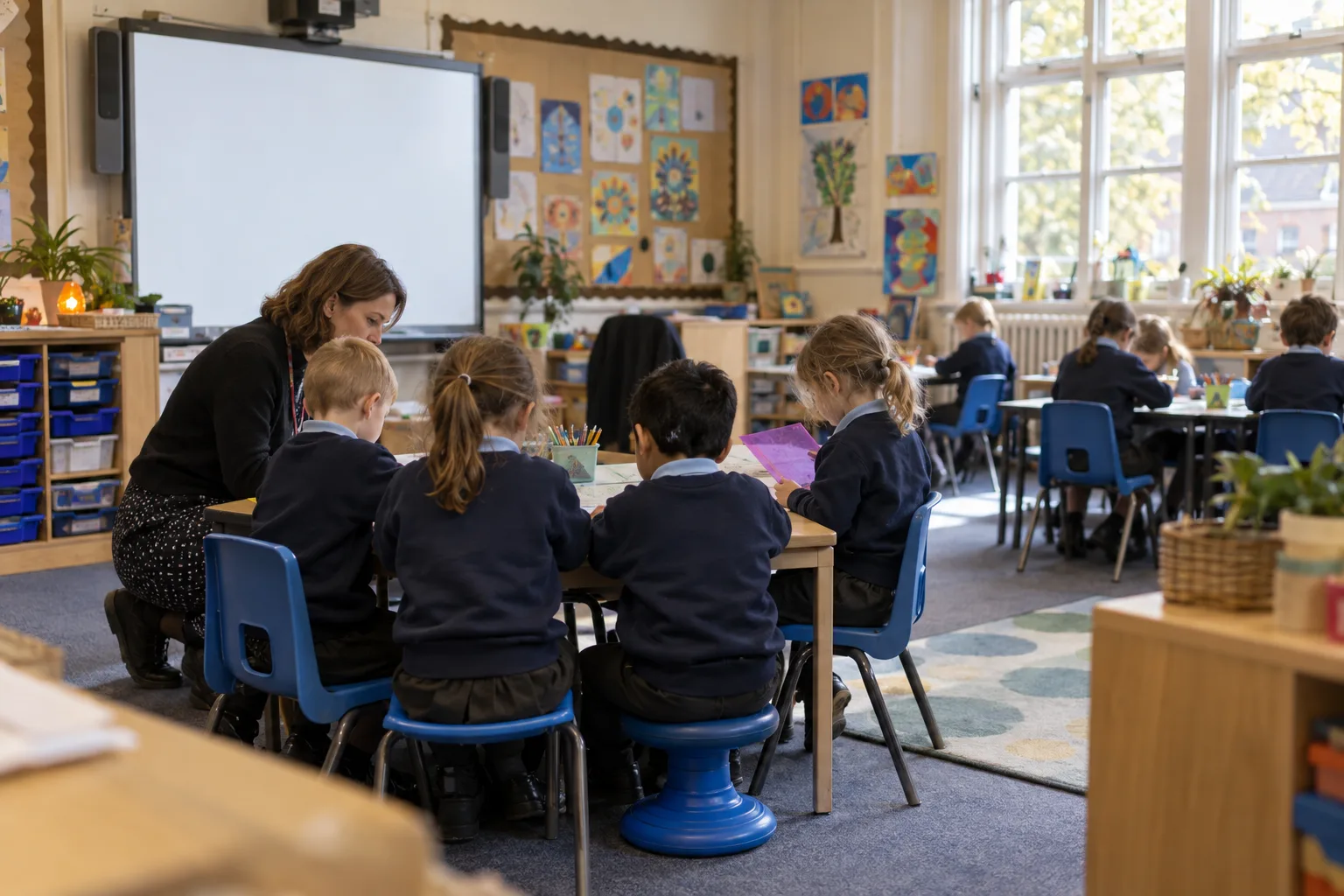
Small changes to the classroom can make a big difference to dyslexic learners' learning experience. Seat these learners away from distractions, such as busy walkways or noisy equipment. Make sure their workspace has strong lighting and a clear view of the whiteboard. You could also offer different seating, such as stability balls or standing desks, as these can help some dyslexic learners focus better.
To include all learners, adjust your teaching. Break down instructions into clear steps, using both spoken and written forms. Give learners time to respond, as dyslexic learners may need additional processing time.
Offer choices to show understanding, like presentations instead of reports. Use varied methods; connect sight, sound, and movement, like recommended by Reid (2005).
Reduce visual clutter on walls and handouts, while keeping the learning space engaging. Use consistent fonts, such as Arial or Comic Sans MS, at 12-point size or larger, with enough spacing between lines. Coloured overlays are not an intervention for dyslexia: Current SpLD Assessment Standards Committee (SASC) guidance confirms that overlays address visual stress, which is distinct from dyslexia although the two can co-occur. If a learner reports glare, letters moving on the page, or visual fatigue during reading, refer them for an optometric or orthoptic assessment rather than trialling overlays in the classroom; also create designated quiet spaces and clear routines, so learners can step away from sensory input, know what to expect, and feel less anxious during classroom transitions.
Assistive technology can make a real difference for learners with dyslexia. It can help them work around areas of difficulty and become more independent. Some commonly used tools include:
Provide training and support so learners can use assistive technology with confidence. This is crucial because it helps them use these tools well and improve their learning experience.
A dyslexia-friendly classroom helps all learners, not only those with dyslexia. Key elements include:
By using these strategies, teachers can build an inclusive classroom. This helps all learners do well, whatever their learning differences.
Changes to the physical classroom can play a crucial role in supporting dyslexic learners. Seat these learners away from distractions, such as busy areas or noisy equipment, and make sure their workspace has good lighting.
Use cream or off-white paper instead of bright white, as this reduces visual stress for many dyslexic learners. Display key information in dyslexia-friendly fonts like Arial or Comic Sans, at 12-point size or larger. Keep colour coding consistent for different subjects or types of information.
Build structured, multi-sensory teaching into daily lessons. When you teach new vocabulary, use visual displays, explain it aloud, and add a kinaesthetic, hands-on activity. Break complex instructions into small steps, and give learners visual checklists to tick off as they progress. Use mind maps and flow charts to show information clearly, so abstract concepts become more concrete and easier for dyslexic learners to remember.
Technology boosts access for every learner; no one is singled out. Offer text-to-speech and audiobooks. Use tablets/laptops for writing if needed.
These methods, (Hall, 2018; Rose & Meyer, 2002) help dyslexic learners show what they know. It develops literacy skills (Shaywitz & Shaywitz, 2003).
Good parent-teacher partnerships support learners with dyslexia. Shaywitz's research proves consistent home and school approaches improve results. Teachers should start regular chats with families. This allows quick feedback and joint problem solving, beyond parents' evening.
Talk with parents about their learner's strengths and areas for support. Mention specific classroom adjustments like extra time or varied teaching. Show parents how they can use these strategies at home. Give families resources, like reading programmes and homework advice.
Set up structured review meetings to check progress and adjust support together. Ask parents to share what they know about their child's learning preferences, emotional responses to reading tasks, and successful strategies used at home. This two-way exchange helps classroom interventions and home support respond to the learner's changing needs. It also creates a smooth support network that maximises learning potential across all environments.
Traditional assessments can miss dyslexic learners' abilities. This creates barriers, hiding understanding, not revealing it. Fair tests separate skills from how you assess them.
Difficulties with reading or writing should not hide subject knowledge. Snowling's research shows dyslexic learners have strong reasoning skills (Snowling, 2020). These remain hidden with text-heavy assessments.
Use assessment modifications such as oral exams or presentations as well as written work. Dyslexic learners need extra time (25-50%) to process information, (Humphrey, 2002). You can also give questions in advance or use larger fonts. Assistive technology, such as speech-to-text or digital readers, lowers the load on working memory during assessment, so these adjustments offer fair access, not lowered standards, (Mortimore & Dupree, 1991).
Marking should focus on content knowledge over spelling (Black & Wiliam, 1998). Rubrics should separate accuracy from understanding (Sadler, 1989). Give detailed feedback noting strengths and areas to improve (Hattie & Timperley, 2007). This helps learners see assessment as a learning tool.
Dyslexic learners often think poorly of their learning skills (Reid, 2003). This leads to avoiding work and less class participation. Teachers must recognise emotional support is vital alongside dyslexia teaching. This boosts confidence while tackling anxieties.
Psychologically safe spaces value diverse strengths. Reframe challenges as learning differences, not deficits.
Offer dyslexic learners chances to show creative thinking (e.g. visual tasks). Praise effort and strategy, not talent. Dweck's research on growth mindset helps learners build resilience.
Give learners reading tasks in advance. Let learners show knowledge in varied ways. Set clear routines to lower mental effort.
Dyslexic learners can mentor others, building self-esteem. Check learners' feelings often to support well-being and learning. (Modified from Burden & Burdett, 2023)
Early identification, evidence-based instruction, classroom changes, and tech all aid dyslexic learners. Teachers need to understand dyslexia and use good strategies (Lyon et al., 2003). This helps learners overcome challenges and achieve their potential (Vellutino et al., 2004).
Remember that every learner with dyslexia is unique, so their needs may vary. Keep regular communication with parents, specialists, and the learners themselves. This helps ensure that they receive the appropriate support and accommodations. A collaborative and understanding approach can make a significant difference in the lives of learners with dyslexia, developing their academic success and overall wellbeing.
Remember each dyslexic learner is different. Use multi-sensory methods and tech as suggested. School-wide support works best. Tailor strategies to the learner's specific needs.
Begin with one or two simple adjustments. Try dyslexia-friendly fonts or give learners more time. Once easy, add more methods. Use colour-coding or movement activities gradually to support dyslexic learners.
Regular monitoring and flexibility are still essential throughout this process. What works well in the autumn term may need adjustment by spring. Learners develop, and curriculum demands change.
Keep simple records of which practical strategies work best for each learner. Then adapt your approach based on learner feedback and what you observe.
Investment in dyslexia-friendly teaching practices helps learners with dyslexia and improves learning for all learners in your classroom. As you use these strategies, keep regular communication with learners, parents, and support staff. This helps ensure that approaches remain effective and respond to changing needs. With proper support and understanding, dyslexic learners can achieve academic success whilst developing the confidence and resilience that will serve them throughout their educational process.
Build a Section 504 accommodation plan by condition and need
This tool helps you select appropriate Section 504 accommodations based on the learner's condition and classroom needs. Filter by condition, category, and setting to build a comprehensive accommodation list.
(Section 504 of the Rehabilitation Act, 1973; OCR, 2020)
Step 1, Select a condition
Selected Accommodations

Dyslexia affects learners' reading, spelling, and phonological processing. It does not relate to intelligence (Shaywitz, 1998). Learners with dyslexia may read slowly. They might struggle with multi step instructions (Lyon et al., 2003).
Teachers use multisensory strategies by bringing sight, sound and movement into the same lesson. For example, learners might trace letter shapes in sand while saying the sound aloud, or use colour coded tiles to build words. These methods strengthen memory and give learners more than one way to find and recall information.
Researchers like Rose (Report) support phonics. Explicit phonics teaches simple sounds first. This structured approach aids learners before complex sounds (Rose, Report). Overlearning and practice develop automaticity over time, research shows.
Careful use of technology allows learners to access complex texts that match their intellectual level through text to speech software. It helps remove barriers to written expression. This means learners can show their true knowledge without being held back by spelling or handwriting difficulties. Digital tools also support organisation through visual mind mapping and note taking applications.
A common error is to assume that dyslexia is linked to lower intelligence or a lack of effort from the learner. Another mistake is to rely only on simpler work. Instead, teachers should provide reasonable adjustments that allow the child to access the full curriculum. If teachers overlook the social and emotional impact of literacy struggles, confidence and wellbeing can also decrease.
Dyslexia is not a sign of low intelligence. It affects learners of all abilities. Most learners with dyslexia have good cognitive skills (Snowling, 2020), but they may struggle with phonics and reading. When teachers see this clearly, they can remove barriers and keep high expectations (Elliott & Grigorenko, 2014).
| Area | Adjustments |
|---|---|
| Reading | Audio versions of texts, reduced reading load, pre-teaching vocabulary, paired reading, reading pens |
| Writing | Extra time, word processing, speech-to-text software, reduced copying from board, alternative recording methods |
| Spelling | Focus on key spellings, use of mnemonics, access to spell checkers, multi-sensory strategies |
| Organisation | Checklists, colour-coding, graphic organisers, breaking tasks into smaller steps |
| Assessments | Extra time, quiet room, use of technology, alternative formats (oral, practical) |
Birsh (2018).
Cepeda et al. (2006).
Frith (1997).
Ganschow et al. (1998).
Hartanto et al. (2016).
Humphrey (2002).
Lyon et al. (2003).
MacArthur (2009).
Reid (2003).
Sadler (1989).
Shaywitz (1998).
Shaywitz et al. (1998).
Snowling (2020).
Vellutino et al. (2004).
Vygotsky (1978).