What Is Pedagogy? 5 Teaching Approaches ExplainedTeacher supporting students with what is pedagogy? five teaching approaches every educator should know strategies

Updated on  

March 20, 2026

What Is Pedagogy? 5 Teaching Approaches Explained

|

November 8, 2021

What is pedagogy? A practical guide for teachers covering evidence-based teaching approaches, from direct instruction to inquiry-based learning, with classroom examples.

Course Enquiry
Copy citation

Main, P (2021, November 08). Pedagogy for teaching: A classroom guide. Retrieved from https://www.structural-learning.com/post/pedagogy-for-teaching-a-classroom-guide

What is Pedagogy in Education?

Implementing effective pedagogy in your classroom doesn't have to be complicated when you have the right strategies at your fingertips. This practical guide gives you proven pedagogical approaches that work in real classrooms, helping you design lessons that engage students while building both knowledge and critical thinking skills. You'll learn how to adapt these research-backed techniques to meet your students' diverse needs, creating learning experiences that truly make a difference. Discover how small changes in your teaching approach can lead to remarkable improvements in student outcomes.

Key Takeaways

  1. Pedagogy is the science and art of teaching: Derived from the Greek paidagogos (child-leader), pedagogy encompasses the theories, methods, and practices teachers use to facilitate learning, extending beyond subject knowledge to include how content is structured and delivered (Shulman, 1987).
  2. Pedagogical content knowledge bridges theory and practice: Shulman (1986) argued that effective teaching requires not just subject expertise but pedagogical content knowledge (PCK), the ability to represent concepts in ways that make them accessible to specific learners.
  3. Constructivist and direct instruction approaches serve different purposes: Evidence supports both teacher-led explicit instruction (Rosenshine, 2012) and pupil-centred constructivist approaches (Piaget, 1952; Vygotsky, 1978), with effectiveness depending on learner expertise, task complexity, and learning objectives.
  4. Andragogy and heutagogy extend pedagogy beyond childhood: Knowles (1984) distinguished adult learning (andragogy) from child-centred pedagogy, while Hase and Kenyon (2000) proposed heutagogy (self-determined learning), reflecting a spectrum from teacher-directed to learner-directed approaches.

Monday Morning Action Plan

3 things to try in your classroom this week

  • 1
    Print and display a 'Think, Pair, Share' prompt related to the day's learning objective. Use it as a quick starter activity.
  • 2
    Introduce a 'Knowledge Harvest' activity: Give learners sticky notes to record what they already know about the topic. Collate these on a board to activate prior knowledge and identify knowledge gaps.
  • 3
    End the lesson with a 'Two Stars and a Wish' reflection. Ask learners to write down two things they learned well and one thing they wish they understood better. Use this feedback to inform the next lesson.

Pedagogy refers to the methods, principles, and practices teachers use to facilitate learning in the classroom. Unlike curriculum, which defines what is taught, pedagogy addresses how content is delivered, structured, and assessed (Alexander, 2008). Without a deliberate pedagogical framework, lessons risk becoming a series of activities disconnected from the evidence base on how pupils actually learn.

Pyramid infographic showing four levels for deep learning: Evidence-Based Teaching, Active Engagement, Critical Thinking, leading to Deep Learning.
Deep Learning Pillars

Essential Pedagogy Principles for Teachers

  1. Beyond Teaching Fads: Discover why evidence-based pedagogy beats learning styles myths and how to build teaching strategies that actually deepen student thinking
  2. The Three Pedagogical Pillars: Master the core components that transform passive classrooms into active learning spaces where students question, explore and apply understanding
  3. Constructivism in Action: Learn how to shift from information delivery to student-led discovery by connecting new ideas to prior knowledge through collaboration
  4. Deep Learning Through Thinking: Unpack the universal thinking framework that scaffolds complex tasks and reveals why mental engagement, not busy work, drives understanding

At its core, pedagogy defines how learning happens. It asks teachers to consider what students learn and how they engage with content, how they apply their thinking, and how they reflect on their progress. By choosing and adapting pedagogical approaches to match the subject matter, learners' needs, and classroom environment, teachers ensure learning is both meaningful and effective.

For a comprehensive exploration of this approach in practice, see our deep dive methodology guide.

Hub-and-spoke diagram showing pedagogy at centre with three connected components
Hub-and-spoke diagram: The Three Components of Pedagogy

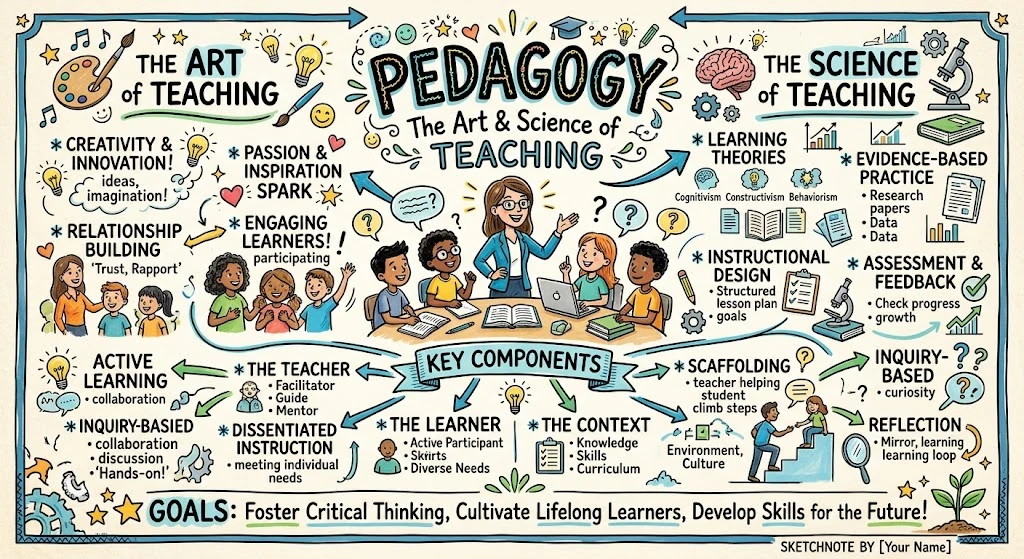
Pedagogy can be broken down into three defining components, which help educators make informed decisions about their teaching approaches:

  • The methods and strategies used to teach content, from direct instruction to collaborative group work and inquiry-based learning.
  • The underlying educational principles that guide those methods, including theories of constructivism, behaviourism, and metacognition.
  • The interaction between teacher, learner, and content, ensuring that students actively participate in their learning, rather than passively receiving information.
  • A well-developed pedagogy helps teachers create responsive classrooms where learners can question, explore, and apply their understanding. One widely used pedagogical approach is constructivism, which emphasises the importance of active learning and student agency in the learning process. This model encourages learners to construct their own understanding by connecting new ideas to prior knowledge, collaborating with peers, and reflecting on their progress.

    The key pedagogical approaches used in modern classrooms, highlight evidence-informed teaching strategies, and examine how teachers can blend multiple approaches to suit the needs of their learners. Whether through direct instruction, exploratory learning, or inquiry-based methods, effective pedagogy ensures that learners not only acquire knowledge but also develop the critical thinking skills they need to succeed both in school and beyond.

    ◆ Structural Learning
    The Teacher's Toolkit: Pedagogy That Works
    A deep-dive podcast for educators

    This podcast explores the pedagogical approaches that make the biggest difference in classrooms, from direct instruction to enquiry-based learning and everything between.

    Why Pedagogy Transforms Student Outcomes

    The most effective pedagogies encompass a range of teaching techniques, including a detailed guide for teachers, structured and whole-class group work, guided learning,  formative assessment practise and individual activity. These pedagogies focus on improving higher-order thinking and meta-cognition and make good use of  questioning and dialogue in doing so. 

    Hub-and-spoke diagram showing three components of effective pedagogy: teaching methods, educational principles, and learning interactions
    Three Pedagogical Pillars

    At Structural Learning, we try to steer away from teaching fads such as learning styles (it was once thought that children should be labelled a visual learner, a kinaesthetic learner or an aural learner).

    Whatever learning environment you are operating in, it's good practise to utilise the research that is available to us. We all share the same goal in enhancing the learning experience of children. Our focus has always been on developing deep learning experiences. This involves unpicking the learning process and designing effective teaching strategies that really get children thinking.

    Pedagogy plays a crucial role in determining the learning outcomes of students. A well-designed pedagogical approach can creates critical thinking, problem-solving skills, and creativity among students. On the other hand, a poor pedagogical approach can leadto disengagement and a lack of understanding.

    Top 5 Modern Pedagogical Methods

    There are many different pedagogical approaches that can be used in the classroom. Some of the most common include:

    Direct instruction pedagogy involves explicit teaching where educators clearly present information, demonstrate skills, and guide students through structured practise. This approach works particularly well for teaching foundational skills like phonics or mathematical procedures, where step-by-step mastery is essential.

    Constructivist pedagogy, by contrast, positions students as active builders of their own knowledge. Teachers using this approach might present students with real-world problems to solve, encouraging them to draw connections and develop understanding through exploration. For example, instead of explaining historical causes directly, a constructivist teacher might provide primary sources and guide students to discover patterns and relationships themselves, leading to deeper analytical thinking.

    Collaborative learning represents another effective pedagogical approach, where students work together to achieve shared learning objectives. In practise, this might involve literature circles where small groups analyse different aspects of a text before sharing insights with the class, or peer tutoring sessions where stronger students support their classmates. This teaching method develops both academic skills and social competencies, as learners must communicate ideas clearly, listen actively, and negotiate different perspectives to reach understanding.

    Inquiry-based pedagogy transforms the classroom into a space of investigation, with teachers facilitating student-led questioning and research. Rather than delivering predetermined answers, educators guide students to formulate hypotheses, gather evidence, and draw conclusions. In science lessons, this might involve students designing experiments to test theories, whilst in English, learners might investigate how authors use language techniques across different genres,

    • Direct instruction: A teacher-centred approach where the teacher explicitly teaches concepts or skills to students.
    • Inquiry-based learning: A student-centred approach where students explore questions or problems to construct their own understanding.
    • Collaborative learning: A learning environment where students work together to achieve a common goal.
    • Project-based learning: A learning environment where students engage in real-world projects or tasks to apply their knowledge and skills.
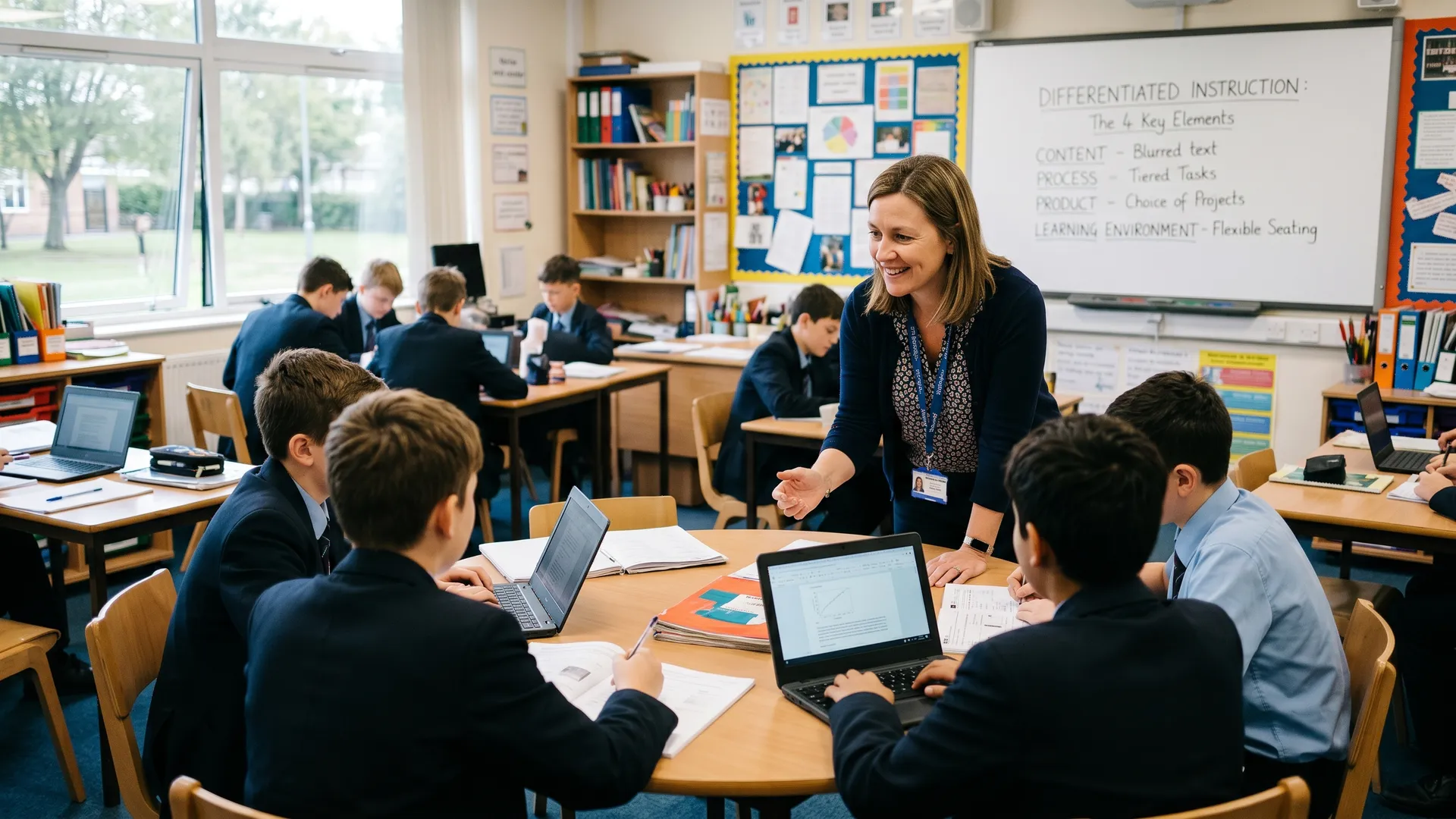
    • Differentiated instruction: Tailoring instruction to meet the diverse needs of individual learners.
    • The best pedagogical approach will depend on the subject matter, the learners' needs, and the classroom environment. Teachers should be prepared to use a variety of approaches to meet the diverse needs of their students. No matter what strategies are used, the best teaching comes from the marriage of research and teacher expertise.

      Essential Pedagogical Approaches for Teachers

      Contemporary pedagogical approaches have transformed classroom practise by shifting focus from teacher-centred instruction to student-centred learning experiences. Constructivism, pioneered by theorists like Jean Piaget and Lev Vygotsky, emphasises that learners actively build knowledge through interaction with their environment and social context. This approach recognises that students bring prior experiences to every learning situation, making the teacher's role one of facilitator rather than sole knowledge transmitter.

      Inquiry-based learning extends constructivist principles by encouraging students to ask questions, investigate problems, and discover solutions independently. Jerome Bruner's discovery learning theory supports this methodology, suggesting that students retain knowledge more effectively when they construct understanding through exploration. Meanwhile, differentiated instruction acknowledges that learners have varied abilities, interests, and learning preferences, requiring teachers to adapt content, process, and assessment methods accordingly.

      Implementing these approaches requires careful consideration of John Sweller's cognitive load theory, which demonstrates that effective learning occurs when instructional design m anages the mental effort required to process information. Teachers can apply these frameworks by incorporating collaborative activities, open-ended questioning techniques, and flexible grouping strategies. The key lies in balancing structured guidance with opportunities for student autonomy, creating classroom environments where diverse learners can engage meaningfully with content whilst developing critical thinking skills.

      Andragogy: How Adult Learning Differs from Pedagogy

      Malcolm Knowles (1968) coined andragogy to describe the distinct way adults learn compared to children. His six principles state that adult learners need to know why they are learning something, bring prior experience as a resource, prefer self-directed approaches, respond to problems rather than subjects, require intrinsic motivation over external rewards, and learn best when content has immediate application.

      For teachers, understanding andragogy matters because CPD sessions and staff training frequently fail when delivered using child-centred pedagogy. A training session on behaviour management is more effective when facilitators acknowledge participants' existing classroom experience, offer genuine choice in application, and tie content directly to problems teachers face that week (Knowles, Holton and Swanson, 2015).

      Knowles later refined the model to six principles (Knowles, Holton and Swanson, 2015). The table below maps each principle to a concrete classroom implication for teachers working with adult or near-adult learners, such as Sixth Form students or colleagues in CPD settings.

      Andragogical PrincipleWhat It MeansClassroom / CPD Application
      Need to KnowAdults need a reason before investing effortOpen CPD with a clear "why this matters today" linked to current school data
      Self-ConceptAdults see themselves as self-directingOffer genuine choice of case study or task format rather than prescribing one route
      Prior ExperienceExperience is both resource and filterUse think-pair-share to surface what teachers already do before introducing new models
      Readiness to LearnAdults learn when they need to solve a real problemTime SEND training immediately before annual review season, not six months earlier
      Orientation to LearningAdults prefer problem-centred over subject-centred designFrame sessions around a classroom dilemma, not a theory title
      MotivationInternal drivers outweigh external rewardsAvoid compulsory quizzes; invite reflection journals or peer observations instead

      The distinction between pedagogy and andragogy also matters for how teachers think about Sixth Form teaching. At this level, students are transitioning from dependent learners to self-directed ones. Applying andragogical principles , acknowledging their subject expertise, offering negotiated deadlines, encouraging self-assessment against mark schemes , can improve engagement and readiness for university-style independent study (Mezirow, 1991).

      Heutagogy: Self-Determined Learning Beyond Andragogy

      Heutagogy extends andragogy by removing the instructor entirely from the learning design. Hase and Kenyon (2000) proposed that truly self-determined learners negotiate their own curriculum, assessment criteria, and learning pathways. The framework centres on double-loop learning, where students question not just the content but the assumptions and values underlying their approach.

      While full heutagogy suits higher education and professional development more than primary classrooms, teachers can introduce heutagogical elements through extended projects where students define their own research questions, select their methods, and evaluate their own outcomes against self-set criteria. This progression from pedagogy (teacher-directed) to andragogy (self-directed) to heutagogy (self-determined) maps a continuum of learner autonomy that teachers can use to scaffold increasing independence across key stages.

      Double-loop learning is the mechanism that distinguishes heutagogy from simpler forms of self-directed study. In single-loop learning, a student adjusts their behaviour to fix an error (for example, revising a paragraph to improve coherence). In double-loop learning, they question the underlying assumption , asking not just "How do I write better?" but "Why am I being asked to write in this form, and does this form serve the purpose I care about?" (Argyris and Schon, 1978). Teachers who want to nurture this capacity can use Socratic seminars, philosophical enquiry, or open-ended research projects where the question itself is negotiated.

      A practical heutagogical sequence for a Sixth Form or further education context might run as follows. In week one, students identify a genuine question they want to answer , ideally connected to the subject but not prescribed by the teacher. In weeks two and three, they map the knowledge and skills they already have versus those they need to acquire, producing a personal learning plan. Across the remaining weeks, they pursue their enquiry using self-selected sources, then present findings to peers and respond to challenge questions. The teacher's role throughout is that of a consultant rather than a director: available, questioning, but not leading.

      For mainstream Key Stage 4 classrooms, full heutagogy is rarely appropriate, but its principles can be introduced at a smaller scale. Allowing students to design their own revision timetable, select their own stimulus texts, or set their own extension targets all shift responsibility towards the learner without removing the teacher's accountability for core outcomes.

      Differentiated Instruction for Diverse Learners

      Effective pedagogical practise requires a fundamental shift from a one-size-fits-all approach to a responsive, differentiated methodology that recognises the unique learning profiles within every classroom. Howard Gardner's theory of multiple intelligences reminds us that students possess diverse cognitive strengths, whilst research by Carol Ann Tomlinson demonstrates that differentiation significantly improves learning outcomes when teachers adjust content, process, and product according to student readiness, interests, and learning preferences.

      Successful adaptation begins with systematic assessment of your learners' needs through observation, diagnostic tools, and ongoing formative assessment. Consider how visual learners benefit from graphic organisers and mind maps, whilst kinaesthetic learners engage more effectively through hands-on activities and movement-based tasks. Similarly, students with varying prior knowledge require different entry points into new concepts, demanding flexible grouping strategies and tiered assignments that maintain high expectations whilst providing appropriate support.

      Implement practical differentiation through strategic classroom organisation and varied instructional methods. Establish learning centres that offer choice in how students engage with content, use technology tools to provide personalised practise opportunities, and develop assessment rubrics that allow multiple ways to demonstrate understanding. Remember that inclusive pedagogy benefits all learners, creating a dynamic learning environment where every student can access, engage with, and succeed in their educational process.

      Culturally Responsive Pedagogy: Teaching Across Cultural Contexts

      Every classroom contains cultural knowledge. The question is not whether culture is present in teaching, but whether that culture is acknowledged, used, or ignored. Culturally responsive pedagogy is a framework for making a deliberate choice to use it.

      Geneva Gay (2010) defined culturally responsive teaching as using the cultural characteristics, experiences, and perspectives of ethnically diverse students as conduits for more effective teaching. Gay's argument was not simply that teachers should be sensitive to difference. She argued that students' cultural backgrounds are cognitive and motivational assets: when learning is connected to what students already know and value, acquisition accelerates rather than stalls. The practical implication is that teachers need to know their students' cultural frames of reference well enough to build bridges from unfamiliar content to familiar experience.

      Gloria Ladson-Billings (1995) developed the related concept of culturally relevant pedagogy, grounded in her observations of teachers who were consistently effective with Black students in the United States. She identified three pillars: academic success, cultural competence, and critical consciousness. Academic success refers to maintaining high expectations and producing genuine learning gains, not lowering the bar in the name of accommodation. Cultural competence means helping students to use their own cultural knowledge as a foundation for learning, while also developing fluency in the mainstream culture required for success in wider society. Critical consciousness asks teachers to help students interrogate social inequalities rather than simply adapt to them.

      Django Paris (2012) extended this thinking with culturally sustaining pedagogy, arguing that relevance and responsiveness are insufficient goals. He called for pedagogy that actively sustains the linguistic and cultural practices of communities, treating them not merely as bridges to academic content but as worthwhile in themselves. This is a stronger claim than Gay's or Ladson-Billings', and it carries implications for curriculum design as much as classroom practice.

      Zaretta Hammond (2015) brought a neuroscientific framing to this conversation, arguing that culturally responsive teaching reduces the cognitive threat response that can be triggered when learners feel their identity is not recognised or respected. When a student's cultural knowledge is treated as irrelevant or wrong, the brain can interpret this as a safety threat, diverting cognitive resources away from learning. Hammond's work connects equity to neuroscience: cultural responsiveness is not an add-on to good pedagogy but a prerequisite for it.

      Several practical approaches follow from this research. Mirrors and windows in curriculum design, a concept developed by Emily Style (1988), asks teachers to ensure students can both see themselves reflected in what they study and look outward through others' experiences. Funds of knowledge, developed by Luis Moll and colleagues (1992), refers to the historically accumulated bodies of knowledge and skills within households and communities. Teachers who conduct informal research into students' home knowledge and draw on it in their teaching consistently report stronger engagement and deeper understanding from students who have previously disengaged from academic content.

      Pedagogical Assessment Strategies That Work

      Assessment strategies that misalign with your pedagogical approach create confusion for learners and undermine the coherence of your teaching practise. When your classroom emphasises collaborative learning and critical thinking, yet assessments focus solely on individual recall of facts, students receive conflicting messages about what truly matters. This disconnect not only compromises the validity of your assessment data but also dilutes the impact of your carefully chosen teaching methods.

      Benjamin Bloom's taxonomy provides a valuable framework for ensuring assessment alignment, particularly when moving beyond knowledge recall to evaluate higher-order thinking skills. If your pedagogical approach centres on inquiry-based learning, your assessments should reflect this by requiring students to analyse, synthesise, and evaluate rather than simply remember. Similarly, constructivist teaching approaches benefit from authentic assessments that mirror real-world applications, allowing learners to demonstrate understanding through meaningful contexts.

      Practical alignment begins with mapping your assessment tasks against your stated learning objectives and chosen teaching methods. Consider whether a traditional written examination truly captures the collaborative problem-solving skills you've been developing through group projects. Instead, portfolio assessments, peer evaluations, or performance-based tasks may better reflect your pedagogical priorities whilst providing richer feedback for both you and your students about genuine learning progress.

      Technology Integration in Modern Pedagogy

      The integration of technology into pedagogical practise requires a thoughtful approach that prioritises student achievement over technological novelty. Rather than simply digitising traditional teaching methods, effective technology integration involves reimagining how students engage with content, collaborate with peers, and demonstrate their understanding. Mishra and Koehler's TPACK framework emphasises that successful integration occurs when technological knowledge intersects meaningfully with both pedagogical and content knowledge, creating opportunities for enhanced learning experiences that would be difficult to achieve through conventional means alone.

      When implementing digital tools, teachers must consider John Sweller's cognitive load theory to ensure technology supports rather than overwhelms the learning process. Start small by introducing one new technological element at a time, allowing both you and your students to develop confidence before expanding your digital toolkit. Focus on tools that facilitate active learning, such as collaborative platforms that enable real-time peer feedback or interactive simulations that make abstract concepts tangible.

      Successful technology integration also requires ongoing reflection and adaptation. Regularly assess whether your chosen digital tools are genuinely enhancing student engagement and understanding, or merely adding complexity to your classroom practise. Remember that technology should amplify good pedagogy, not replace the fundamental human connections that drive effective teaching and learning.

      Connectivism: Learning as Network Formation in the Digital Age

      Connectivism is a learning theory developed by George Siemens (2005) and Stephen Downes (2007) specifically to account for how people learn in a networked, digital world. Siemens argued that the classical theories , behaviourism, cognitivism, constructivism , were designed for an era when knowledge was stable and stored primarily inside individual minds. In a world where knowledge doubles rapidly, where information is distributed across databases, communities, and algorithms, the act of knowing where to look becomes as important as the act of knowing (Siemens, 2005).

      The core principle of connectivism is that learning is the process of creating connections: between concepts, between people, and between the learner and digital nodes of information. Knowledge does not reside in one place , it is distributed across a network, and understanding grows as the learner's connections become richer and better maintained. Siemens described this as "know-where" learning: the ability to locate, evaluate, and connect sources of information is the primary pedagogical skill of the 21st century.

      For classroom teachers, connectivism offers a concrete framework for integrating digital tools with purpose rather than novelty. A connectivist lesson is not simply one that uses laptops or tablets , it is one where students are taught to curate, evaluate, and synthesise information from multiple sources, human and digital. Practical examples include collaborative knowledge-mapping using shared documents, structured peer-review workflows, and student-run blogs or wikis where knowledge is built publicly and iteratively.

      Downes (2007) extended Siemens's model by emphasising the role of distributed cognition , the idea that thinking itself is partly offloaded to tools, communities, and environments. A teacher using connectivist principles might design a project where students must consult three different types of source (academic article, practitioner blog, expert interview), then synthesise and evaluate them rather than simply report what each one says. This builds the metacognitive habit of asking: "Who produced this? What assumptions does it carry? How does it connect to or contradict what I already know?"

      A note on limitations: connectivism assumes reliable digital access, which is not yet universal in UK schools. Critics including Verhagen (2006) argue that connectivism is a pedagogical approach rather than a fully developed learning theory, noting that it lacks the empirical base of cognitivism or constructivism. Nevertheless, its emphasis on network literacy and information evaluation is widely accepted as a necessary addition to any contemporary pedagogical toolkit, particularly for secondary and post-16 educators designing research-heavy units.

      Classroom Management Through Effective Pedagogy

      Pedagogy for teaching encompasses the art, science, and craft of education; it's the deliberate practise of helping students learn. At its simplest, pedagogy refers to the methods and practices teachers use to deliver curriculum content and support student understanding. However, effective pedagogy extends far beyond mere content delivery to include how teachers create learning environments, respond to individual needs, and adapt their approaches based on ongoing assessment.

      In the classroom, pedagogy shapes every teaching decision you make. When you choose between whole-class discussion and paired work, you're making a pedagogical choice. When you decide whether to introduce a concept through direct explanation or guided discovery, that's pedagogy in action. These decisions stem from your understanding of how children learn best, informed by educational research and your knowledge of your specific students.

      Consider a Year 5 maths lesson on fractions. A teacher might begin with concrete materials like fraction bars, allowing students to physically manipulate and compare parts of wholes. This pedagogical choice reflects constructivist principles, where students build understanding through hands-on exploration before moving to abstract concepts. The same teacher might then use questioning techniques drawn from dialogic teaching, asking students to explain their reasoning and challenge each other's thinking.

      Effective pedagogy also requires teachers to be responsive practitioners. Research by Black and Wiliam (2001) on formative assessment shows that adjusting teaching based on student responses significantly improves educational results. This might mean pausing a lesson when misconceptions arise, reorganising groups based on observed needs, or extending an activity when students show deep engagement with the material.

      Trauma-Informed Pedagogy: Understanding Adversity's Effect on Learning

      Behaviour that looks like defiance is often a response to fear. Inattention that looks like laziness is often a symptom of a nervous system that cannot settle. Trauma-informed pedagogy asks teachers to look beneath the surface of classroom behaviour and ask a different question: not "what is wrong with this child?" but "what has happened to this child?"

      The Substance Abuse and Mental Health Services Administration (SAMHSA, 2014) outlined a trauma-informed approach through four principles, sometimes called the four R's: realise the widespread impact of trauma and understand potential paths to recovery; recognise the signs and symptoms of trauma in pupils, families, and staff; respond by integrating knowledge about trauma into practice; and resist re-traumatisation by avoiding approaches that inadvertently recreate the experience of powerlessness, shame, or unpredictability that trauma originally produced.

      The evidence base for why this matters in schools is grounded in the Adverse Childhood Experiences (ACEs) study (Felitti et al., 1998), one of the largest investigations of the relationship between childhood adversity and long-term outcomes. The study found that ACEs, including abuse, neglect, household dysfunction, and parental mental illness, were more common than expected and had dose-dependent effects: the more ACEs a child experienced, the greater the probability of difficulties with health, behaviour, and learning. Critically, these effects were not confined to extreme cases. Even moderate levels of adversity produced measurable impacts on concentration, emotional regulation, and academic achievement.

      Bruce Perry (2006) provided a neurobiological account of why this happens through his neurosequential model. The brain develops from the bottom up, with the brainstem (responsible for regulation of states like hunger, arousal, and threat response) developing before the cortex (responsible for reasoning, language, and impulse control). Trauma that occurs in early childhood, when the brainstem and limbic system are still being organised, can result in a brain that defaults to a heightened threat-detection state. A child in that state cannot access higher cortical functions: they cannot reason, plan, or learn in the conventional sense. Perry's prescription for working with such children follows the sequence regulate, relate, reason: first help the child feel safe in their body, then build a trusting relationship, then and only then attempt to engage the thinking brain.

      Chris Bergin and Andrea Bergin (2009) reviewed evidence on attachment theory as it applies to schools, finding that secure relationships with teachers produced measurable benefits for children who had insecure or disorganised attachments with primary caregivers. The teacher does not replace the parent but can function as a secondary attachment figure, providing the consistency and emotional availability that allows a child's stress response system to become more regulated over time.

      Louise Bomber (2007) translated this research directly into classroom strategies in her work on supporting traumatised children in school. She emphasised predictable routines as a primary tool: children who have experienced unpredictable or threatening environments are often hypervigilant to change, and clear, consistent structures reduce the cognitive load of monitoring for danger. Safe spaces, both physical and relational, matter too: a calm area a child can access when overwhelmed, and a key adult who has taken time to understand their triggers, can make the difference between a child who manages their day and one who does not.

      The implication for standard behaviour management approaches is significant. Sanctions that involve shame, exclusion, or public humiliation are likely to re-traumatise children who have already experienced those things at home. Co-regulation, where the regulated adult helps the dysregulated child return to a calm state, is more consistent with the neuroscience than consequence-based systems applied without attention to the child's current physiological state. Trauma-informed pedagogy does not abandon boundaries, but it asks that those boundaries be held with warmth and without punitive intent.

      Applying Pedagogy in Your Classroom

      Transforming pedagogical theory into classroom practise begins with small, deliberate changes to your daily teaching. Start by selecting one pedagogical approach, such as constructivist learning, and implement it through a single activity each week. For instance, replace traditional note-taking with concept mapping where students visually connect new vocabulary to their existing knowledge, encouraging them to explain the relationships they create.

      Building questioning techniques into every lesson creates immediate opportunities for deeper thinking. Rather than asking closed questions that check recall, use Bloom's Taxonomy to craft open-ended prompts that require analysis and evaluation. When teaching historical events, shift from 'When did World War II begin?' to 'What factors made conflict inevitable by 1939?' This simple change transforms passive listeners into active thinkers who must synthesise multiple sources and perspectives.

      Collaborative learning structures provide another practical entry point for pedagogical change. Try the 'think-pair-share' method: pose a challenging question, give students two minutes to formulate individual responses, then have them discuss with a partner before sharing with the class. This approach, supported by Johnson and Johnson's cooperative learning research, ensures every student engages with the material whilst building confidence through peer discussion.

      Assessment practices offer rich opportunities to embed pedagogical principles. Replace some traditional tests with learning portfolios where students collect work samples, reflect on their progress, and identify areas for improvement. This metacognitive approach, central to self-regulated learning theory, helps students understand not just what they've learnt but how they learn best, preparing them for lifelong educational success.

      Question 1 of 12
      According to the Center for Innovative Teaching and Learning, what is the primary distinction between assessment and evaluation?
      AAssessment is the process of gathering data, while evaluation uses judgment to determine the value of an outcome based on that data.
      BAssessment determines final grades, whereas evaluation provides informal feedback during a lesson.
      CAssessment identifies student weaknesses, whereas evaluation is used only to identify instructor performance.
      DAssessment is a product-oriented process, while evaluation is a process-oriented activity.

      Student Engagement Strategies That Work

      pedagogy is more than just teaching techniques, it is a comprehensive framework that guides how teachers facilitate learning. By understanding the core components of pedagogy, exploring different teaching methods, and adapting their approaches to suit their students' needs, teachers can create effective and engaging learning experiences that creates deep understanding and critical thinking.

      The key is to intentionally design learning experiences, use research to drive teaching decisions, and remember that every child is different. No matter what your teaching style is, pedagogy is the driving force behind your teaching and can enhance the learning gains of your students.

      Written by the Structural Learning Research Team

      Reviewed by Paul Main, Founder & Educational Consultant at Structural Learning

      Pedagogy, Andragogy, and Heutagogy: A Continuum of Learning Direction

      Most teachers are familiar with pedagogy as the art and science of teaching children. Yet the moment your learners enter sixth form or post-16 education, you are dealing with people whose learning needs shift considerably. Malcolm Knowles (1980) formalised this distinction with the term andragogy, describing the principles that underpin adult learning rather than child-directed instruction.

      Knowles identified four core assumptions about adult learners. First, adults are self-directing: they increasingly resist being told what to learn and prefer to manage their own learning process. Second, adults bring a reservoir of experience that functions as a rich resource for new learning; ignoring that experience communicates a kind of dismissal. Third, adult readiness to learn is tied to the developmental tasks of their social roles, so content that connects to real responsibilities lands more readily. Fourth, adults are problem-centred rather than subject-centred: they want to apply knowledge immediately rather than accumulate it for future use.

      Stewart Hase and Chris Kenyon (2000) pushed this further with heutagogy, a term describing self-determined learning in which the learner not only directs the process but also defines the competencies they wish to develop. Where andragogy assumes the teacher still sets the curriculum, heutagogy hands that responsibility to the learner entirely. The concept draws on complexity theory and the idea that learners in information-rich environments need to become capable of learning how to learn, not just absorbing pre-selected content.

      What does this continuum mean for your classroom? At primary level, the pedagogical model is appropriate: children benefit from structured, teacher-directed learning with high levels of support. By Key Stage 4, you can begin to introduce andragogical elements: connecting content to students' own questions, building in choice, and making the purpose of each learning sequence explicit. At sixth form and beyond, heutagogical approaches become increasingly viable: independent research projects, student-designed assessment criteria, and self-identified areas for development.

      The risk of treating all learners as if they occupy the same point on this continuum is real. A Year 7 pupil given too much self-direction without the prerequisite skills is likely to disengage. A sixth-form student treated purely as a passive recipient of instruction is likely to find the experience patronising. Understanding where your learners sit on the pedagogy-andragogy-heutagogy spectrum is, in itself, a significant pedagogical decision.

      Evidence-Based Pedagogy: What the Research Actually Shows

      Teaching is one of the few professions where practice has historically outrun evidence. That is changing. Over the past two decades, a body of robust research has shifted what we know about effective teaching from informed opinion to something closer to an empirical science. Three sources in particular have become reference points for practising teachers.

      Barak Rosenshine's (2012) Principles of Instruction remains the most practically influential synthesis of that evidence base. Rosenshine drew on cognitive science, studies of effective teachers, and research from cognitive support systems to identify ten principles that consistently characterise high-quality teaching. These include beginning lessons with a short review of previous learning, presenting new material in small steps with student practice at each stage, asking large numbers of questions to check understanding, and providing models before requiring independent work. The principles are not a prescription but a framework: each one addresses a specific risk in the learning process.

      John Hattie's (2009) Visible Learning meta-analysis of over 800 studies synthesised effect sizes for a vast range of educational influences. Hattie's central finding was that almost everything teachers do has a positive effect: the question is which approaches have above-average effects. Feedback, teacher-student relationships, metacognitive strategies, and direct instruction consistently appeared in the highest-effect categories. Approaches such as unstructured discovery learning, ability grouping, and homework at primary level showed far more modest or even negative effects. Hattie's work has attracted methodological criticism, particularly around the aggregation of heterogeneous studies, but its basic message, that teacher expertise and specific instructional decisions matter enormously, has proved durable.

      The Education Endowment Foundation Teaching and Learning Toolkit translates this research into a format designed for school leaders and classroom teachers. Each strand is rated for evidence strength and average months of progress. High-impact, low-cost approaches such as feedback and metacognitive strategies consistently outperform expensive whole-school interventions.

      Robert Coe and colleagues (2014) in their report What Makes Great Teaching? identified six components of teaching quality with strong evidence behind them. Pedagogical content knowledge, quality of instruction, and use of assessment for learning scored highest. More surprising was their finding that some widely valued practices, including certain types of praise, discovery learning, and grouping by learning style, had little or no robust evidence behind them.

      Gert Biesta (2007) introduced an important distinction between evidence-based and evidence-informed practice. Evidence-based approaches risk treating research findings as algorithms to be applied regardless of context. Evidence-informed practice asks teachers to engage critically with research, weighing its applicability to their specific pupils and circumstances. Teachers, Biesta argued, should be research-literate consumers who can read and interrogate studies, not technicians implementing findings from a manual. The difference is not merely semantic: it determines whether professional judgement is preserved or eroded in the name of evidence.

      Culturally Responsive Pedagogy: Teaching Across Cultural Contexts

      Every classroom contains cultural knowledge. The question is not whether culture is present in teaching, but whether that culture is acknowledged, used, or ignored. Culturally responsive pedagogy is a framework for making a deliberate choice to use it.

      Geneva Gay (2010) defined culturally responsive teaching as using the cultural characteristics, experiences, and perspectives of ethnically diverse students as conduits for more effective teaching. Gay's argument was not simply that teachers should be sensitive to difference. She argued that students' cultural backgrounds are cognitive and motivational assets: when learning is connected to what students already know and value, acquisition accelerates rather than stalls. The practical implication is that teachers need to know their students' cultural frames of reference well enough to build bridges from unfamiliar content to familiar experience.

      Gloria Ladson-Billings (1995) developed the related concept of culturally relevant pedagogy, grounded in her observations of teachers who were consistently effective with Black students in the United States. She identified three pillars: academic success, cultural competence, and critical consciousness. Academic success refers to maintaining high expectations and producing genuine learning gains, not lowering the bar in the name of accommodation. Cultural competence means helping students to use their own cultural knowledge as a foundation for learning, while also developing fluency in the mainstream culture required for success in wider society. Critical consciousness asks teachers to help students interrogate social inequalities rather than simply adapt to them.

      Django Paris (2012) extended this thinking with culturally sustaining pedagogy, arguing that relevance and responsiveness are insufficient goals. He called for pedagogy that actively sustains the linguistic and cultural practices of communities, treating them not merely as bridges to academic content but as worthwhile in themselves. This is a stronger claim than Gay's or Ladson-Billings', and it carries implications for curriculum design as much as classroom practice.

      Zaretta Hammond (2015) brought a neuroscientific framing to this conversation, arguing that culturally responsive teaching reduces the cognitive threat response that can be triggered when learners feel their identity is not recognised or respected. When a student's cultural knowledge is treated as irrelevant or wrong, the brain can interpret this as a safety threat, diverting cognitive resources away from learning. Hammond's work connects equity to neuroscience: cultural responsiveness is not an add-on to good pedagogy but a prerequisite for it.

      Several practical approaches follow from this research. Mirrors and windows in curriculum design, a concept developed by Emily Style (1988), asks teachers to ensure students can both see themselves reflected in what they study and look outward through others' experiences. Funds of knowledge, developed by Luis Moll and colleagues (1992), refers to the historically accumulated bodies of knowledge and skills within households and communities. Teachers who conduct informal research into students' home knowledge and draw on it in their teaching consistently report stronger engagement and deeper understanding from students who have previously disengaged from academic content.

      Trauma-Informed Pedagogy: Understanding Adversity's Effect on Learning

      Behaviour that looks like defiance is often a response to fear. Inattention that looks like laziness is often a symptom of a nervous system that cannot settle. Trauma-informed pedagogy asks teachers to look beneath the surface of classroom behaviour and ask a different question: not "what is wrong with this child?" but "what has happened to this child?"

      The Substance Abuse and Mental Health Services Administration (SAMHSA, 2014) outlined a trauma-informed approach through four principles, sometimes called the four R's: realise the widespread impact of trauma and understand potential paths to recovery; recognise the signs and symptoms of trauma in pupils, families, and staff; respond by integrating knowledge about trauma into practice; and resist re-traumatisation by avoiding approaches that inadvertently recreate the experience of powerlessness, shame, or unpredictability that trauma originally produced.

      The evidence base for why this matters in schools is grounded in the Adverse Childhood Experiences (ACEs) study (Felitti et al., 1998), one of the largest investigations of the relationship between childhood adversity and long-term outcomes. The study found that ACEs, including abuse, neglect, household dysfunction, and parental mental illness, were more common than expected and had dose-dependent effects: the more ACEs a child experienced, the greater the probability of difficulties with health, behaviour, and learning. Critically, these effects were not confined to extreme cases. Even moderate levels of adversity produced measurable impacts on concentration, emotional regulation, and academic achievement.

      Bruce Perry (2006) provided a neurobiological account of why this happens through his neurosequential model. The brain develops from the bottom up, with the brainstem (responsible for regulation of states like hunger, arousal, and threat response) developing before the cortex (responsible for reasoning, language, and impulse control). Trauma that occurs in early childhood, when the brainstem and limbic system are still being organised, can result in a brain that defaults to a heightened threat-detection state. A child in that state cannot access higher cortical functions: they cannot reason, plan, or learn in the conventional sense. Perry's prescription for working with such children follows the sequence regulate, relate, reason: first help the child feel safe in their body, then build a trusting relationship, then and only then attempt to engage the thinking brain.

      Chris Bergin and Andrea Bergin (2009) reviewed evidence on attachment theory as it applies to schools, finding that secure relationships with teachers produced measurable benefits for children who had insecure or disorganised attachments with primary caregivers. The teacher does not replace the parent but can function as a secondary attachment figure, providing the consistency and emotional availability that allows a child's stress response system to become more regulated over time.

      Louise Bomber (2007) translated this research directly into classroom strategies in her work on supporting traumatised children in school. She emphasised predictable routines as a primary tool: children who have experienced unpredictable or threatening environments are often hypervigilant to change, and clear, consistent structures reduce the cognitive load of monitoring for danger. Safe spaces, both physical and relational, matter too: a calm area a child can access when overwhelmed, and a key adult who has taken time to understand their triggers, can make the difference between a child who manages their day and one who does not.

      The implication for standard behaviour management approaches is significant. Sanctions that involve shame, exclusion, or public humiliation are likely to re-traumatise children who have already experienced those things at home. Co-regulation, where the regulated adult helps the dysregulated child return to a calm state, is more consistent with the neuroscience than consequence-based systems applied without attention to the child's current physiological state. Trauma-informed pedagogy does not abandon boundaries, but it asks that those boundaries be held with warmth and without punitive intent.

      Frequently Asked Questions

      Constructivist Assessment Techniques for Teachers

      Use formative assessments like peer discussions, reflection journals, and project-based evaluations that show students' thinking processes. Focus on assessing how students connect new concepts to prior knowledge rather than just testing recall. Portfolio assessments and self-evaluation rubrics work particularly well as they encourage students to reflect on their learning process.

      Pedagogy Strategies for Large Classes

      Implement think-pair-share activities where students discuss concepts with a partner before sharing with the class. Use exit tickets at the end of lessons to gauge understanding quickly across all students. Digital polling tools and collaborative online documents can also help manage participation and feedback efficiently in larger groups.

      How can teachers blend different pedagogical approaches effectively?

      Start with direct instruction for foundational concepts, then move to collaborative activities for deeper exploration, and finish with independent application tasks. Match your approach to the learning objective, use behaviourist methods for skill practise, constructivist approaches for concept development, and metacognitive strategies for reflection. The key is being intentional about why you're choosing each approach.

      What does active learning look like in practise for different subjects?

      In maths, students might work through problems in groups and explain their reasoning to peers. In English, active learning could involve students analysing texts collaboratively and creating their own interpretations. Science lessons might include hands-on experiments where students form hypotheses and draw conclusions from their observations.

      How can teachers measure if their pedagogy is actually working?

      Look for increased student engagement through questioning, volunteering answers, and initiating discussions about the topic. Monitor whether students can transfer knowledge to new situations and make connections between concepts independently. Regular feedback from students about their learning experience and tracking progress over time through varied assessment methods will show pedagogical effectiveness.

      Professional Development Resources for Educators

      Pedagogical approaches research

      Teaching methods effectiveness

      Evidence-based pedagogy

      1. Alexander, R. J. (2020). *Towards Dialogic Teaching: Rethinking Classroom Talk* (5th ed.). Dialogos Education.
      2. Hattie, J. (2012). *Visible Learning for Teachers: Maximizing Impact on Learning*. Routledge.
      3. Pellegrino, J. W., & Altman, D. W. (2017). *Information Technologies for Education: Towards Interoperability, Scalability, and Sustainability*. Policy and Practise.
      4. Willingham, D. T. (2009). *Why Don't Students Like School?: A Cognitive Scientist Answers Questions About How the Mind Works and What It Means for the Classroom*. Jossey-Bass.

    Implementing Pedagogy: Step-by-Step Guide

    Transforming pedagogical theory into classroom practise requires a systematic approach that builds from your existing teaching routines. Start by selecting one pedagogical principle, such as constructivist learning, and integrate it into a single lesson segment. For instance, instead of explaining photosynthesis directly, begin with students' observations of plants in different conditions, then guide them to construct their own understanding through discussion and experimentation.

    The most effective implementation follows a clear sequence: assess your students' prior knowledge, choose an appropriate pedagogical approach, design activities that encourage active thinking, and reflect on outcomes. When teaching fraction addition, you might use Bruner's scaffolding theory by first having students manipulate physical fraction tiles, then progress to pictorial representations, before moving to abstract calculations. This gradual release of support helps students build confidence whilst developing deep mathematical understanding.

    Monitoring and adapting your pedagogical choices ensures continuous improvement. Keep a teaching journal noting which strategies engage different learners; perhaps your Year 9 science class responds well to inquiry-based learning whilst your Year 7 group needs more structured guidance. Research by Hattie (2009) shows that teachers who regularly evaluate their pedagogical impact achieve significantly better student outcomes.

    Remember that effective pedagogy isn't about perfecting every lesson immediately. Choose one approach, practise it consistently for several weeks, then gradually expand your repertoire. This measured implementation allows you to develop expertise whilst maintaining classroom stability and student progress.

Find the Right Evidence-Based Strategy for Your School

Answer five questions about your school context and receive personalised EEF strategy recommendations ranked by impact, cost, and evidence strength.

EEF Strategy Recommendation Engine

Match your school context to the highest-impact, evidence-based teaching strategies from the EEF Toolkit.

1 of 5
1

Based on your context, here are the three strategies with the strongest evidence fit. Expand each card for implementation guidance.

Pedagogy for Teaching: A Visual Framework

Visual guide to core pedagogical approaches, evidence-based teaching strategies, and practical frameworks for planning effective lessons.

⬇️ Download Slide Deck (.pptx)
PowerPoint format. Structural Learning.

Free Resource Pack

Download this free Pedagogy, Teaching Practice & Learning Design resource pack for your classroom and staff room. Includes printable posters, desk cards, and CPD materials.

Free Resource Pack

Pedagogy & Learning Design Essentials

4 essential resources to refine teaching practice and learning design principles.

Pedagogy & Learning Design Essentials , 4 resources
Teaching StrategiesLearning DesignPedagogical PrinciplesLesson PlanningCPD VisualQuick Reference GuideTeacher ToolkitLearning Theories

Download your free bundle

Fill in your details below and we'll send the resource pack straight to your inbox.

Quick survey (helps us create better resources)

How confident do you feel applying a range of pedagogical strategies in your classroom to enhance learning?

Not at all confident
Slightly confident
Moderately confident
Very confident
Extremely confident

To what extent do you feel your school culture actively promotes and supports reflective teaching practice and innovative learning design?

Not at all
Slightly
Moderately
Significantly
Extremely

How often do you intentionally incorporate explicit learning design principles (e.g., cognitive load theory, retrieval practice, spaced learning) into your lesson planning?

Never
Rarely
Sometimes
Often
Always

Your resource pack is ready

We've also sent a copy to your email. Check your inbox.

Pedagogy vs Andragogy vs Heutagogy

The term "pedagogy" specifically describes teacher-directed instruction for children, derived from the Greek "paid" (child) and "agogos" (leader). However, the broader educational landscape requires understanding two related concepts that shape how we teach across different contexts.

Andragogy, coined by Malcolm Knowles (1984), describes the principles of adult learning. Adults are typically self-directed learners who bring substantial life experience, prefer problem-centred learning over content-centred learning, and are motivated by internal drivers rather than external rewards. In the classroom, this distinction matters when teaching Sixth Form students or adults; you gradually shift from teacher-directed tasks towards collaborative goal-setting and independent enquiry.

Heutagogy, introduced by Hase and Kenyon (2000), extends this further to describe self-determined learning where learners actively design their own learning pathway. Rather than the teacher directing (pedagogy) or the learner guiding within a structure (andragogy), the learner takes ownership of both content and process. This is most relevant in higher education and professional development, but it has applications in secondary schools through Project Based Learning and student-led research modules.

For secondary teachers, the practical implication is this: young students (KS1-KS2) respond well to clear structure and explicit teacher guidance. By GCSE (KS4), you can introduce more andragogic principles, with students co-designing assignments and choosing research topics. By A Level and vocational pathways, heutagogic elements,where students direct their own enquiry,become increasingly appropriate. This scaffolding from pedagogy to andragogy to heutagogy mirrors cognitive development and prepares students for independent learning at university.

Foundational Learning Theories

Effective teaching rests on understanding the major theories of how people learn. These theories often contradict each other, yet each offers insights for different teaching contexts. Rather than choosing one "best" theory, skilled teachers draw from multiple frameworks depending on subject, age group, and learning outcome.

Behaviourism (Skinner, 1965) proposes that learning is a change in observable behaviour resulting from stimulus-response associations and reinforcement. In practice: if a student is reinforced (praised, rewarded, or given positive feedback) when they complete a task correctly, they are more likely to repeat it. Behaviourism is highly effective for building automaticity (times tables, spelling patterns) and establishing classroom routines through consistent consequences.

Cognitivism views learning as the processing of information through working memory into long-term memory. Piaget (1954) argued that children progress through stages of cognitive development, moving from concrete thinking to abstract reasoning. Later cognitive load theory (Sweller, 1988) emphasised that working memory has limited capacity, so teaching must reduce extraneous cognitive load (clutter, complex visuals) to free space for learning. Cognitivism is essential for understanding why Year 7 students struggle with abstract algebra and why chunking information reduces cognitive overload.

Constructivism (Piaget, Vygotsky, Bruner) asserts that learners actively build understanding through experience and social interaction, rather than passively receiving knowledge. Vygotsky's Zone of Proximal Development (ZPD) highlights the gap between what a learner can do alone and what they can do with expert guidance. Constructivism underpins discovery learning, group work, and scaffolding strategies where the teacher gradually withdraws support.

Connectivism (Siemens, 2005) is a newer framework suited to the digital age, proposing that learning happens through networks,both human connections and technology. In a classroom context, this means students learn not only from the teacher and textbook, but from peers, online communities, and curated digital resources. This theory is particularly relevant for teaching digital literacy and project-based work in connected environments.

Theory Key Idea Classroom Implication Limitation
Behaviourism Stimulus → Response → Reinforcement Use rewards/consequences to build routines and automaticity Does not explain complex learning, higher-order thinking, or intrinsic motivation
Cognitivism Learning is information processing through working and long-term memory Chunk information, reduce cognitive load, use worked examples Can underestimate the role of emotion and social context in learning
Constructivism Learners actively build knowledge through experience and interaction Use scaffolding, group work, and guided discovery; gradually release responsibility Can be inefficient for novice learners; requires careful teacher guidance or learning falters
Connectivism Learning flows through digital and social networks Curate resources, facilitate peer learning, teach information evaluation skills Assumes digital access; can lead to information overload without strong guidance

Visible Learning and Effect Sizes

John Hattie's (2009) meta-analysis of over 800 studies ranks educational strategies by their impact on student achievement using a metric called "effect size" (d). Effect size quantifies how much larger the gains are for a taught group compared to a control group, measured in standard deviations. A rule of thumb: an effect size of d = 0.40 is considered the "hinge point" for educational effectiveness. Strategies with d > 0.40 have above-average impact; those below 0.40 are less efficient uses of time.

Hattie's top strategies include: feedback (d = 0.73), metacognitive strategies or "thinking about thinking" (d = 0.69), direct instruction (d = 0.60), and formative assessment (d = 0.52). Notably, strategies often perceived as essential,such as individualised learning (d = 0.25) and reducing class size (d = 0.21),show smaller effect sizes than targeted feedback and metacognition. This does not mean ignore individual differences or that class size is irrelevant, but it does suggest that the quality of instruction matters far more than the setting.

A practical example: you want Year 8 students to master fractions. You could spend a week on self-paced, individualised computer programs (lower effect size) or five days on direct instruction with worked examples, immediate corrective feedback, and peer explanation tasks (d = 0.60 + 0.73 + higher engagement). The second approach is more efficient. Hattie's framework helps teachers allocate time to high-impact activities rather than following educational trends without evidence.

Interpreting effect sizes requires care. A strategy with d = 0.60 is not twice as good as one with d = 0.30; the difference between them represents roughly one term's worth of additional learning progress. Over a school year, compounding high-effect strategies is how schools narrow attainment gaps.

Direct Instruction vs Discovery Learning

One of the most contentious debates in education is whether students learn better through guided, explicit teaching (direct instruction) or through self-directed exploration and discovery. Kirschner, Sweller and Clark (2006) reviewed decades of research and concluded that for novice learners, minimal guidance approaches,leaving students to discover rules and solve problems with little teacher input,are far less effective than guided instruction.

The cognitive science explanation is rooted in cognitive load theory. A novice learner's working memory is already overloaded as they process new information. If you add the cognitive burden of "figuring out" the rule or procedure on their own, working memory becomes overwhelmed, and learning fails. For example, a Year 9 student learning photosynthesis cannot simultaneously hold in mind the chemical reactants, the role of chlorophyll, the light and dark reactions, and the mechanism by which glucose is synthesised. If they are simply given plants and light and told to "discover" photosynthesis, most will not. Instead, explicit instruction that breaks the process into steps, uses diagrams, and provides worked examples protects working memory and enables learning.

However, discovery learning is highly effective once students have built a strong schema (mental framework). An expert biochemist given an unfamiliar protein-folding problem can explore and discover solutions. The key difference is in the learner's prior knowledge. This is why "guidance fading" is the research-backed middle ground: begin with explicit, scaffolded instruction, provide worked examples and teacher-led demonstrations, then gradually hand over responsibility as competence increases. By late GCSE or A Level, students can tackle more open-ended enquiry because they have sufficient knowledge to self-scaffold.

A classroom example: teaching Year 9 photosynthesis via guided practical is more effective than open inquiry. Provide a clear protocol (measure oxygen production under different light intensities), explain the expected pattern, and debrief to link observations to the mechanism. Only once students grasp the concept should they design their own experiments.

Differentiation, Personalisation, and Individualisation

These three terms are often used interchangeably in schools, but they describe distinct approaches and have different implications for teaching.

Differentiation (Tomlinson, 2014) describes instruction that is teacher-designed to meet the varied needs of learners in the same class. The teacher adjusts content, process, or product based on assessed readiness, interest, or learning profile. For example, in a Year 7 English class reading "Of Mice and Men," the teacher might provide an adapted text for lower-ability readers, a standard text for on-track learners, and a critical analysis guide for advanced readers. Differentiation is proactive; the teacher designs multiple pathways before the lesson.

Personalisation involves the learner having input into what they learn and how. In a personalised curriculum, students choose topics within a framework, or co-design projects with teachers. This increases ownership and motivation but requires clear learning outcomes so that personalisation does not become fragmented. For instance, students might personalise a project on "sustainable development" by choosing their own country and presenting findings in their chosen format (poster, video, podcast), but the core learning objectives remain the same.

Individualisation refers to adjusting the pace or pathway of a fixed curriculum to match each learner's speed. A student might progress through phonics programmes at their own rate, or complete maths modules when ready. Individualisation is often technology-enabled but can also happen through one-to-one tuition. The content and outcomes are non-negotiable; only the pace varies.

The confusion arises because these approaches often overlap in practice, but their purposes differ. Differentiation is about inclusion within a shared classroom experience. Personalisation is about agency and motivation. Individualisation is about pacing. Conflating them,for example, assuming personalisation is the same as differentiation,leads to unfocused curricula where students learn different things rather than the same essential knowledge at different paces or with varied support.

Culturally Responsive Teaching and Trauma-Informed Practice

Culturally responsive teaching (Gay, 2010) is not a supplementary activity or assembly theme; it is a fundamental pedagogical approach. Gay defines culturally responsive teaching as using the cultural knowledge, prior experiences, frames of reference, and performance styles of ethnically diverse students to make learning more relevant and effective. This means curriculum content reflects diverse perspectives, examples use cultural contexts familiar to students, and teaching methods honour varied communication and learning styles.

Ladson-Billings' (1995) concept of "culturally sustaining pedagogy" goes further: teaching should not only be responsive to students' cultures but should actively sustain and affirm them. A history lesson on the British Empire taught solely from a colonial perspective excludes the voices of colonised peoples and misrepresents the past. A responsive history teacher presents multiple sources and perspectives, examines the economic and human impact of colonisation, and positions students from historically marginalised groups as active agents in historical narratives, not passive subjects.

Trauma-informed practice in schools recognises that many students carry the effects of adverse experiences and creates classroom conditions that promote safety, choice, and collaboration. Key principles include: physical and emotional safety (predictable routines, calm environment), informed choice (giving students agency over tasks when possible), and collaborative relationships (building trust through consistency and respect). These are not separate interventions; they are embedded in daily pedagogy. A trauma-informed teacher explains instructions twice, allows a student to sit near the door if it helps them feel safe, and responds to behaviour with curiosity ("What happened?") rather than punishment alone.

Both approaches require intentional design. A practical example: a Year 10 history class studying the British Empire. A responsive teacher uses primary sources from multiple perspectives (British administrators, Indian nationalists, enslaved people), contextualises the economic motivations, and asks students to debate and analyse conflicting accounts. Students from South Asian backgrounds see their heritage represented; all students build historical thinking skills and empathy. A trauma-informed classroom where a student has experienced conflict at home offers choice ("Would you like to work in a group or pair?"), clear structure (lesson agenda on the board), and private feedback ("Your analysis was thoughtful; let's talk about evidence next") rather than public correction.

Formative vs Summative Assessment

Black and Wiliam's (1998) landmark review of assessment research showed that formative assessment,assessment for learning,is one of the highest-impact teaching strategies available. Yet formative and summative assessment are often conflated in schools, and many formative approaches are treated as administrative add-ons rather than core pedagogy.

Formative assessment is assessment for learning: gathering evidence during instruction to diagnose what students understand and adjusting teaching in response. A teacher uses an exit ticket asking "Explain why friction causes heat" and collects responses as students leave. The teacher reads them that evening, notices that half the class thinks friction is a type of force, and reteaches the concept the next day using a revised explanation. The exit ticket itself is not "marked"; it informs instruction. Other formative strategies include hinge questions (quick-fire questions mid-lesson to check understanding), think-pair-share (students discuss, then share thinking), and teacher observation during practical work.

Summative assessment is assessment of learning: evaluating what students have learned at a point in time, usually for reporting or certification. A GCSE exam, an end-of-unit test, or a final project grade are summative. They measure achievement but do not adjust instruction because they happen at the end of a learning cycle. Both are necessary, but the balance in many schools is skewed towards summative testing and away from formative feedback loops.

The power of formative assessment lies in the feedback loop: assess → analyse → adjust teaching → reassess. This requires a culture where assessment is a learning tool, not just an accountability tool. A formative assessment-rich classroom feels different: students expect to make mistakes and use them as information; teachers listen carefully to student thinking; and instruction is fluid, responding to evidence rather than following a fixed script. The time investment in formative assessment pays dividends: students learn faster, gaps are caught early, and confidence builds because they receive specific, actionable feedback before high-stakes assessments.

Further Reading: Key Research Papers

These peer-reviewed studies provide the research foundation for the strategies discussed in this article:

Developing classroom ICT teaching techniques, principles and practise for teachers in rural Ghana without access to computers or internet: a framework based on literature review View study ↗
31 citations

Yaw Ofosu-Asare (2024)

This paper offers practical strategies for teaching technology concepts to students even when computers and internet access are unavailable, which is particularly valuable for teachers in under-resourced schools. The framework addresses real infrastructure and financial barriers that many educators face, providing alternative approaches to ensure all students can develop

Cross-cultural instructional design: A framework for multilingual and interdisciplinary education View study ↗
11 citations

Olateju Temitope Akintayo et al. (2024)

This paper provides teachers with a framework for designing lessons that respect and incorporate students' diverse cultural and linguistic backgrounds while connecting multiple subject areas. As classrooms become increasingly diverse, this research helps educators create more inclusive learning environments where all students feel valued and can access content through culturally responsive teaching methods.

Instructional design for effective classroom Pedagogy of teaching View study ↗
9 citations

L. D. Mallillin et al. (2023)

This study examines how thoughtful lesson planning and instructional design directly contribute to more effective teaching in the classroom. Teachers will find practical guidance on structuring their lessons and selecting teaching methods that improve student learning outcomes, making their preparation time more productive and impactful.

How Project-Based Learning Improves Critical Thinking Skills for Sustainable Development View study ↗
4 citations

A. I. Elfeky et al. (2025)

This research demonstrates that project-based learning significantly enhances students' critical thinking abilities, providing teachers with evidence-based support for moving beyond traditional lecture methods. By engaging students in real-world projects, teachers can help develop the problem-solving and analytical skills that students need for future success and addressing global challenges.

Effect of applying six thinking hats teaching method for development through life span course on students opinion and critical thinking skills View study ↗
4 citations

Amal Ahmed Elbilgahy & Fadiyah Jadid Alanazi (2025)

This study shows how the Six Thinking Hats strategy, which encourages students to view problems from different perspectives, can effectively develop critical thinking skills and increase student engagement. Teachers looking for alternatives to traditional lectures will find this method useful for promoting diverse thinking and creative problem-solving in their classrooms, particularly when addressing complex topics.

Loading audit...

What is Pedagogy in Education?

Implementing effective pedagogy in your classroom doesn't have to be complicated when you have the right strategies at your fingertips. This practical guide gives you proven pedagogical approaches that work in real classrooms, helping you design lessons that engage students while building both knowledge and critical thinking skills. You'll learn how to adapt these research-backed techniques to meet your students' diverse needs, creating learning experiences that truly make a difference. Discover how small changes in your teaching approach can lead to remarkable improvements in student outcomes.

Key Takeaways

  1. Pedagogy is the science and art of teaching: Derived from the Greek paidagogos (child-leader), pedagogy encompasses the theories, methods, and practices teachers use to facilitate learning, extending beyond subject knowledge to include how content is structured and delivered (Shulman, 1987).
  2. Pedagogical content knowledge bridges theory and practice: Shulman (1986) argued that effective teaching requires not just subject expertise but pedagogical content knowledge (PCK), the ability to represent concepts in ways that make them accessible to specific learners.
  3. Constructivist and direct instruction approaches serve different purposes: Evidence supports both teacher-led explicit instruction (Rosenshine, 2012) and pupil-centred constructivist approaches (Piaget, 1952; Vygotsky, 1978), with effectiveness depending on learner expertise, task complexity, and learning objectives.
  4. Andragogy and heutagogy extend pedagogy beyond childhood: Knowles (1984) distinguished adult learning (andragogy) from child-centred pedagogy, while Hase and Kenyon (2000) proposed heutagogy (self-determined learning), reflecting a spectrum from teacher-directed to learner-directed approaches.

Monday Morning Action Plan

3 things to try in your classroom this week

  • 1
    Print and display a 'Think, Pair, Share' prompt related to the day's learning objective. Use it as a quick starter activity.
  • 2
    Introduce a 'Knowledge Harvest' activity: Give learners sticky notes to record what they already know about the topic. Collate these on a board to activate prior knowledge and identify knowledge gaps.
  • 3
    End the lesson with a 'Two Stars and a Wish' reflection. Ask learners to write down two things they learned well and one thing they wish they understood better. Use this feedback to inform the next lesson.

Pedagogy refers to the methods, principles, and practices teachers use to facilitate learning in the classroom. Unlike curriculum, which defines what is taught, pedagogy addresses how content is delivered, structured, and assessed (Alexander, 2008). Without a deliberate pedagogical framework, lessons risk becoming a series of activities disconnected from the evidence base on how pupils actually learn.

Pyramid infographic showing four levels for deep learning: Evidence-Based Teaching, Active Engagement, Critical Thinking, leading to Deep Learning.
Deep Learning Pillars

Essential Pedagogy Principles for Teachers

  1. Beyond Teaching Fads: Discover why evidence-based pedagogy beats learning styles myths and how to build teaching strategies that actually deepen student thinking
  2. The Three Pedagogical Pillars: Master the core components that transform passive classrooms into active learning spaces where students question, explore and apply understanding
  3. Constructivism in Action: Learn how to shift from information delivery to student-led discovery by connecting new ideas to prior knowledge through collaboration
  4. Deep Learning Through Thinking: Unpack the universal thinking framework that scaffolds complex tasks and reveals why mental engagement, not busy work, drives understanding

At its core, pedagogy defines how learning happens. It asks teachers to consider what students learn and how they engage with content, how they apply their thinking, and how they reflect on their progress. By choosing and adapting pedagogical approaches to match the subject matter, learners' needs, and classroom environment, teachers ensure learning is both meaningful and effective.

For a comprehensive exploration of this approach in practice, see our deep dive methodology guide.

Hub-and-spoke diagram showing pedagogy at centre with three connected components
Hub-and-spoke diagram: The Three Components of Pedagogy

Pedagogy can be broken down into three defining components, which help educators make informed decisions about their teaching approaches:

  • The methods and strategies used to teach content, from direct instruction to collaborative group work and inquiry-based learning.
  • The underlying educational principles that guide those methods, including theories of constructivism, behaviourism, and metacognition.
  • The interaction between teacher, learner, and content, ensuring that students actively participate in their learning, rather than passively receiving information.
  • A well-developed pedagogy helps teachers create responsive classrooms where learners can question, explore, and apply their understanding. One widely used pedagogical approach is constructivism, which emphasises the importance of active learning and student agency in the learning process. This model encourages learners to construct their own understanding by connecting new ideas to prior knowledge, collaborating with peers, and reflecting on their progress.

    The key pedagogical approaches used in modern classrooms, highlight evidence-informed teaching strategies, and examine how teachers can blend multiple approaches to suit the needs of their learners. Whether through direct instruction, exploratory learning, or inquiry-based methods, effective pedagogy ensures that learners not only acquire knowledge but also develop the critical thinking skills they need to succeed both in school and beyond.

    ◆ Structural Learning
    The Teacher's Toolkit: Pedagogy That Works
    A deep-dive podcast for educators

    This podcast explores the pedagogical approaches that make the biggest difference in classrooms, from direct instruction to enquiry-based learning and everything between.

    Why Pedagogy Transforms Student Outcomes

    The most effective pedagogies encompass a range of teaching techniques, including a detailed guide for teachers, structured and whole-class group work, guided learning,  formative assessment practise and individual activity. These pedagogies focus on improving higher-order thinking and meta-cognition and make good use of  questioning and dialogue in doing so. 

    Hub-and-spoke diagram showing three components of effective pedagogy: teaching methods, educational principles, and learning interactions
    Three Pedagogical Pillars

    At Structural Learning, we try to steer away from teaching fads such as learning styles (it was once thought that children should be labelled a visual learner, a kinaesthetic learner or an aural learner).

    Whatever learning environment you are operating in, it's good practise to utilise the research that is available to us. We all share the same goal in enhancing the learning experience of children. Our focus has always been on developing deep learning experiences. This involves unpicking the learning process and designing effective teaching strategies that really get children thinking.

    Pedagogy plays a crucial role in determining the learning outcomes of students. A well-designed pedagogical approach can creates critical thinking, problem-solving skills, and creativity among students. On the other hand, a poor pedagogical approach can leadto disengagement and a lack of understanding.

    Top 5 Modern Pedagogical Methods

    There are many different pedagogical approaches that can be used in the classroom. Some of the most common include:

    Direct instruction pedagogy involves explicit teaching where educators clearly present information, demonstrate skills, and guide students through structured practise. This approach works particularly well for teaching foundational skills like phonics or mathematical procedures, where step-by-step mastery is essential.

    Constructivist pedagogy, by contrast, positions students as active builders of their own knowledge. Teachers using this approach might present students with real-world problems to solve, encouraging them to draw connections and develop understanding through exploration. For example, instead of explaining historical causes directly, a constructivist teacher might provide primary sources and guide students to discover patterns and relationships themselves, leading to deeper analytical thinking.

    Collaborative learning represents another effective pedagogical approach, where students work together to achieve shared learning objectives. In practise, this might involve literature circles where small groups analyse different aspects of a text before sharing insights with the class, or peer tutoring sessions where stronger students support their classmates. This teaching method develops both academic skills and social competencies, as learners must communicate ideas clearly, listen actively, and negotiate different perspectives to reach understanding.

    Inquiry-based pedagogy transforms the classroom into a space of investigation, with teachers facilitating student-led questioning and research. Rather than delivering predetermined answers, educators guide students to formulate hypotheses, gather evidence, and draw conclusions. In science lessons, this might involve students designing experiments to test theories, whilst in English, learners might investigate how authors use language techniques across different genres,

    • Direct instruction: A teacher-centred approach where the teacher explicitly teaches concepts or skills to students.
    • Inquiry-based learning: A student-centred approach where students explore questions or problems to construct their own understanding.
    • Collaborative learning: A learning environment where students work together to achieve a common goal.
    • Project-based learning: A learning environment where students engage in real-world projects or tasks to apply their knowledge and skills.
    • Differentiated instruction: Tailoring instruction to meet the diverse needs of individual learners.
    • The best pedagogical approach will depend on the subject matter, the learners' needs, and the classroom environment. Teachers should be prepared to use a variety of approaches to meet the diverse needs of their students. No matter what strategies are used, the best teaching comes from the marriage of research and teacher expertise.

      Essential Pedagogical Approaches for Teachers

      Contemporary pedagogical approaches have transformed classroom practise by shifting focus from teacher-centred instruction to student-centred learning experiences. Constructivism, pioneered by theorists like Jean Piaget and Lev Vygotsky, emphasises that learners actively build knowledge through interaction with their environment and social context. This approach recognises that students bring prior experiences to every learning situation, making the teacher's role one of facilitator rather than sole knowledge transmitter.

      Inquiry-based learning extends constructivist principles by encouraging students to ask questions, investigate problems, and discover solutions independently. Jerome Bruner's discovery learning theory supports this methodology, suggesting that students retain knowledge more effectively when they construct understanding through exploration. Meanwhile, differentiated instruction acknowledges that learners have varied abilities, interests, and learning preferences, requiring teachers to adapt content, process, and assessment methods accordingly.

      Implementing these approaches requires careful consideration of John Sweller's cognitive load theory, which demonstrates that effective learning occurs when instructional design m anages the mental effort required to process information. Teachers can apply these frameworks by incorporating collaborative activities, open-ended questioning techniques, and flexible grouping strategies. The key lies in balancing structured guidance with opportunities for student autonomy, creating classroom environments where diverse learners can engage meaningfully with content whilst developing critical thinking skills.

      Andragogy: How Adult Learning Differs from Pedagogy

      Malcolm Knowles (1968) coined andragogy to describe the distinct way adults learn compared to children. His six principles state that adult learners need to know why they are learning something, bring prior experience as a resource, prefer self-directed approaches, respond to problems rather than subjects, require intrinsic motivation over external rewards, and learn best when content has immediate application.

      For teachers, understanding andragogy matters because CPD sessions and staff training frequently fail when delivered using child-centred pedagogy. A training session on behaviour management is more effective when facilitators acknowledge participants' existing classroom experience, offer genuine choice in application, and tie content directly to problems teachers face that week (Knowles, Holton and Swanson, 2015).

      Knowles later refined the model to six principles (Knowles, Holton and Swanson, 2015). The table below maps each principle to a concrete classroom implication for teachers working with adult or near-adult learners, such as Sixth Form students or colleagues in CPD settings.

      Andragogical PrincipleWhat It MeansClassroom / CPD Application
      Need to KnowAdults need a reason before investing effortOpen CPD with a clear "why this matters today" linked to current school data
      Self-ConceptAdults see themselves as self-directingOffer genuine choice of case study or task format rather than prescribing one route
      Prior ExperienceExperience is both resource and filterUse think-pair-share to surface what teachers already do before introducing new models
      Readiness to LearnAdults learn when they need to solve a real problemTime SEND training immediately before annual review season, not six months earlier
      Orientation to LearningAdults prefer problem-centred over subject-centred designFrame sessions around a classroom dilemma, not a theory title
      MotivationInternal drivers outweigh external rewardsAvoid compulsory quizzes; invite reflection journals or peer observations instead

      The distinction between pedagogy and andragogy also matters for how teachers think about Sixth Form teaching. At this level, students are transitioning from dependent learners to self-directed ones. Applying andragogical principles , acknowledging their subject expertise, offering negotiated deadlines, encouraging self-assessment against mark schemes , can improve engagement and readiness for university-style independent study (Mezirow, 1991).

      Heutagogy: Self-Determined Learning Beyond Andragogy

      Heutagogy extends andragogy by removing the instructor entirely from the learning design. Hase and Kenyon (2000) proposed that truly self-determined learners negotiate their own curriculum, assessment criteria, and learning pathways. The framework centres on double-loop learning, where students question not just the content but the assumptions and values underlying their approach.

      While full heutagogy suits higher education and professional development more than primary classrooms, teachers can introduce heutagogical elements through extended projects where students define their own research questions, select their methods, and evaluate their own outcomes against self-set criteria. This progression from pedagogy (teacher-directed) to andragogy (self-directed) to heutagogy (self-determined) maps a continuum of learner autonomy that teachers can use to scaffold increasing independence across key stages.

      Double-loop learning is the mechanism that distinguishes heutagogy from simpler forms of self-directed study. In single-loop learning, a student adjusts their behaviour to fix an error (for example, revising a paragraph to improve coherence). In double-loop learning, they question the underlying assumption , asking not just "How do I write better?" but "Why am I being asked to write in this form, and does this form serve the purpose I care about?" (Argyris and Schon, 1978). Teachers who want to nurture this capacity can use Socratic seminars, philosophical enquiry, or open-ended research projects where the question itself is negotiated.

      A practical heutagogical sequence for a Sixth Form or further education context might run as follows. In week one, students identify a genuine question they want to answer , ideally connected to the subject but not prescribed by the teacher. In weeks two and three, they map the knowledge and skills they already have versus those they need to acquire, producing a personal learning plan. Across the remaining weeks, they pursue their enquiry using self-selected sources, then present findings to peers and respond to challenge questions. The teacher's role throughout is that of a consultant rather than a director: available, questioning, but not leading.

      For mainstream Key Stage 4 classrooms, full heutagogy is rarely appropriate, but its principles can be introduced at a smaller scale. Allowing students to design their own revision timetable, select their own stimulus texts, or set their own extension targets all shift responsibility towards the learner without removing the teacher's accountability for core outcomes.

      Differentiated Instruction for Diverse Learners

      Effective pedagogical practise requires a fundamental shift from a one-size-fits-all approach to a responsive, differentiated methodology that recognises the unique learning profiles within every classroom. Howard Gardner's theory of multiple intelligences reminds us that students possess diverse cognitive strengths, whilst research by Carol Ann Tomlinson demonstrates that differentiation significantly improves learning outcomes when teachers adjust content, process, and product according to student readiness, interests, and learning preferences.

      Successful adaptation begins with systematic assessment of your learners' needs through observation, diagnostic tools, and ongoing formative assessment. Consider how visual learners benefit from graphic organisers and mind maps, whilst kinaesthetic learners engage more effectively through hands-on activities and movement-based tasks. Similarly, students with varying prior knowledge require different entry points into new concepts, demanding flexible grouping strategies and tiered assignments that maintain high expectations whilst providing appropriate support.

      Implement practical differentiation through strategic classroom organisation and varied instructional methods. Establish learning centres that offer choice in how students engage with content, use technology tools to provide personalised practise opportunities, and develop assessment rubrics that allow multiple ways to demonstrate understanding. Remember that inclusive pedagogy benefits all learners, creating a dynamic learning environment where every student can access, engage with, and succeed in their educational process.

      Culturally Responsive Pedagogy: Teaching Across Cultural Contexts

      Every classroom contains cultural knowledge. The question is not whether culture is present in teaching, but whether that culture is acknowledged, used, or ignored. Culturally responsive pedagogy is a framework for making a deliberate choice to use it.

      Geneva Gay (2010) defined culturally responsive teaching as using the cultural characteristics, experiences, and perspectives of ethnically diverse students as conduits for more effective teaching. Gay's argument was not simply that teachers should be sensitive to difference. She argued that students' cultural backgrounds are cognitive and motivational assets: when learning is connected to what students already know and value, acquisition accelerates rather than stalls. The practical implication is that teachers need to know their students' cultural frames of reference well enough to build bridges from unfamiliar content to familiar experience.

      Gloria Ladson-Billings (1995) developed the related concept of culturally relevant pedagogy, grounded in her observations of teachers who were consistently effective with Black students in the United States. She identified three pillars: academic success, cultural competence, and critical consciousness. Academic success refers to maintaining high expectations and producing genuine learning gains, not lowering the bar in the name of accommodation. Cultural competence means helping students to use their own cultural knowledge as a foundation for learning, while also developing fluency in the mainstream culture required for success in wider society. Critical consciousness asks teachers to help students interrogate social inequalities rather than simply adapt to them.

      Django Paris (2012) extended this thinking with culturally sustaining pedagogy, arguing that relevance and responsiveness are insufficient goals. He called for pedagogy that actively sustains the linguistic and cultural practices of communities, treating them not merely as bridges to academic content but as worthwhile in themselves. This is a stronger claim than Gay's or Ladson-Billings', and it carries implications for curriculum design as much as classroom practice.

      Zaretta Hammond (2015) brought a neuroscientific framing to this conversation, arguing that culturally responsive teaching reduces the cognitive threat response that can be triggered when learners feel their identity is not recognised or respected. When a student's cultural knowledge is treated as irrelevant or wrong, the brain can interpret this as a safety threat, diverting cognitive resources away from learning. Hammond's work connects equity to neuroscience: cultural responsiveness is not an add-on to good pedagogy but a prerequisite for it.

      Several practical approaches follow from this research. Mirrors and windows in curriculum design, a concept developed by Emily Style (1988), asks teachers to ensure students can both see themselves reflected in what they study and look outward through others' experiences. Funds of knowledge, developed by Luis Moll and colleagues (1992), refers to the historically accumulated bodies of knowledge and skills within households and communities. Teachers who conduct informal research into students' home knowledge and draw on it in their teaching consistently report stronger engagement and deeper understanding from students who have previously disengaged from academic content.

      Pedagogical Assessment Strategies That Work

      Assessment strategies that misalign with your pedagogical approach create confusion for learners and undermine the coherence of your teaching practise. When your classroom emphasises collaborative learning and critical thinking, yet assessments focus solely on individual recall of facts, students receive conflicting messages about what truly matters. This disconnect not only compromises the validity of your assessment data but also dilutes the impact of your carefully chosen teaching methods.

      Benjamin Bloom's taxonomy provides a valuable framework for ensuring assessment alignment, particularly when moving beyond knowledge recall to evaluate higher-order thinking skills. If your pedagogical approach centres on inquiry-based learning, your assessments should reflect this by requiring students to analyse, synthesise, and evaluate rather than simply remember. Similarly, constructivist teaching approaches benefit from authentic assessments that mirror real-world applications, allowing learners to demonstrate understanding through meaningful contexts.

      Practical alignment begins with mapping your assessment tasks against your stated learning objectives and chosen teaching methods. Consider whether a traditional written examination truly captures the collaborative problem-solving skills you've been developing through group projects. Instead, portfolio assessments, peer evaluations, or performance-based tasks may better reflect your pedagogical priorities whilst providing richer feedback for both you and your students about genuine learning progress.

      Technology Integration in Modern Pedagogy

      The integration of technology into pedagogical practise requires a thoughtful approach that prioritises student achievement over technological novelty. Rather than simply digitising traditional teaching methods, effective technology integration involves reimagining how students engage with content, collaborate with peers, and demonstrate their understanding. Mishra and Koehler's TPACK framework emphasises that successful integration occurs when technological knowledge intersects meaningfully with both pedagogical and content knowledge, creating opportunities for enhanced learning experiences that would be difficult to achieve through conventional means alone.

      When implementing digital tools, teachers must consider John Sweller's cognitive load theory to ensure technology supports rather than overwhelms the learning process. Start small by introducing one new technological element at a time, allowing both you and your students to develop confidence before expanding your digital toolkit. Focus on tools that facilitate active learning, such as collaborative platforms that enable real-time peer feedback or interactive simulations that make abstract concepts tangible.

      Successful technology integration also requires ongoing reflection and adaptation. Regularly assess whether your chosen digital tools are genuinely enhancing student engagement and understanding, or merely adding complexity to your classroom practise. Remember that technology should amplify good pedagogy, not replace the fundamental human connections that drive effective teaching and learning.

      Connectivism: Learning as Network Formation in the Digital Age

      Connectivism is a learning theory developed by George Siemens (2005) and Stephen Downes (2007) specifically to account for how people learn in a networked, digital world. Siemens argued that the classical theories , behaviourism, cognitivism, constructivism , were designed for an era when knowledge was stable and stored primarily inside individual minds. In a world where knowledge doubles rapidly, where information is distributed across databases, communities, and algorithms, the act of knowing where to look becomes as important as the act of knowing (Siemens, 2005).

      The core principle of connectivism is that learning is the process of creating connections: between concepts, between people, and between the learner and digital nodes of information. Knowledge does not reside in one place , it is distributed across a network, and understanding grows as the learner's connections become richer and better maintained. Siemens described this as "know-where" learning: the ability to locate, evaluate, and connect sources of information is the primary pedagogical skill of the 21st century.

      For classroom teachers, connectivism offers a concrete framework for integrating digital tools with purpose rather than novelty. A connectivist lesson is not simply one that uses laptops or tablets , it is one where students are taught to curate, evaluate, and synthesise information from multiple sources, human and digital. Practical examples include collaborative knowledge-mapping using shared documents, structured peer-review workflows, and student-run blogs or wikis where knowledge is built publicly and iteratively.

      Downes (2007) extended Siemens's model by emphasising the role of distributed cognition , the idea that thinking itself is partly offloaded to tools, communities, and environments. A teacher using connectivist principles might design a project where students must consult three different types of source (academic article, practitioner blog, expert interview), then synthesise and evaluate them rather than simply report what each one says. This builds the metacognitive habit of asking: "Who produced this? What assumptions does it carry? How does it connect to or contradict what I already know?"

      A note on limitations: connectivism assumes reliable digital access, which is not yet universal in UK schools. Critics including Verhagen (2006) argue that connectivism is a pedagogical approach rather than a fully developed learning theory, noting that it lacks the empirical base of cognitivism or constructivism. Nevertheless, its emphasis on network literacy and information evaluation is widely accepted as a necessary addition to any contemporary pedagogical toolkit, particularly for secondary and post-16 educators designing research-heavy units.

      Classroom Management Through Effective Pedagogy

      Pedagogy for teaching encompasses the art, science, and craft of education; it's the deliberate practise of helping students learn. At its simplest, pedagogy refers to the methods and practices teachers use to deliver curriculum content and support student understanding. However, effective pedagogy extends far beyond mere content delivery to include how teachers create learning environments, respond to individual needs, and adapt their approaches based on ongoing assessment.

      In the classroom, pedagogy shapes every teaching decision you make. When you choose between whole-class discussion and paired work, you're making a pedagogical choice. When you decide whether to introduce a concept through direct explanation or guided discovery, that's pedagogy in action. These decisions stem from your understanding of how children learn best, informed by educational research and your knowledge of your specific students.

      Consider a Year 5 maths lesson on fractions. A teacher might begin with concrete materials like fraction bars, allowing students to physically manipulate and compare parts of wholes. This pedagogical choice reflects constructivist principles, where students build understanding through hands-on exploration before moving to abstract concepts. The same teacher might then use questioning techniques drawn from dialogic teaching, asking students to explain their reasoning and challenge each other's thinking.

      Effective pedagogy also requires teachers to be responsive practitioners. Research by Black and Wiliam (2001) on formative assessment shows that adjusting teaching based on student responses significantly improves educational results. This might mean pausing a lesson when misconceptions arise, reorganising groups based on observed needs, or extending an activity when students show deep engagement with the material.

      Trauma-Informed Pedagogy: Understanding Adversity's Effect on Learning

      Behaviour that looks like defiance is often a response to fear. Inattention that looks like laziness is often a symptom of a nervous system that cannot settle. Trauma-informed pedagogy asks teachers to look beneath the surface of classroom behaviour and ask a different question: not "what is wrong with this child?" but "what has happened to this child?"

      The Substance Abuse and Mental Health Services Administration (SAMHSA, 2014) outlined a trauma-informed approach through four principles, sometimes called the four R's: realise the widespread impact of trauma and understand potential paths to recovery; recognise the signs and symptoms of trauma in pupils, families, and staff; respond by integrating knowledge about trauma into practice; and resist re-traumatisation by avoiding approaches that inadvertently recreate the experience of powerlessness, shame, or unpredictability that trauma originally produced.

      The evidence base for why this matters in schools is grounded in the Adverse Childhood Experiences (ACEs) study (Felitti et al., 1998), one of the largest investigations of the relationship between childhood adversity and long-term outcomes. The study found that ACEs, including abuse, neglect, household dysfunction, and parental mental illness, were more common than expected and had dose-dependent effects: the more ACEs a child experienced, the greater the probability of difficulties with health, behaviour, and learning. Critically, these effects were not confined to extreme cases. Even moderate levels of adversity produced measurable impacts on concentration, emotional regulation, and academic achievement.

      Bruce Perry (2006) provided a neurobiological account of why this happens through his neurosequential model. The brain develops from the bottom up, with the brainstem (responsible for regulation of states like hunger, arousal, and threat response) developing before the cortex (responsible for reasoning, language, and impulse control). Trauma that occurs in early childhood, when the brainstem and limbic system are still being organised, can result in a brain that defaults to a heightened threat-detection state. A child in that state cannot access higher cortical functions: they cannot reason, plan, or learn in the conventional sense. Perry's prescription for working with such children follows the sequence regulate, relate, reason: first help the child feel safe in their body, then build a trusting relationship, then and only then attempt to engage the thinking brain.

      Chris Bergin and Andrea Bergin (2009) reviewed evidence on attachment theory as it applies to schools, finding that secure relationships with teachers produced measurable benefits for children who had insecure or disorganised attachments with primary caregivers. The teacher does not replace the parent but can function as a secondary attachment figure, providing the consistency and emotional availability that allows a child's stress response system to become more regulated over time.

      Louise Bomber (2007) translated this research directly into classroom strategies in her work on supporting traumatised children in school. She emphasised predictable routines as a primary tool: children who have experienced unpredictable or threatening environments are often hypervigilant to change, and clear, consistent structures reduce the cognitive load of monitoring for danger. Safe spaces, both physical and relational, matter too: a calm area a child can access when overwhelmed, and a key adult who has taken time to understand their triggers, can make the difference between a child who manages their day and one who does not.

      The implication for standard behaviour management approaches is significant. Sanctions that involve shame, exclusion, or public humiliation are likely to re-traumatise children who have already experienced those things at home. Co-regulation, where the regulated adult helps the dysregulated child return to a calm state, is more consistent with the neuroscience than consequence-based systems applied without attention to the child's current physiological state. Trauma-informed pedagogy does not abandon boundaries, but it asks that those boundaries be held with warmth and without punitive intent.

      Applying Pedagogy in Your Classroom

      Transforming pedagogical theory into classroom practise begins with small, deliberate changes to your daily teaching. Start by selecting one pedagogical approach, such as constructivist learning, and implement it through a single activity each week. For instance, replace traditional note-taking with concept mapping where students visually connect new vocabulary to their existing knowledge, encouraging them to explain the relationships they create.

      Building questioning techniques into every lesson creates immediate opportunities for deeper thinking. Rather than asking closed questions that check recall, use Bloom's Taxonomy to craft open-ended prompts that require analysis and evaluation. When teaching historical events, shift from 'When did World War II begin?' to 'What factors made conflict inevitable by 1939?' This simple change transforms passive listeners into active thinkers who must synthesise multiple sources and perspectives.

      Collaborative learning structures provide another practical entry point for pedagogical change. Try the 'think-pair-share' method: pose a challenging question, give students two minutes to formulate individual responses, then have them discuss with a partner before sharing with the class. This approach, supported by Johnson and Johnson's cooperative learning research, ensures every student engages with the material whilst building confidence through peer discussion.

      Assessment practices offer rich opportunities to embed pedagogical principles. Replace some traditional tests with learning portfolios where students collect work samples, reflect on their progress, and identify areas for improvement. This metacognitive approach, central to self-regulated learning theory, helps students understand not just what they've learnt but how they learn best, preparing them for lifelong educational success.

      Question 1 of 12
      According to the Center for Innovative Teaching and Learning, what is the primary distinction between assessment and evaluation?
      AAssessment is the process of gathering data, while evaluation uses judgment to determine the value of an outcome based on that data.
      BAssessment determines final grades, whereas evaluation provides informal feedback during a lesson.
      CAssessment identifies student weaknesses, whereas evaluation is used only to identify instructor performance.
      DAssessment is a product-oriented process, while evaluation is a process-oriented activity.

      Student Engagement Strategies That Work

      pedagogy is more than just teaching techniques, it is a comprehensive framework that guides how teachers facilitate learning. By understanding the core components of pedagogy, exploring different teaching methods, and adapting their approaches to suit their students' needs, teachers can create effective and engaging learning experiences that creates deep understanding and critical thinking.

      The key is to intentionally design learning experiences, use research to drive teaching decisions, and remember that every child is different. No matter what your teaching style is, pedagogy is the driving force behind your teaching and can enhance the learning gains of your students.

      Written by the Structural Learning Research Team

      Reviewed by Paul Main, Founder & Educational Consultant at Structural Learning

      Pedagogy, Andragogy, and Heutagogy: A Continuum of Learning Direction

      Most teachers are familiar with pedagogy as the art and science of teaching children. Yet the moment your learners enter sixth form or post-16 education, you are dealing with people whose learning needs shift considerably. Malcolm Knowles (1980) formalised this distinction with the term andragogy, describing the principles that underpin adult learning rather than child-directed instruction.

      Knowles identified four core assumptions about adult learners. First, adults are self-directing: they increasingly resist being told what to learn and prefer to manage their own learning process. Second, adults bring a reservoir of experience that functions as a rich resource for new learning; ignoring that experience communicates a kind of dismissal. Third, adult readiness to learn is tied to the developmental tasks of their social roles, so content that connects to real responsibilities lands more readily. Fourth, adults are problem-centred rather than subject-centred: they want to apply knowledge immediately rather than accumulate it for future use.

      Stewart Hase and Chris Kenyon (2000) pushed this further with heutagogy, a term describing self-determined learning in which the learner not only directs the process but also defines the competencies they wish to develop. Where andragogy assumes the teacher still sets the curriculum, heutagogy hands that responsibility to the learner entirely. The concept draws on complexity theory and the idea that learners in information-rich environments need to become capable of learning how to learn, not just absorbing pre-selected content.

      What does this continuum mean for your classroom? At primary level, the pedagogical model is appropriate: children benefit from structured, teacher-directed learning with high levels of support. By Key Stage 4, you can begin to introduce andragogical elements: connecting content to students' own questions, building in choice, and making the purpose of each learning sequence explicit. At sixth form and beyond, heutagogical approaches become increasingly viable: independent research projects, student-designed assessment criteria, and self-identified areas for development.

      The risk of treating all learners as if they occupy the same point on this continuum is real. A Year 7 pupil given too much self-direction without the prerequisite skills is likely to disengage. A sixth-form student treated purely as a passive recipient of instruction is likely to find the experience patronising. Understanding where your learners sit on the pedagogy-andragogy-heutagogy spectrum is, in itself, a significant pedagogical decision.

      Evidence-Based Pedagogy: What the Research Actually Shows

      Teaching is one of the few professions where practice has historically outrun evidence. That is changing. Over the past two decades, a body of robust research has shifted what we know about effective teaching from informed opinion to something closer to an empirical science. Three sources in particular have become reference points for practising teachers.

      Barak Rosenshine's (2012) Principles of Instruction remains the most practically influential synthesis of that evidence base. Rosenshine drew on cognitive science, studies of effective teachers, and research from cognitive support systems to identify ten principles that consistently characterise high-quality teaching. These include beginning lessons with a short review of previous learning, presenting new material in small steps with student practice at each stage, asking large numbers of questions to check understanding, and providing models before requiring independent work. The principles are not a prescription but a framework: each one addresses a specific risk in the learning process.

      John Hattie's (2009) Visible Learning meta-analysis of over 800 studies synthesised effect sizes for a vast range of educational influences. Hattie's central finding was that almost everything teachers do has a positive effect: the question is which approaches have above-average effects. Feedback, teacher-student relationships, metacognitive strategies, and direct instruction consistently appeared in the highest-effect categories. Approaches such as unstructured discovery learning, ability grouping, and homework at primary level showed far more modest or even negative effects. Hattie's work has attracted methodological criticism, particularly around the aggregation of heterogeneous studies, but its basic message, that teacher expertise and specific instructional decisions matter enormously, has proved durable.

      The Education Endowment Foundation Teaching and Learning Toolkit translates this research into a format designed for school leaders and classroom teachers. Each strand is rated for evidence strength and average months of progress. High-impact, low-cost approaches such as feedback and metacognitive strategies consistently outperform expensive whole-school interventions.

      Robert Coe and colleagues (2014) in their report What Makes Great Teaching? identified six components of teaching quality with strong evidence behind them. Pedagogical content knowledge, quality of instruction, and use of assessment for learning scored highest. More surprising was their finding that some widely valued practices, including certain types of praise, discovery learning, and grouping by learning style, had little or no robust evidence behind them.

      Gert Biesta (2007) introduced an important distinction between evidence-based and evidence-informed practice. Evidence-based approaches risk treating research findings as algorithms to be applied regardless of context. Evidence-informed practice asks teachers to engage critically with research, weighing its applicability to their specific pupils and circumstances. Teachers, Biesta argued, should be research-literate consumers who can read and interrogate studies, not technicians implementing findings from a manual. The difference is not merely semantic: it determines whether professional judgement is preserved or eroded in the name of evidence.

      Culturally Responsive Pedagogy: Teaching Across Cultural Contexts

      Every classroom contains cultural knowledge. The question is not whether culture is present in teaching, but whether that culture is acknowledged, used, or ignored. Culturally responsive pedagogy is a framework for making a deliberate choice to use it.

      Geneva Gay (2010) defined culturally responsive teaching as using the cultural characteristics, experiences, and perspectives of ethnically diverse students as conduits for more effective teaching. Gay's argument was not simply that teachers should be sensitive to difference. She argued that students' cultural backgrounds are cognitive and motivational assets: when learning is connected to what students already know and value, acquisition accelerates rather than stalls. The practical implication is that teachers need to know their students' cultural frames of reference well enough to build bridges from unfamiliar content to familiar experience.

      Gloria Ladson-Billings (1995) developed the related concept of culturally relevant pedagogy, grounded in her observations of teachers who were consistently effective with Black students in the United States. She identified three pillars: academic success, cultural competence, and critical consciousness. Academic success refers to maintaining high expectations and producing genuine learning gains, not lowering the bar in the name of accommodation. Cultural competence means helping students to use their own cultural knowledge as a foundation for learning, while also developing fluency in the mainstream culture required for success in wider society. Critical consciousness asks teachers to help students interrogate social inequalities rather than simply adapt to them.

      Django Paris (2012) extended this thinking with culturally sustaining pedagogy, arguing that relevance and responsiveness are insufficient goals. He called for pedagogy that actively sustains the linguistic and cultural practices of communities, treating them not merely as bridges to academic content but as worthwhile in themselves. This is a stronger claim than Gay's or Ladson-Billings', and it carries implications for curriculum design as much as classroom practice.

      Zaretta Hammond (2015) brought a neuroscientific framing to this conversation, arguing that culturally responsive teaching reduces the cognitive threat response that can be triggered when learners feel their identity is not recognised or respected. When a student's cultural knowledge is treated as irrelevant or wrong, the brain can interpret this as a safety threat, diverting cognitive resources away from learning. Hammond's work connects equity to neuroscience: cultural responsiveness is not an add-on to good pedagogy but a prerequisite for it.

      Several practical approaches follow from this research. Mirrors and windows in curriculum design, a concept developed by Emily Style (1988), asks teachers to ensure students can both see themselves reflected in what they study and look outward through others' experiences. Funds of knowledge, developed by Luis Moll and colleagues (1992), refers to the historically accumulated bodies of knowledge and skills within households and communities. Teachers who conduct informal research into students' home knowledge and draw on it in their teaching consistently report stronger engagement and deeper understanding from students who have previously disengaged from academic content.

      Trauma-Informed Pedagogy: Understanding Adversity's Effect on Learning

      Behaviour that looks like defiance is often a response to fear. Inattention that looks like laziness is often a symptom of a nervous system that cannot settle. Trauma-informed pedagogy asks teachers to look beneath the surface of classroom behaviour and ask a different question: not "what is wrong with this child?" but "what has happened to this child?"

      The Substance Abuse and Mental Health Services Administration (SAMHSA, 2014) outlined a trauma-informed approach through four principles, sometimes called the four R's: realise the widespread impact of trauma and understand potential paths to recovery; recognise the signs and symptoms of trauma in pupils, families, and staff; respond by integrating knowledge about trauma into practice; and resist re-traumatisation by avoiding approaches that inadvertently recreate the experience of powerlessness, shame, or unpredictability that trauma originally produced.

      The evidence base for why this matters in schools is grounded in the Adverse Childhood Experiences (ACEs) study (Felitti et al., 1998), one of the largest investigations of the relationship between childhood adversity and long-term outcomes. The study found that ACEs, including abuse, neglect, household dysfunction, and parental mental illness, were more common than expected and had dose-dependent effects: the more ACEs a child experienced, the greater the probability of difficulties with health, behaviour, and learning. Critically, these effects were not confined to extreme cases. Even moderate levels of adversity produced measurable impacts on concentration, emotional regulation, and academic achievement.

      Bruce Perry (2006) provided a neurobiological account of why this happens through his neurosequential model. The brain develops from the bottom up, with the brainstem (responsible for regulation of states like hunger, arousal, and threat response) developing before the cortex (responsible for reasoning, language, and impulse control). Trauma that occurs in early childhood, when the brainstem and limbic system are still being organised, can result in a brain that defaults to a heightened threat-detection state. A child in that state cannot access higher cortical functions: they cannot reason, plan, or learn in the conventional sense. Perry's prescription for working with such children follows the sequence regulate, relate, reason: first help the child feel safe in their body, then build a trusting relationship, then and only then attempt to engage the thinking brain.

      Chris Bergin and Andrea Bergin (2009) reviewed evidence on attachment theory as it applies to schools, finding that secure relationships with teachers produced measurable benefits for children who had insecure or disorganised attachments with primary caregivers. The teacher does not replace the parent but can function as a secondary attachment figure, providing the consistency and emotional availability that allows a child's stress response system to become more regulated over time.

      Louise Bomber (2007) translated this research directly into classroom strategies in her work on supporting traumatised children in school. She emphasised predictable routines as a primary tool: children who have experienced unpredictable or threatening environments are often hypervigilant to change, and clear, consistent structures reduce the cognitive load of monitoring for danger. Safe spaces, both physical and relational, matter too: a calm area a child can access when overwhelmed, and a key adult who has taken time to understand their triggers, can make the difference between a child who manages their day and one who does not.

      The implication for standard behaviour management approaches is significant. Sanctions that involve shame, exclusion, or public humiliation are likely to re-traumatise children who have already experienced those things at home. Co-regulation, where the regulated adult helps the dysregulated child return to a calm state, is more consistent with the neuroscience than consequence-based systems applied without attention to the child's current physiological state. Trauma-informed pedagogy does not abandon boundaries, but it asks that those boundaries be held with warmth and without punitive intent.

      Frequently Asked Questions

      Constructivist Assessment Techniques for Teachers

      Use formative assessments like peer discussions, reflection journals, and project-based evaluations that show students' thinking processes. Focus on assessing how students connect new concepts to prior knowledge rather than just testing recall. Portfolio assessments and self-evaluation rubrics work particularly well as they encourage students to reflect on their learning process.

      Pedagogy Strategies for Large Classes

      Implement think-pair-share activities where students discuss concepts with a partner before sharing with the class. Use exit tickets at the end of lessons to gauge understanding quickly across all students. Digital polling tools and collaborative online documents can also help manage participation and feedback efficiently in larger groups.

      How can teachers blend different pedagogical approaches effectively?

      Start with direct instruction for foundational concepts, then move to collaborative activities for deeper exploration, and finish with independent application tasks. Match your approach to the learning objective, use behaviourist methods for skill practise, constructivist approaches for concept development, and metacognitive strategies for reflection. The key is being intentional about why you're choosing each approach.

      What does active learning look like in practise for different subjects?

      In maths, students might work through problems in groups and explain their reasoning to peers. In English, active learning could involve students analysing texts collaboratively and creating their own interpretations. Science lessons might include hands-on experiments where students form hypotheses and draw conclusions from their observations.

      How can teachers measure if their pedagogy is actually working?

      Look for increased student engagement through questioning, volunteering answers, and initiating discussions about the topic. Monitor whether students can transfer knowledge to new situations and make connections between concepts independently. Regular feedback from students about their learning experience and tracking progress over time through varied assessment methods will show pedagogical effectiveness.

      Professional Development Resources for Educators

      Pedagogical approaches research

      Teaching methods effectiveness

      Evidence-based pedagogy

      1. Alexander, R. J. (2020). *Towards Dialogic Teaching: Rethinking Classroom Talk* (5th ed.). Dialogos Education.
      2. Hattie, J. (2012). *Visible Learning for Teachers: Maximizing Impact on Learning*. Routledge.
      3. Pellegrino, J. W., & Altman, D. W. (2017). *Information Technologies for Education: Towards Interoperability, Scalability, and Sustainability*. Policy and Practise.
      4. Willingham, D. T. (2009). *Why Don't Students Like School?: A Cognitive Scientist Answers Questions About How the Mind Works and What It Means for the Classroom*. Jossey-Bass.

    Implementing Pedagogy: Step-by-Step Guide

    Transforming pedagogical theory into classroom practise requires a systematic approach that builds from your existing teaching routines. Start by selecting one pedagogical principle, such as constructivist learning, and integrate it into a single lesson segment. For instance, instead of explaining photosynthesis directly, begin with students' observations of plants in different conditions, then guide them to construct their own understanding through discussion and experimentation.

    The most effective implementation follows a clear sequence: assess your students' prior knowledge, choose an appropriate pedagogical approach, design activities that encourage active thinking, and reflect on outcomes. When teaching fraction addition, you might use Bruner's scaffolding theory by first having students manipulate physical fraction tiles, then progress to pictorial representations, before moving to abstract calculations. This gradual release of support helps students build confidence whilst developing deep mathematical understanding.

    Monitoring and adapting your pedagogical choices ensures continuous improvement. Keep a teaching journal noting which strategies engage different learners; perhaps your Year 9 science class responds well to inquiry-based learning whilst your Year 7 group needs more structured guidance. Research by Hattie (2009) shows that teachers who regularly evaluate their pedagogical impact achieve significantly better student outcomes.

    Remember that effective pedagogy isn't about perfecting every lesson immediately. Choose one approach, practise it consistently for several weeks, then gradually expand your repertoire. This measured implementation allows you to develop expertise whilst maintaining classroom stability and student progress.

Find the Right Evidence-Based Strategy for Your School

Answer five questions about your school context and receive personalised EEF strategy recommendations ranked by impact, cost, and evidence strength.

EEF Strategy Recommendation Engine

Match your school context to the highest-impact, evidence-based teaching strategies from the EEF Toolkit.

1 of 5
1

Based on your context, here are the three strategies with the strongest evidence fit. Expand each card for implementation guidance.

Pedagogy for Teaching: A Visual Framework

Visual guide to core pedagogical approaches, evidence-based teaching strategies, and practical frameworks for planning effective lessons.

⬇️ Download Slide Deck (.pptx)
PowerPoint format. Structural Learning.

Free Resource Pack

Download this free Pedagogy, Teaching Practice & Learning Design resource pack for your classroom and staff room. Includes printable posters, desk cards, and CPD materials.

Free Resource Pack

Pedagogy & Learning Design Essentials

4 essential resources to refine teaching practice and learning design principles.

Pedagogy & Learning Design Essentials , 4 resources
Teaching StrategiesLearning DesignPedagogical PrinciplesLesson PlanningCPD VisualQuick Reference GuideTeacher ToolkitLearning Theories

Download your free bundle

Fill in your details below and we'll send the resource pack straight to your inbox.

Quick survey (helps us create better resources)

How confident do you feel applying a range of pedagogical strategies in your classroom to enhance learning?

Not at all confident
Slightly confident
Moderately confident
Very confident
Extremely confident

To what extent do you feel your school culture actively promotes and supports reflective teaching practice and innovative learning design?

Not at all
Slightly
Moderately
Significantly
Extremely

How often do you intentionally incorporate explicit learning design principles (e.g., cognitive load theory, retrieval practice, spaced learning) into your lesson planning?

Never
Rarely
Sometimes
Often
Always

Your resource pack is ready

We've also sent a copy to your email. Check your inbox.

Pedagogy vs Andragogy vs Heutagogy

The term "pedagogy" specifically describes teacher-directed instruction for children, derived from the Greek "paid" (child) and "agogos" (leader). However, the broader educational landscape requires understanding two related concepts that shape how we teach across different contexts.

Andragogy, coined by Malcolm Knowles (1984), describes the principles of adult learning. Adults are typically self-directed learners who bring substantial life experience, prefer problem-centred learning over content-centred learning, and are motivated by internal drivers rather than external rewards. In the classroom, this distinction matters when teaching Sixth Form students or adults; you gradually shift from teacher-directed tasks towards collaborative goal-setting and independent enquiry.

Heutagogy, introduced by Hase and Kenyon (2000), extends this further to describe self-determined learning where learners actively design their own learning pathway. Rather than the teacher directing (pedagogy) or the learner guiding within a structure (andragogy), the learner takes ownership of both content and process. This is most relevant in higher education and professional development, but it has applications in secondary schools through Project Based Learning and student-led research modules.

For secondary teachers, the practical implication is this: young students (KS1-KS2) respond well to clear structure and explicit teacher guidance. By GCSE (KS4), you can introduce more andragogic principles, with students co-designing assignments and choosing research topics. By A Level and vocational pathways, heutagogic elements,where students direct their own enquiry,become increasingly appropriate. This scaffolding from pedagogy to andragogy to heutagogy mirrors cognitive development and prepares students for independent learning at university.

Foundational Learning Theories

Effective teaching rests on understanding the major theories of how people learn. These theories often contradict each other, yet each offers insights for different teaching contexts. Rather than choosing one "best" theory, skilled teachers draw from multiple frameworks depending on subject, age group, and learning outcome.

Behaviourism (Skinner, 1965) proposes that learning is a change in observable behaviour resulting from stimulus-response associations and reinforcement. In practice: if a student is reinforced (praised, rewarded, or given positive feedback) when they complete a task correctly, they are more likely to repeat it. Behaviourism is highly effective for building automaticity (times tables, spelling patterns) and establishing classroom routines through consistent consequences.

Cognitivism views learning as the processing of information through working memory into long-term memory. Piaget (1954) argued that children progress through stages of cognitive development, moving from concrete thinking to abstract reasoning. Later cognitive load theory (Sweller, 1988) emphasised that working memory has limited capacity, so teaching must reduce extraneous cognitive load (clutter, complex visuals) to free space for learning. Cognitivism is essential for understanding why Year 7 students struggle with abstract algebra and why chunking information reduces cognitive overload.

Constructivism (Piaget, Vygotsky, Bruner) asserts that learners actively build understanding through experience and social interaction, rather than passively receiving knowledge. Vygotsky's Zone of Proximal Development (ZPD) highlights the gap between what a learner can do alone and what they can do with expert guidance. Constructivism underpins discovery learning, group work, and scaffolding strategies where the teacher gradually withdraws support.

Connectivism (Siemens, 2005) is a newer framework suited to the digital age, proposing that learning happens through networks,both human connections and technology. In a classroom context, this means students learn not only from the teacher and textbook, but from peers, online communities, and curated digital resources. This theory is particularly relevant for teaching digital literacy and project-based work in connected environments.

Theory Key Idea Classroom Implication Limitation
Behaviourism Stimulus → Response → Reinforcement Use rewards/consequences to build routines and automaticity Does not explain complex learning, higher-order thinking, or intrinsic motivation
Cognitivism Learning is information processing through working and long-term memory Chunk information, reduce cognitive load, use worked examples Can underestimate the role of emotion and social context in learning
Constructivism Learners actively build knowledge through experience and interaction Use scaffolding, group work, and guided discovery; gradually release responsibility Can be inefficient for novice learners; requires careful teacher guidance or learning falters
Connectivism Learning flows through digital and social networks Curate resources, facilitate peer learning, teach information evaluation skills Assumes digital access; can lead to information overload without strong guidance

Visible Learning and Effect Sizes

John Hattie's (2009) meta-analysis of over 800 studies ranks educational strategies by their impact on student achievement using a metric called "effect size" (d). Effect size quantifies how much larger the gains are for a taught group compared to a control group, measured in standard deviations. A rule of thumb: an effect size of d = 0.40 is considered the "hinge point" for educational effectiveness. Strategies with d > 0.40 have above-average impact; those below 0.40 are less efficient uses of time.

Hattie's top strategies include: feedback (d = 0.73), metacognitive strategies or "thinking about thinking" (d = 0.69), direct instruction (d = 0.60), and formative assessment (d = 0.52). Notably, strategies often perceived as essential,such as individualised learning (d = 0.25) and reducing class size (d = 0.21),show smaller effect sizes than targeted feedback and metacognition. This does not mean ignore individual differences or that class size is irrelevant, but it does suggest that the quality of instruction matters far more than the setting.

A practical example: you want Year 8 students to master fractions. You could spend a week on self-paced, individualised computer programs (lower effect size) or five days on direct instruction with worked examples, immediate corrective feedback, and peer explanation tasks (d = 0.60 + 0.73 + higher engagement). The second approach is more efficient. Hattie's framework helps teachers allocate time to high-impact activities rather than following educational trends without evidence.

Interpreting effect sizes requires care. A strategy with d = 0.60 is not twice as good as one with d = 0.30; the difference between them represents roughly one term's worth of additional learning progress. Over a school year, compounding high-effect strategies is how schools narrow attainment gaps.

Direct Instruction vs Discovery Learning

One of the most contentious debates in education is whether students learn better through guided, explicit teaching (direct instruction) or through self-directed exploration and discovery. Kirschner, Sweller and Clark (2006) reviewed decades of research and concluded that for novice learners, minimal guidance approaches,leaving students to discover rules and solve problems with little teacher input,are far less effective than guided instruction.

The cognitive science explanation is rooted in cognitive load theory. A novice learner's working memory is already overloaded as they process new information. If you add the cognitive burden of "figuring out" the rule or procedure on their own, working memory becomes overwhelmed, and learning fails. For example, a Year 9 student learning photosynthesis cannot simultaneously hold in mind the chemical reactants, the role of chlorophyll, the light and dark reactions, and the mechanism by which glucose is synthesised. If they are simply given plants and light and told to "discover" photosynthesis, most will not. Instead, explicit instruction that breaks the process into steps, uses diagrams, and provides worked examples protects working memory and enables learning.

However, discovery learning is highly effective once students have built a strong schema (mental framework). An expert biochemist given an unfamiliar protein-folding problem can explore and discover solutions. The key difference is in the learner's prior knowledge. This is why "guidance fading" is the research-backed middle ground: begin with explicit, scaffolded instruction, provide worked examples and teacher-led demonstrations, then gradually hand over responsibility as competence increases. By late GCSE or A Level, students can tackle more open-ended enquiry because they have sufficient knowledge to self-scaffold.

A classroom example: teaching Year 9 photosynthesis via guided practical is more effective than open inquiry. Provide a clear protocol (measure oxygen production under different light intensities), explain the expected pattern, and debrief to link observations to the mechanism. Only once students grasp the concept should they design their own experiments.

Differentiation, Personalisation, and Individualisation

These three terms are often used interchangeably in schools, but they describe distinct approaches and have different implications for teaching.

Differentiation (Tomlinson, 2014) describes instruction that is teacher-designed to meet the varied needs of learners in the same class. The teacher adjusts content, process, or product based on assessed readiness, interest, or learning profile. For example, in a Year 7 English class reading "Of Mice and Men," the teacher might provide an adapted text for lower-ability readers, a standard text for on-track learners, and a critical analysis guide for advanced readers. Differentiation is proactive; the teacher designs multiple pathways before the lesson.

Personalisation involves the learner having input into what they learn and how. In a personalised curriculum, students choose topics within a framework, or co-design projects with teachers. This increases ownership and motivation but requires clear learning outcomes so that personalisation does not become fragmented. For instance, students might personalise a project on "sustainable development" by choosing their own country and presenting findings in their chosen format (poster, video, podcast), but the core learning objectives remain the same.

Individualisation refers to adjusting the pace or pathway of a fixed curriculum to match each learner's speed. A student might progress through phonics programmes at their own rate, or complete maths modules when ready. Individualisation is often technology-enabled but can also happen through one-to-one tuition. The content and outcomes are non-negotiable; only the pace varies.

The confusion arises because these approaches often overlap in practice, but their purposes differ. Differentiation is about inclusion within a shared classroom experience. Personalisation is about agency and motivation. Individualisation is about pacing. Conflating them,for example, assuming personalisation is the same as differentiation,leads to unfocused curricula where students learn different things rather than the same essential knowledge at different paces or with varied support.

Culturally Responsive Teaching and Trauma-Informed Practice

Culturally responsive teaching (Gay, 2010) is not a supplementary activity or assembly theme; it is a fundamental pedagogical approach. Gay defines culturally responsive teaching as using the cultural knowledge, prior experiences, frames of reference, and performance styles of ethnically diverse students to make learning more relevant and effective. This means curriculum content reflects diverse perspectives, examples use cultural contexts familiar to students, and teaching methods honour varied communication and learning styles.

Ladson-Billings' (1995) concept of "culturally sustaining pedagogy" goes further: teaching should not only be responsive to students' cultures but should actively sustain and affirm them. A history lesson on the British Empire taught solely from a colonial perspective excludes the voices of colonised peoples and misrepresents the past. A responsive history teacher presents multiple sources and perspectives, examines the economic and human impact of colonisation, and positions students from historically marginalised groups as active agents in historical narratives, not passive subjects.

Trauma-informed practice in schools recognises that many students carry the effects of adverse experiences and creates classroom conditions that promote safety, choice, and collaboration. Key principles include: physical and emotional safety (predictable routines, calm environment), informed choice (giving students agency over tasks when possible), and collaborative relationships (building trust through consistency and respect). These are not separate interventions; they are embedded in daily pedagogy. A trauma-informed teacher explains instructions twice, allows a student to sit near the door if it helps them feel safe, and responds to behaviour with curiosity ("What happened?") rather than punishment alone.

Both approaches require intentional design. A practical example: a Year 10 history class studying the British Empire. A responsive teacher uses primary sources from multiple perspectives (British administrators, Indian nationalists, enslaved people), contextualises the economic motivations, and asks students to debate and analyse conflicting accounts. Students from South Asian backgrounds see their heritage represented; all students build historical thinking skills and empathy. A trauma-informed classroom where a student has experienced conflict at home offers choice ("Would you like to work in a group or pair?"), clear structure (lesson agenda on the board), and private feedback ("Your analysis was thoughtful; let's talk about evidence next") rather than public correction.

Formative vs Summative Assessment

Black and Wiliam's (1998) landmark review of assessment research showed that formative assessment,assessment for learning,is one of the highest-impact teaching strategies available. Yet formative and summative assessment are often conflated in schools, and many formative approaches are treated as administrative add-ons rather than core pedagogy.

Formative assessment is assessment for learning: gathering evidence during instruction to diagnose what students understand and adjusting teaching in response. A teacher uses an exit ticket asking "Explain why friction causes heat" and collects responses as students leave. The teacher reads them that evening, notices that half the class thinks friction is a type of force, and reteaches the concept the next day using a revised explanation. The exit ticket itself is not "marked"; it informs instruction. Other formative strategies include hinge questions (quick-fire questions mid-lesson to check understanding), think-pair-share (students discuss, then share thinking), and teacher observation during practical work.

Summative assessment is assessment of learning: evaluating what students have learned at a point in time, usually for reporting or certification. A GCSE exam, an end-of-unit test, or a final project grade are summative. They measure achievement but do not adjust instruction because they happen at the end of a learning cycle. Both are necessary, but the balance in many schools is skewed towards summative testing and away from formative feedback loops.

The power of formative assessment lies in the feedback loop: assess → analyse → adjust teaching → reassess. This requires a culture where assessment is a learning tool, not just an accountability tool. A formative assessment-rich classroom feels different: students expect to make mistakes and use them as information; teachers listen carefully to student thinking; and instruction is fluid, responding to evidence rather than following a fixed script. The time investment in formative assessment pays dividends: students learn faster, gaps are caught early, and confidence builds because they receive specific, actionable feedback before high-stakes assessments.

Further Reading: Key Research Papers

These peer-reviewed studies provide the research foundation for the strategies discussed in this article:

Developing classroom ICT teaching techniques, principles and practise for teachers in rural Ghana without access to computers or internet: a framework based on literature review View study ↗
31 citations

Yaw Ofosu-Asare (2024)

This paper offers practical strategies for teaching technology concepts to students even when computers and internet access are unavailable, which is particularly valuable for teachers in under-resourced schools. The framework addresses real infrastructure and financial barriers that many educators face, providing alternative approaches to ensure all students can develop

Cross-cultural instructional design: A framework for multilingual and interdisciplinary education View study ↗
11 citations

Olateju Temitope Akintayo et al. (2024)

This paper provides teachers with a framework for designing lessons that respect and incorporate students' diverse cultural and linguistic backgrounds while connecting multiple subject areas. As classrooms become increasingly diverse, this research helps educators create more inclusive learning environments where all students feel valued and can access content through culturally responsive teaching methods.

Instructional design for effective classroom Pedagogy of teaching View study ↗
9 citations

L. D. Mallillin et al. (2023)

This study examines how thoughtful lesson planning and instructional design directly contribute to more effective teaching in the classroom. Teachers will find practical guidance on structuring their lessons and selecting teaching methods that improve student learning outcomes, making their preparation time more productive and impactful.

How Project-Based Learning Improves Critical Thinking Skills for Sustainable Development View study ↗
4 citations

A. I. Elfeky et al. (2025)

This research demonstrates that project-based learning significantly enhances students' critical thinking abilities, providing teachers with evidence-based support for moving beyond traditional lecture methods. By engaging students in real-world projects, teachers can help develop the problem-solving and analytical skills that students need for future success and addressing global challenges.

Effect of applying six thinking hats teaching method for development through life span course on students opinion and critical thinking skills View study ↗
4 citations

Amal Ahmed Elbilgahy & Fadiyah Jadid Alanazi (2025)

This study shows how the Six Thinking Hats strategy, which encourages students to view problems from different perspectives, can effectively develop critical thinking skills and increase student engagement. Teachers looking for alternatives to traditional lectures will find this method useful for promoting diverse thinking and creative problem-solving in their classrooms, particularly when addressing complex topics.

CPD

Back to Blog

{"@context":"https://schema.org","@graph":[{"@type":"Article","@id":"https://www.structural-learning.com/post/pedagogy-for-teaching-a-classroom-guide#article","headline":"What Is Pedagogy? Five Teaching Approaches Every","description":"Pedagogy is more than a buzzword. Discover five distinct teaching approaches, from direct instruction to inquiry-based learning.","datePublished":"2021-11-08T16:35:27.698Z","dateModified":"2026-03-02T11:01:41.894Z","author":{"@type":"Person","name":"Paul Main","url":"https://www.structural-learning.com/team/paulmain","jobTitle":"Founder & Educational Consultant"},"publisher":{"@type":"Organization","name":"Structural Learning","url":"https://www.structural-learning.com","logo":{"@type":"ImageObject","url":"https://cdn.prod.website-files.com/5b69a01ba2e409e5d5e055c6/6040bf0426cb415ba2fc7882_newlogoblue.svg"}},"mainEntityOfPage":{"@type":"WebPage","@id":"https://www.structural-learning.com/post/pedagogy-for-teaching-a-classroom-guide"},"image":"https://cdn.prod.website-files.com/5b69a01ba2e409501de055d1/69a2d7150f396190b84edf64_69a2d713717921d46c293664_deep-learning-pillars-nb2-infographic.webp","wordCount":3516},{"@type":"BreadcrumbList","@id":"https://www.structural-learning.com/post/pedagogy-for-teaching-a-classroom-guide#breadcrumb","itemListElement":[{"@type":"ListItem","position":1,"name":"Home","item":"https://www.structural-learning.com/"},{"@type":"ListItem","position":2,"name":"Blog","item":"https://www.structural-learning.com/blog"},{"@type":"ListItem","position":3,"name":"What Is Pedagogy? Five Teaching Approaches Every","item":"https://www.structural-learning.com/post/pedagogy-for-teaching-a-classroom-guide"}]}]}